
Empire of Water
An Environmental and Political History of the New York City Water Supply
A history of how New York City's water system reshaped city, countryside, and environmental policy.
New York's Water Network
Come here for
- The water network’s reach from New York City to the Catskills
Expect
- City–countryside tensions over water
- Changing conservation practices and watershed management
Where it sits
How strongly BookFrontier reads the book as belonging to each subject.
Nearest books
Matched by our semantic model. Ordered by what its readers also loved. Most of these share its genre: Water Supply.
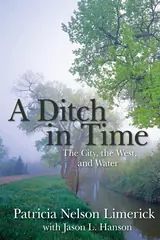 A Ditch in TimePatricia Nelson Limerick, Jason L. Hanson64% subject matchAlso shares Conservation
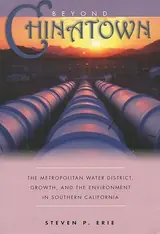 Beyond <I>Chinatown</I>Steven P. Erie61% subject match
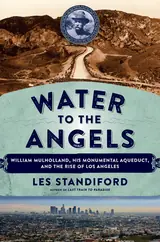 Water to the AngelsLes Standiford60% subject match
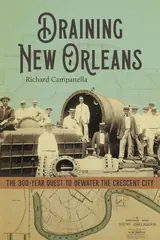 Draining New OrleansRichard Campanella58% subject match
 Cadillac DesertMarc Reisner56% subject match
For younger readers: Manhattan, Many Voices, Thirst
Start with three books, and this one can be the first.
Members get a new edition every morning: a route out from their books to essays, research and talks, with the reason for each.
Sign upAbout this book
Supplying water to millions is not simply an engineering and logistical challenge. As David Soll shows in his finely observed history of the nation's largest municipal water system, the task of providing water to New Yorkers transformed the natural and built environment of the city, its suburbs, and distant rural watersheds.
Continue reading
Almost as soon as New York City completed its first municipal water system in 1842, it began to expand the network, eventually reaching far into the Catskill Mountains, more than one hundred miles from the city. Empire of Water explores the history of New York City's water system from the late nineteenth century to the early twenty-first century, focusing on the geographical, environmental, and political repercussions of the city's search for more water.
Soll vividly recounts the profound environmental implications for both city and countryside. Some of the region's most prominent landmarks, such as the High Bridge across the Harlem River, Central Park's Great Lawn, and the Ashokan Reservoir in Ulster County, have their origins in the city's water system. By tracing the evolution of the city's water conservation efforts and watershed management regime, Soll reveals the tremendous shifts in environmental practices and consciousness that occurred during the twentieth century. Few episodes better capture the long-standing upstate-downstate divide in New York than the story of how mountain water came to flow from spigots in Brooklyn and Manhattan.
Soll concludes by focusing on the landmark watershed protection agreement signed in 1997 between the city, watershed residents, environmental organizations, and the state and federal governments. After decades of rancor between the city and Catskill residents, the two sides set aside their differences to forge a new model of environmental stewardship. His account of this unlikely environmental success story offers a behind the scenes perspective on the nation's most ambitious and wide-ranging watershed protection program.
Publisher details
Publisher categories
- Middle Atlantic History
- Conservation
- Water Supply
- Authors
- David Soll
- Publisher
- Cornell University Press
- Published
- March 26, 2013
- Format
- Print & ebook
- Reading lane
- Middle Atlantic History