
Du Bois's Telegram
Literary Resistance and State Containment
Juliana Spahr traces how U.S. state interests shaped literary resistance across three eras of writing.
Literary Resistance
Come here for
- Three eras of writing that challenged political orthodoxies
- The influence of state institutions on literary production
Expect
- Avant-garde modernism, social-movement writing, and multilingual English-language works
- A study of how political art can be contained or co-opted
Where it sits
How strongly BookFrontier reads the book as belonging to each subject.
Nearest books
Matched by our semantic model. Ordered by what its readers also loved.
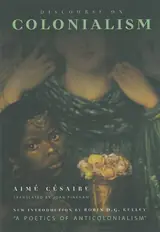 Discourse on ColonialismAimé Césaire51% subject matchShares Colonialism & Its Aftermath
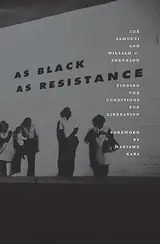 As Black as ResistanceWilliam C. Anderson, Zoé Samudzi60% subject match
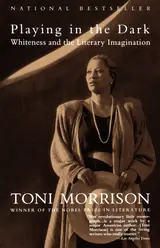 Playing in the DarkToni Morrison59% subject matchShares Black Lit Crit
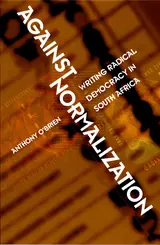 Against NormalizationAnthony O'Brien59% subject matchShares Colonialism & Its Aftermath
 A Resistance History of the United StatesTad Stoermer59% subject match
For younger readers: Now Is Your Time!, A Long Time Coming
Start with three books, and this one can be the first.
Members get a new edition every morning: a route out from their books to essays, research and talks, with the reason for each.
Sign upAbout this book
In 1956 W. E. B. Du Bois was denied a passport to attend the Présence Africaine Congress of Black Writers and Artists in Paris. So he sent the assembled a telegram. “Any Negro-American who travels abroad today must either not discuss race conditions in the United States or say the sort of thing which our State Department wishes the world to believe.”
Continue reading
Taking seriously Du Bois’s allegation, Juliana Spahr breathes new life into age-old questions as she explores how state interests have shaped U.S. literature. What is the relationship between literature and politics? Can writing be revolutionary? Can art be autonomous, or is escape from nations and nationalisms impossible?
Du Bois’s Telegram brings together a wide range of institutional forces implicated in literary production, paying special attention to three eras of writing that sought to defy political orthodoxies by contesting linguistic conventions: avant-garde modernism of the early twentieth century; social-movement writing of the 1960s and 1970s; and, in the twenty-first century, the profusion of English-language works incorporating languages other than English. Spahr shows how these literatures attempted to assert their autonomy, only to be shut down by FBI harassment or coopted by CIA and State Department propagandists. Liberal state allies such as the Ford and Rockefeller foundations made writers complicit by funding multiculturalist works that celebrated diversity and assimilation while starving radical anti-imperial, anti-racist, anti-capitalist efforts.
Spahr does not deny the exhilarations of politically engaged art. But her study affirms a sobering reality: aesthetic resistance is easily domesticated.
Publisher details
Publisher categories
- American Lit Crit
- 20th-Century Literary Criticism
- 21st Century Literature
- Authors
- Juliana Spahr
- Publisher
- WW Norton
- Published
- October 23, 2018
- Format
- Print & ebook
- Reading lane
- American Lit Crit