
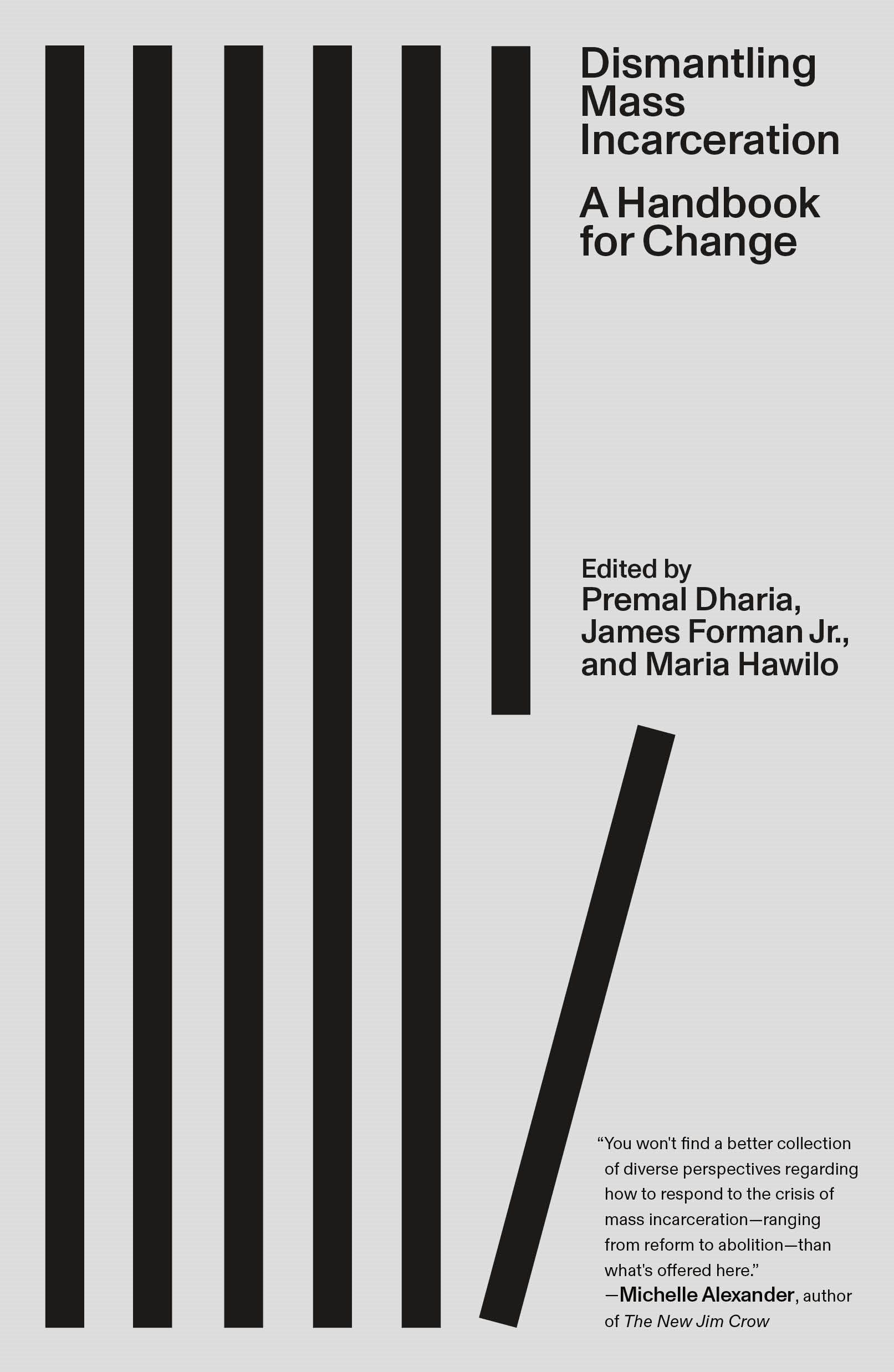
Book
Dismantling Mass Incarceration
A Handbook for Change
Premal Dharia, James Forman, Jr., Maria Hawilo
Farrar Straus & Giroux · Print & ebook · July 9, 2024
Reading lane: Criminal Sentencing
"You won't find a better collection of diverse perspectives regarding how to respond to the crisis of mass incarceration—ranging from reform to abolition—than what's offered here." —Michelle Alexander, author of The New Jim Crow "This extraordinary collection by our nation’s most brilliant thinkers on punishment, policing and prisons is exactly the blueprint for making a just society that we have all been waiting for and desperately need." —Heather Ann Thompson, Pulitzer Prize–winning author of Blood in the Water " Dismantling Mass Incarceration: A Handbook for Change should be required reading in every U.S. high school and college." — Newcity Lit A vital reader on ending mass incarceration featuring advocates, experts, and formerly incarcerated people.
At a Glance
Why This Clicks
Many Routes Forward
A layered look at confronting mass incarceration, without pretending there’s only one answer.
Come here for
- Perspectives spanning reform and abolition
- Practical interventions across the criminal system
Expect
- Discussion and disagreement, not a single prescribed solution
- A shift from critique toward hope and action
Book Details
- Authors
- Premal Dharia, James Forman, Jr., Maria Hawilo
- Publisher
- Farrar Straus & Giroux
- Published
- July 9, 2024
- Format
- Print & ebook
- Theme
- Criminal Sentencing · Human Rights
- Reading lane
- Criminal Sentencing
Affinity
Publisher Categories
Courts & the Judiciary
Penology & Prisons
Activism & Social Justice
About This Book
"You won't find a better collection of diverse perspectives regarding how to respond to the crisis of mass incarceration—ranging from reform to abolition—than what's offered here." —Michelle Alexander, author of The New Jim Crow "This extraordinary collection by our nation’s most brilliant thinkers on punishment, policing and prisons is exactly the blueprint for making a just society that we have all been waiting for and desperately need." —Heather Ann Thompson, Pulitzer Pri...
Read full description
Similar Books

The New Jim Crow
Michelle Alexander · The New Press
Affinity signal
Criminal Sentencing
Civil & Human Rights for Teens
The Long Term
Alice Kim, Erica Meiners · Haymarket Books
Affinity signal
Criminal Sentencing
Human Rights

From the War on Poverty to the War on Crime
Elizabeth Hinton · WW Norton
Affinity signal
Criminal Sentencing
21st-Century America