
Dance Floor Democracy
The Social Geography of Memory at the Hollywood Canteen
Sherrie Tucker uses Hollywood Canteen oral histories to examine swing culture and wartime national memory.
- Themes
- Swing culture and national memory, Race, sexism, and inequality, Contested historical memory
- Pacing
- Reflective
Hollywood Canteen Memories
Come here for
- Oral histories from civilian volunteers and military guests
- Jitterbugging, wartime memory, and contested recollections
Expect
- Accounts that challenge a singular history of the dance floor
- Attention to racism, sexism, and inequality
Where it sits
How strongly BookFrontier reads the book as belonging to each subject.
Nearest books
Matched by our semantic model. Ordered by what its readers also loved.
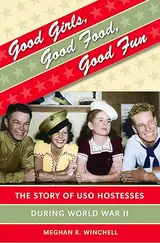 Good Girls, Good Food, Good FunMeghan K. Winchell65% subject match
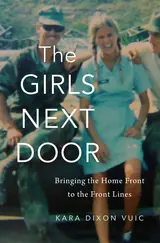 Girls Next DoorKara Dixon Vuic59% subject match
 Hollywood BabylonKenneth Anger52% subject match
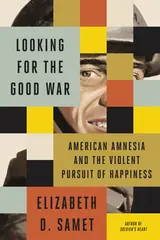 Looking for the Good WarElizabeth D. Samet52% subject match
 The Wounded GenerationDavid Nasaw52% subject match
 Once Upon a TownBob Greene52% subject matchShares 20th-Century America
For younger readers: The Silver Blonde, ¡Mambo Mucho Mambo! The Dance That Crossed Color Lines, Candy Bomber
Start with three books, and this one can be the first.
Members get a new edition every morning: a route out from their books to essays, research and talks, with the reason for each.
Sign upAbout this book
Open from 1942 until 1945, the Hollywood Canteen was the most famous of the patriotic home front nightclubs where civilian hostesses jitterbugged with enlisted men of the Allied Nations. Since the opening night, when the crowds were so thick that Bette Davis had to enter through the bathroom window to give her welcome speech, the storied dance floor where movie stars danced with soldiers has been the subject of much U.S. nostalgia about the "Greatest Generation."
Continue reading
Drawing from oral histories with civilian volunteers and military guests who danced at the wartime nightclub, Sherrie Tucker explores how jitterbugging swing culture has come to represent the war in U.S. national memory. Yet her interviewees' varied experiences and recollections belie the possibility of any singular historical narrative. Some recall racism, sexism, and inequality on the nightclub's dance floor and in Los Angeles neighborhoods, dynamics at odds with the U.S. democratic, egalitarian ideals associated with the Hollywood Canteen and the "Good War" in popular culture narratives. For Tucker, swing dancing's torque—bodies sharing weight, velocity, and turning power without guaranteed outcomes—is an apt metaphor for the jostling narratives, different perspectives, unsteady memories, and quotidian acts that comprise social history.
Publisher details
Publisher categories
- 20th-Century America
- Women's Studies
- Authors
- Sherrie Tucker
- Publisher
- Duke University Press
- Published
- October 17, 2014
- Format
- Print & ebook
- Reading lane
- 20th-Century America