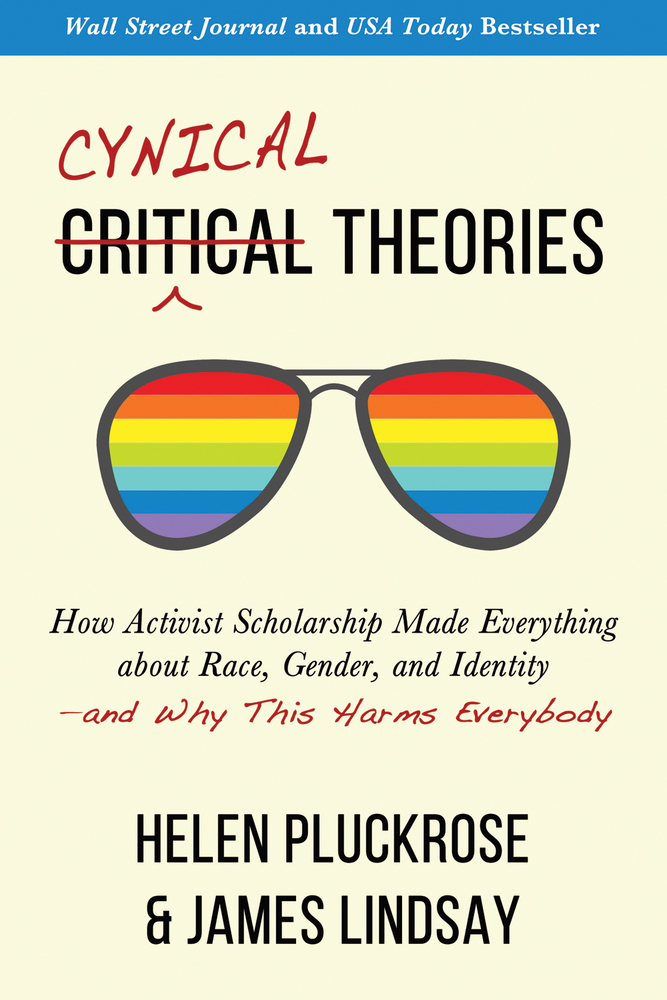
Cynical Theories
How Activist Scholarship Made Everything About Race, Gender, and Identity—and Why This Harms Everybody
A probing account of activist scholarship that traces its ideas and argues over their consequences.
Ideas Under Scrutiny
Come here for
- A history of activist scholarship’s ideas and their cultural influence
- Questions about science, reason, identity, and liberal ethics
Expect
- A critical, sustained discussion of postmodernism and academic activism
- A pointed case for science, reason, and consistently liberal ethics
Where it sits
How strongly BookFrontier reads the book as belonging to each subject.
Nearest books
Matched by our semantic model. Ordered by what its readers also loved.
 The Origin of PoliticsNicholas Wade55% subject match
 The Age of EntitlementChristopher Caldwell57% subject match
 The End of WomanCarrie Gress59% subject match
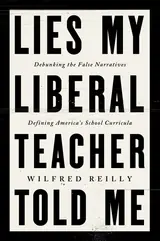 Lies My Liberal Teacher Told MeWilfred Reilly56% subject match
For younger readers: Better Than We Found It: Conversations to Help Save the World, Big Lies, The Sum of Us
Start with three books, and this one can be the first.
Members get a new edition every morning: a route out from their books to essays, research and talks, with the reason for each.
Sign upAbout this book
Wall Street Journal, USA Today, and Publishers Weekly Bestseller! Times, Sunday Times, and Financial Times Book-of-the-Year Selection! Have you heard that language is violence and that science is sexist? Have you read that certain people shouldn't practice yoga or cook Chinese food? Or been told that being obese is healthy, that there is no such thing as biological sex, or that only white people can be racist?
Continue reading
Are you confused by these ideas, and do you wonder how they have managed so quickly to challenge the very logic of Western society? In this probing and intrepid volume, Helen Pluckrose and James Lindsay document the evolution of the dogma that informs these ideas, from its coarse origins in French postmodernism to its refinement within activist academic fields. Today this dogma is recognizable as much by its effects, such as cancel culture and social-media dogpiles, as by its tenets, which are all too often embraced as axiomatic in mainstream media: knowledge is a social construct; science and reason are tools of oppression; all human interactions are sites of oppressive power play; and language is dangerous. As Pluckrose and Lindsay warn, the unchecked proliferation of these anti-Enlightenment beliefs present a threat not only to liberal democracy but also to modernity itself. While acknowledging the need to challenge the complacency of those who think a just society has been fully achieved, Pluckrose and Lindsay break down how this often-radical activist scholarship does far more harm than good, not least to those marginalized communities it claims to champion. They also detail its alarmingly inconsistent and illiberal ethics. Only through a proper understanding of the evolution of these ideas, they conclude, can those who value science, reason, and consistently liberal ethics successfully challenge this harmful and authoritarian orthodoxy—in the academy, in culture, and beyond.
Publisher details
Publisher categories
- Philosophy of Education
- Pop Culture Studies
- Authors
- Helen Pluckrose, James Lindsay
- Publisher
- Pitchstone Publishing
- Published
- June 14, 2022
- Format
- Print & ebook
- Reading lane
- Philosophy of Education