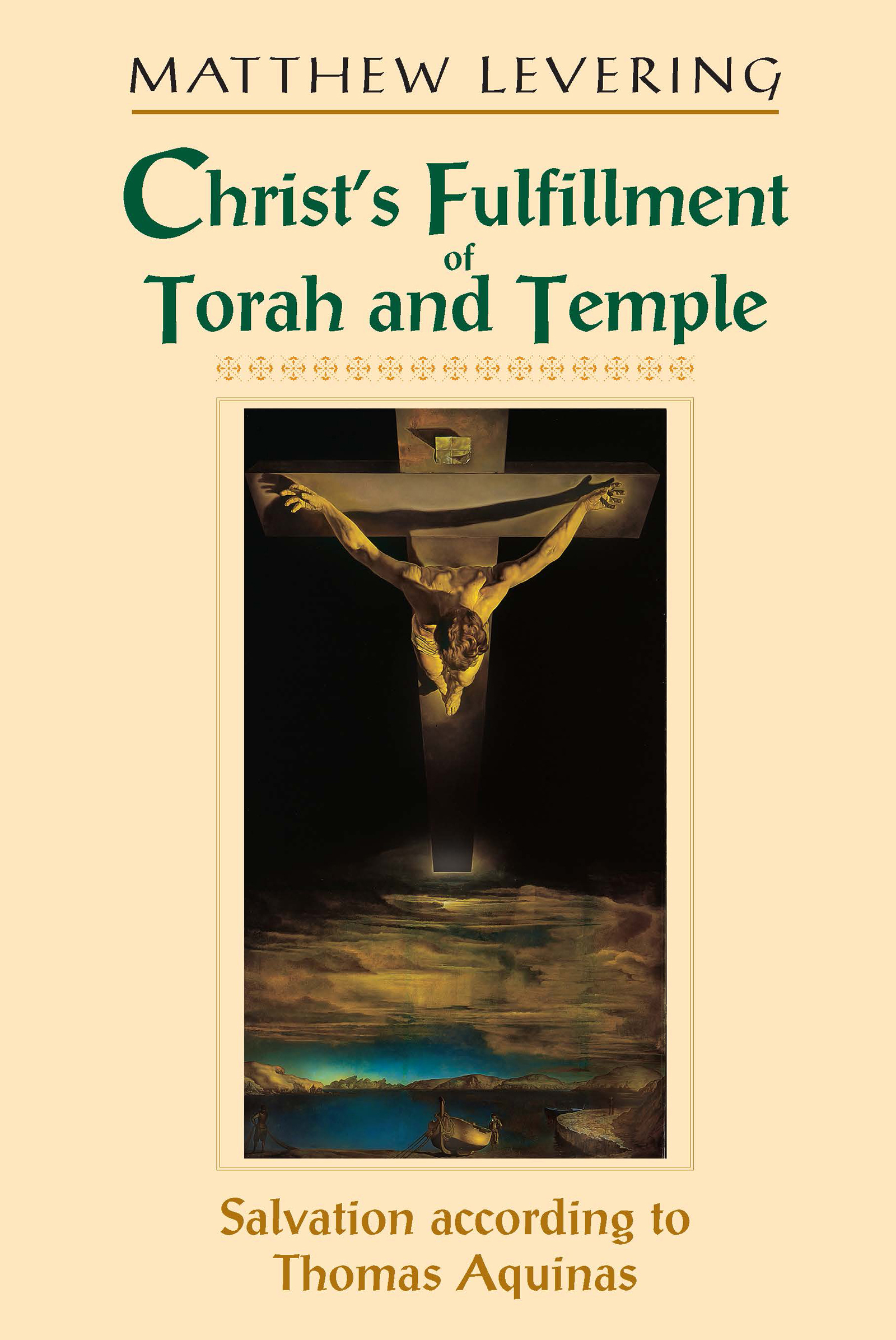
Christ's Fulfillment of Torah and Temple
Salvation According to Thomas Aquinas
Matthew Levering traces Aquinas’s theology of salvation through Israel’s Torah, Temple, covenants, and eternal life.
Torah and Temple
Come here for
- Aquinas’s account of salvation through Torah and Temple
- Christ’s fulfillment of Israel’s law and worship
Expect
- Six aspects of salvation, from divine law and Christ’s passion to eternal life
- A study engaging Scripture and contemporary systematic theology
Where it sits
How strongly BookFrontier reads the book as belonging to each subject.
Nearest books
Matched by our semantic model. Ordered by what its readers also loved. Most of these share its genre: Soteriology.
 Images of Salvation in the New TestamentBrenda B. Colijn62% subject match
 Saving PowerPeter M. Schmiechen60% subject matchAlso shares Christology and Systematic Theology
 Transformed LivesCynthia S. W. Crysdale56% subject match
 Universal Salvation?Robin Parry, Christopher H. Partridge55% subject match
 Classic ChristianityThomas C. Oden54% subject matchAlso shares Systematic Theology
 The Gospel According to JesusJohn F. MacArthur54% subject match
 God the PeacemakerGraham Cole53% subject matchAlso shares Christology and Systematic Theology
 AtonementThomas F. Torrance, Robert T. Walker53% subject matchAlso shares Christology and Systematic Theology
Start with three books, and this one can be the first.
Members get a new edition every morning: a route out from their books to essays, research and talks, with the reason for each.
Sign upAbout this book
Christ?s Fulfillment of Torah and Temple is a concise introduction to the Christian theology of salvation in light of the contributions of Thomas Aquinas. In this cogent study, Matthew Levering identifies six important aspects of soteriology, each of which corresponds to an individual chapter in the book. Levering focuses on human history understood in light of the divine law and covenants, Jesus the Incarnate Son of God and Messiah of Israel, Jesus?
Continue reading
cross, transformation in the image of God, the Mystical Body of Christ into which all human beings are called, and eternal life.
Taking the doctrines of faith as his starting point, Levering?s objective is to answer the questions of both Christians and non-Christians who desire to learn how and for what end Jesus ?saves? humankind. Levering?s work also speaks directly to contemporary systematic theologians. In contrast to widespread assumptions that Aquinas?s theology of salvation is overly abstract or juridical, Levering demonstrates that Aquinas?s theology of salvation flows from his reading of Scripture and deserves a central place in contemporary discussions.
Thomas Aquinas?s theology of salvation employs and develops the concepts of satisfaction and merit in light of his theology of the Old Testament. For Aquinas, Christ fulfills Israel?s Torah and Temple, law and liturgy. These two aspects of Israel?s religion provide the central categories for understanding salvation. The Torah expresses God?s Wisdom, incarnated in Jesus Christ. Christ?s passion, then, fulfills and transforms the moral, juridical, and ceremonial precepts of the Torah, which correspond to the three ?offices? of ancient Israel?prophet, king, and priest. The New Law in Christ Jesus is also the fulfillment of the Temple, Israel?s worship. Christ offers the Father the perfect worship, participated in by all members of his Mystical Body through faith, charity, and the sacraments. Old Law and New Law are fulfilled in the perfect knowing and loving (perfect law and liturgy) of eternal life, the Heavenly Jerusalem.
As a Thomistic contribution to contemporary theology, this fruitful study develops a theology of salvation in accord with contemporary canonical readings of Scripture and with the teachings of the Second Vatican Council on the fulfillment and permanence of God?s covenants.
Publisher details
Publisher categories
- Canon & Church Law
- Catholicism
- History of Christian Thought
- Authors
- Matthew Levering
- Publisher
- University of Notre Dame Press
- Published
- April 15, 2002
- Format
- Print & ebook
- Reading lane
- Canon & Church Law