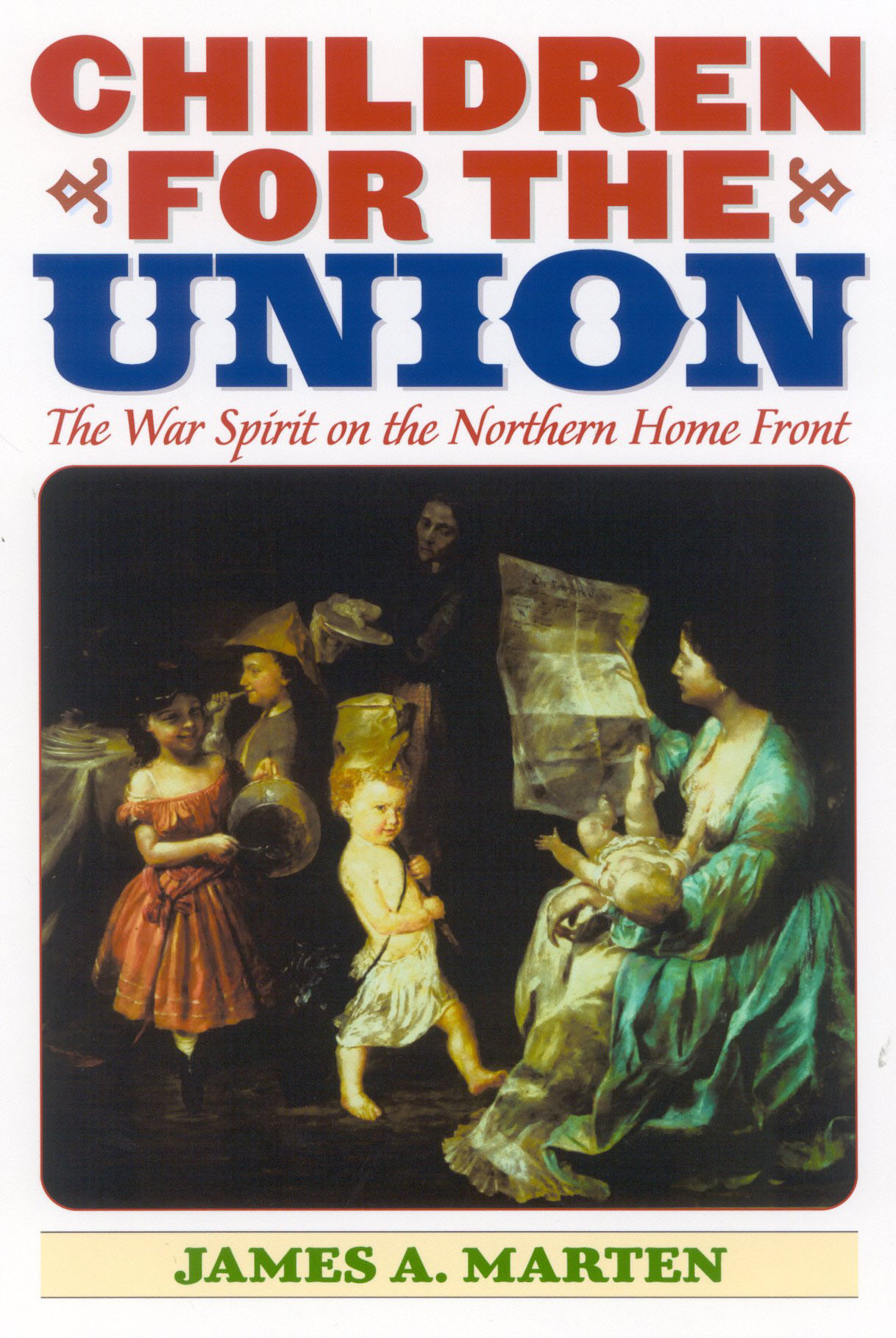
Children’s lives on the Northern home front, from farm labor to wartime writing.
- Themes
- Children and the Civil War, Northern home-front participation, War's impact on family life
Northern Childhood at War
Come here for
- Northern children’s work on farms and in factories
- Children’s wartime writing and its political viewpoints
Expect
- Letters from Union soldiers to their children
- Toys, games, and stories shaped by images of warfare
Where it sits
How strongly BookFrontier reads the book as belonging to each subject.
Nearest books
Matched by our semantic model. Ordered by what its readers also loved. Most of these share its genre: Civil War Era.
 Mothers of InventionDrew Gilpin Faust52% subject match
 Unexpected BraveryA.J. Schenkman66% subject match
 Beyond Their YearsScotti Cohn65% subject match
 What They Fought For 1861-1865James M. McPherson61% subject match
 The Divided Family in Civil War AmericaAmy Murrell Taylor61% subject match
 The Soldier's PenRobert E. Bonner60% subject match
 The Civil WarDK, D.K. Publishing59% subject match
 Girls Next DoorKara Dixon Vuic59% subject match
For younger readers: Battles of the American Civil War, How I Found the Strong, Under Siege!
Start with three books, and this one can be the first.
Members get a new edition every morning: a route out from their books to essays, research and talks, with the reason for each.
Sign upAbout this book
The Civil War influenced virtually every aspect of children's lives, and in turn they eagerly incorporated the experience of war into their daily assumptions and activities. In this new contribution to the American Childhoods series, James A. Marten places the experiences of children living in the North during the Civil War into the larger contexts of economic, political, and cultural developments during the nineteenth century.
Continue reading
On the home front, children became almost full-fledged members of their communities in their support of the war effort. They left school to replace absent men on farms and in factories, helped raise funds for hospitals and other soldiers' causes, and volunteered to knit socks, pick lint, and perform other necessary duties. Even as families were torn apart by the war, Mr. Marten notes, family ties grew stronger as Union soldiers filled their letters with love and advice for their children. He shows how the war brought writers for children to challenge the pacifism reflected in antebellum literature and instead to promote controversial political viewpoints such as abolitionism and to support the Union's military action. Indeed, Northern children's lives were militarized as never before, from the toys and games and stories that were overwhelmed by images of warfare and pro-Union ideals to actual military service by under-age soldiers and drummer boys. Both heroes and casualties, drummer boys in fact became potent symbols of the Northern war effort and the subject of countless poems and articles, at least temporarily altering perceptions of proper roles for children and youth in American society. As adults looking back, Northern children saw the war as a great adventure or a turning point in their lives. Some mourned lost fathers or relatives; others mourned lost childhoods. Children for the Union opens a new window on the impact of the war and shows that the youngest Americans were inevitable and enthusiastic participants in the nation's worst crisis. Abundantly illustrated.
Publisher details
Publisher categories
- History
- Civil War Era
- Authors
- James A. Marten
- Publisher
- Ivan R. Dee
- Published
- February 23, 2004
- Format
- Print & ebook
- Reading lane
- History