
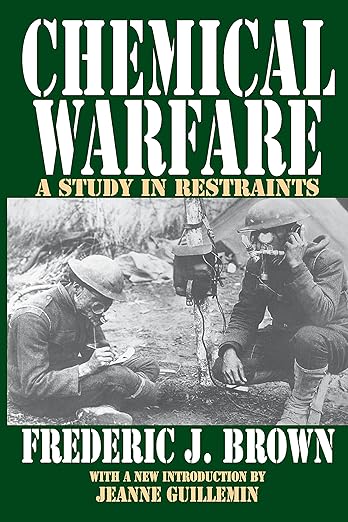
Book
Chemical Warfare
1st Edition, Kindle Edition
Fredric Brown, Frederic J. Brown
Transaction Publishers · Ebook · November 17, 2005
Reading lane: Chemical & Biological Warfare
In the aftermath of 9/11, the potential terror of weapons of mass destruction--from nuclear, biological, and chemical to dirty bombs--preoccupies national security experts.
At a Glance
Who It's For
Book Details
- Authors
- Fredric Brown, Frederic J. Brown
- Publisher
- Transaction Publishers
- Published
- November 17, 2005
- Format
- Ebook
- Theme
- Chemical & Biological Warfare · Nuclear Warfare
- Reading lane
- Chemical & Biological Warfare
Affinity
Publisher Categories
Military Strategy
20th-Century America
About This Book
In the aftermath of 9/11, the potential terror of weapons of mass destruction--from nuclear, biological, and chemical to dirty bombs--preoccupies national security experts. In Chemical Warfare , Frederic J. Brown, presents a cogent, innovative framework for understanding the historical forces that have restrained the use of WMD and how they continue to have relevance today. Analyzing both world wars, he argues that the restraints on use were complex and often unpredictable a...
Read full description
Similar Books
A History of Chemical Warfare
K. Coleman, Kim Coleman · Palgrave Macmillan
Affinity signal
History
History of Science
War of Nerves
Jonathan Tucker · Knopf Doubleday Publishing Group
Affinity signal
Chemical & Biological Warfare
Nuclear Warfare
Holding Their Breath
Marion Girard Dorsey, M. Girard Dorsey · Cornell University Press
Affinity signal
Chemical & Biological Warfare
Nuclear Warfare
Chemical-biological Defense
Albert J. Mauroni · Praeger
Affinity signal
History
A Higher Form of Killing
Robert Harris, Jeremy Paxman · Random House Publishing Group
Affinity signal
Chemical & Biological Warfare
Nuclear Warfare
The a to Z of Nuclear, Biological and Chemical Warfare
Professor Benjamin C. Garrett, John Mason Hart · Bloomsbury Academic
Affinity signal
History