
Born in Flames
The Business of Arson and the Remaking of the American City
A tightly framed urban history that turns arson into a lens on the American city.
City Fires
Come here for
- Urban history with a sharper edge
- Classroom-ready cultural context
Expect
- Insightful explanation
- A measured, readable scholarly tone
Where it sits
How strongly BookFrontier reads the book as belonging to each subject.
Nearest books
Matched by our semantic model. Ordered by what its readers also loved.
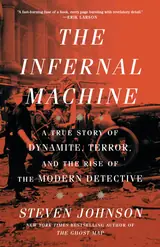 The Infernal MachineSteven Johnson59% subject match
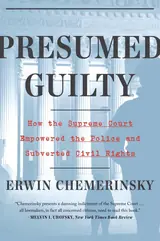 Presumed GuiltyErwin Chemerinsky45% subject match
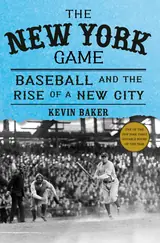 The New York GameKevin Baker49% subject match
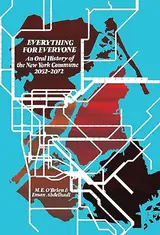 Everything for EveryoneM. E. O'Brien, Eman Abdelhadi45% subject match
 An Inconvenient CopEdwin Raymond, Jon Sternfeld45% subject match
 Ladies and Gentlemen, the Bronx Is BurningJonathan Mahler63% subject matchShares 20th-Century America
For younger readers: Rising from the Ashes, I Survived the Great Chicago Fire, 1871, The Big Burn
Start with three books, and this one can be the first.
Members get a new edition every morning: a route out from their books to essays, research and talks, with the reason for each.
Sign upAbout this book
“Ladies and gentlemen, the Bronx is burning!” That legendary and apocryphal phrase, allegedly uttered by announcers during the 1977 World Series as flames rose above Yankee Stadium, seemed to encapsulate an entire era in this nation’s urban history. Across that decade, a wave of arson coursed through American cities, destroying entire neighborhoods home to poor communities of color.
Continue reading
Yet as historian Bench Ansfield demonstrates in Born in Flames, the most destructive fires were not set by residents, as is commonly assumed, but by landlords looking to collect insurance payouts. Driven by perverse incentives—new government-sponsored insurance combined with tanking property values—landlords hired “torches,” mostly Black and Brown youth, to set fires in the buildings, sometimes with people still living in them. Tens of thousands of families lost their homes to these blazes, yet for much of the 1970s, tenant vandalism and welfare fraud stood as the prevailing explanations for the arson wave, effectively indemnifying landlords.
Ansfield’s book, based on a decade of research, introduces the term “brownlining” for the destructive insurance practices imposed on poor communities of color under the guise of racial redress. Ansfield shows that as the FIRE industries—finance, insurance, and real estate— eclipsed manufacturing in the 1970s, they began profoundly reshaping Black and Brown neighborhoods, seeing them as easy sources of profit. At every step, Ansfield charts the tenant-led resistance movements that sprung up in the Bronx and elsewhere, as well as the explosion of popular culture around the fires, from iconic movies like The Towering Inferno to hit songs such as “Disco Inferno.” Ultimately, they show how similarly pernicious dynamics around insurance and race are still at play in our own era, especially in regions most at risk of climate shocks.
Publisher details
Publisher categories
- 20th-Century America
- Middle Atlantic History
- Cities & Urban Planning
- Authors
- Bench Ansfield
- Publisher
- WW Norton
- Published
- August 19, 2025
- Format
- Print & ebook
- Reading lane
- 20th-Century America