

Book
Benjamin Franklin and the Ends of Empire
Illustrated Edition, Kindle Edition
Carla J. Mulford
Oxford University Press · Ebook · July 15, 2015
Reading lane: Revolutionary America (1775–1800)
Drawing from Benjamin Franklin's published and unpublished papers, including letters, notes, and marginalia, Benjamin Franklin and the Ends of Empire examines how the early modern liberalism of Franklin's youthful intellectual life helped foster his vision of independence from Britain that became his hallmark achievement.
Disclosure: Some outbound links are affiliate links. If you buy through them, we may earn a commission. It doesn't affect which books we include. Learn more in our disclosure policy.
At a Glance
Who It's For
Book Details
- Authors
- Carla J. Mulford
- Publisher
- Oxford University Press
- Published
- July 15, 2015
- Format
- Ebook
- Theme
- Revolutionary America (1775–1800) · Colonial America (to 1775)
- Reading lane
- Revolutionary America (1775–1800)
Affinity
Publisher Categories
Revolutionary America (1775–1800)
About This Book
Drawing from Benjamin Franklin's published and unpublished papers, including letters, notes, and marginalia, Benjamin Franklin and the Ends of Empire examines how the early modern liberalism of Franklin's youthful intellectual life helped foster his vision of independence from Britain that became his hallmark achievement. In the early chapters, Carla Mulford explores the impact of Franklin's family history - especially their difficult times during the English Civil War - on...
Read full description
Similar Books
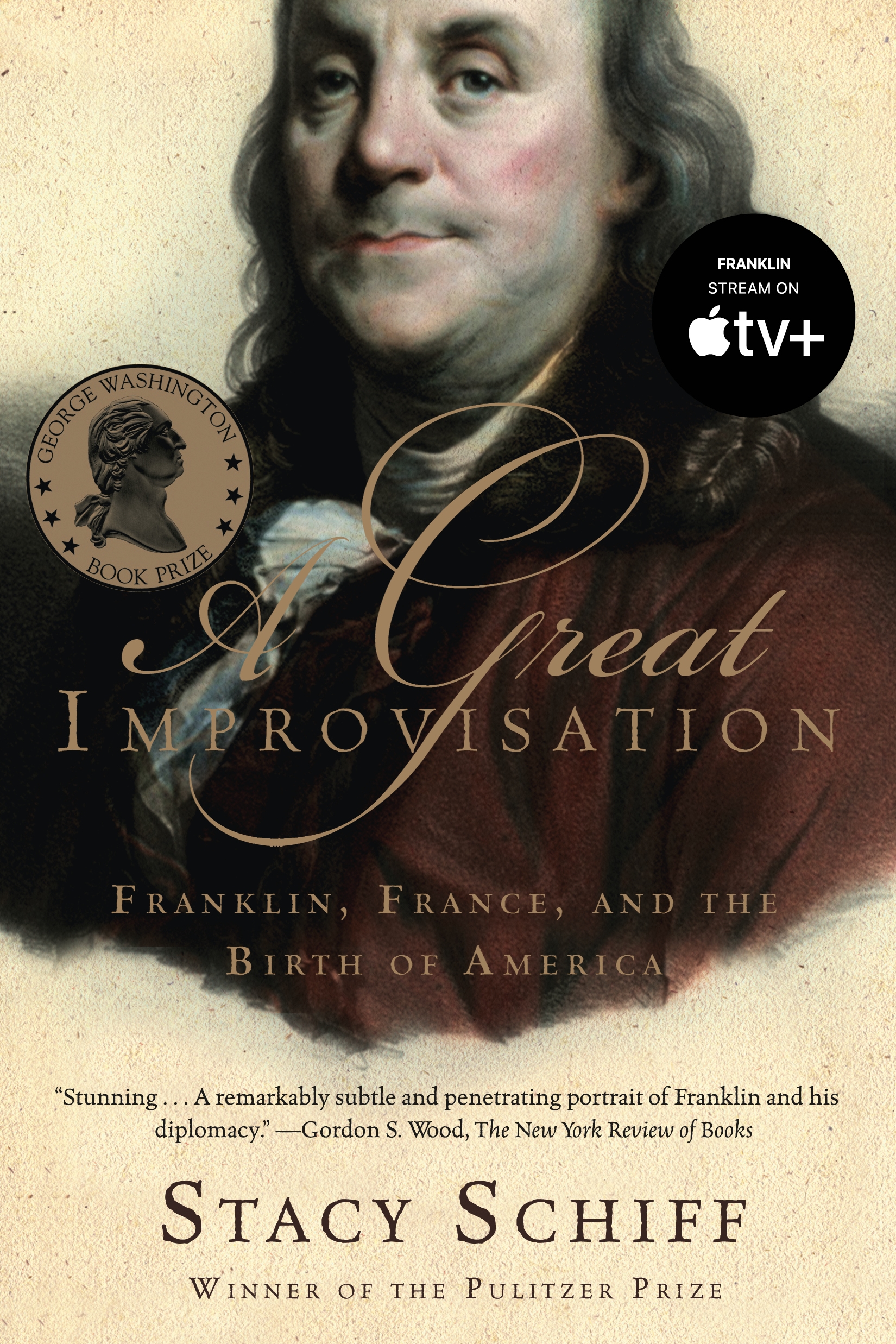
A Great Improvisation
Stacy Schiff · Henry Holt and Co.
Shared affinity
Revolutionary America (1775–1800)
Colonial America (to 1775)
18th‑Century History

The Barbary Wars
Frank Lambert, Franklin T. Lambert · Farrar Straus & Giroux
Shared affinity
Revolutionary America (1775–1800)
Colonial America (to 1775)
18th‑Century History

He Did Not Conquer
Madelaine Drohan · Dundurn Press
Shared affinity
Affinity match is still building for this title.

Common Sense
Thomas Paine · Start Publishing LLC
Shared affinity
Affinity match is still building for this title.

The Atlantic World and Virginia, 1550-1624
Peter C. Mancall · Omohundro Institute and UNC Press
Shared affinity
Revolutionary America (1775–1800)

Founding Brothers
Joseph J. Ellis · Knopf Doubleday Publishing Group
Shared affinity
Affinity match is still building for this title.

American Creation
Joseph J. Ellis · Knopf Doubleday Publishing Group
Shared affinity
Affinity match is still building for this title.

Tom Paine and Revolutionary America
Eric Foner · Oxford University Press
Shared affinity
Affinity match is still building for this title.