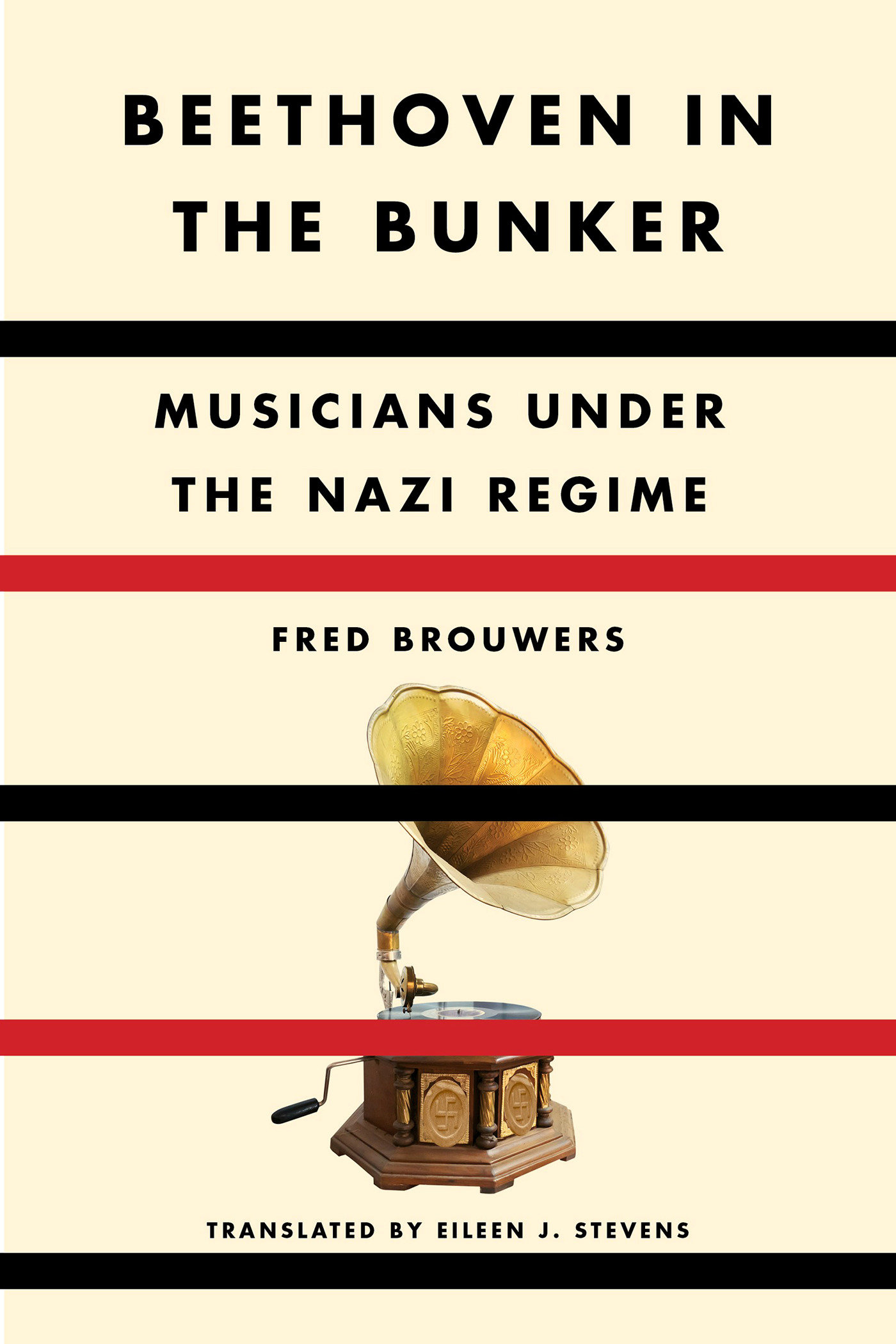
Beethoven in the Bunker
Musicians Under the Nazi Regime
- Themes
- Classical music under Nazism, Musicians’ persecution and survival, Collaboration and resistance
Who it’s for
- For readers interested in classical music under the Nazi regime
- For readers interested in musicians’ lives during World War II
Where it sits
How strongly BookFrontier reads the book as belonging to each subject.
Nearest books
Matched by our semantic model. Ordered by what its readers also loved. Most of these share its genre: Holocaust History.
 Time's EchoJeremy Eichler65% subject matchAlso shares Music History
 A Hangman's DiaryFranz Schmidt47% subject match
 Anti-MusicMark Christian Thompson66% subject matchAlso shares Music History
 Defying HitlerGordon Thomas, Greg Lewis64% subject match
 The Rise and Fall of the Third ReichWilliam L. Shirer61% subject match
 Hitler's American FriendsBradley W. Hart60% subject matchAlso shares World War II History
 The BohemiansNorman Ohler59% subject match
 The Nazi MindLaurence Rees57% subject matchAlso shares World War II History
For younger readers: Impossible Escape, The Harmonica, The Other Victims
Start with three books, and this one can be the first.
Members get a new edition every morning: a route out from their books to essays, research and talks, with the reason for each.
Sign upAbout this book
This compelling survey examines the remarkable relationship between the Nazis and classical music through the stories of musicians, composers, and conductors across the political spectrum.
May 1945. A Soviet military patrol searches Hitler’s secret bunker in Berlin. They find bodies, documents, jewelry, paintings—and also an extensive collection of 78 rpm records. It comes as no surprise that this collection includes work by Beethoven, Wagner, and Bruckner.
Continue reading
The same goes for a procession of other giants promoted by the Nazi regime: “It seems as if the Nazis put a steel helmet on Mozart, girded Schubert with a saber, and wrapped barbed wire around Johann Strauss’s neck,” composer Robert Stolz once said. But how is it possible that Hitler’s favorites also included “forbidden” Jewish and Russian composers and performers?
While Hitler sat secretly enjoying previously recorded music in his bunker, musicians made of flesh and blood were denied a means of making a living. They died in concentration camps or in other war-related circumstances. They survived but ended up in psychiatric care; they managed to flee just in time; they sided with the regime—out of conviction or coercion—or they joined the resistance. From fiery conductor Arturo Toscanini, who defied Mussolini and Hitler, to opportunistic composer Richard Strauss and antisemitic pianist Elly Ney, who collaborated with the Third Reich to varying extents and for different reasons, Fred Brouwers profiles the complex figures of this extraordinarily fascinating chapter in music history.
Publisher details
Publisher categories
- Musicians' Lives
- World War II History
- Music History
- Authors
- Fred Brouwers
- Publisher
- Other Press
- Published
- April 11, 2023
- Format
- Print & ebook
- Reading lane
- Musicians' Lives