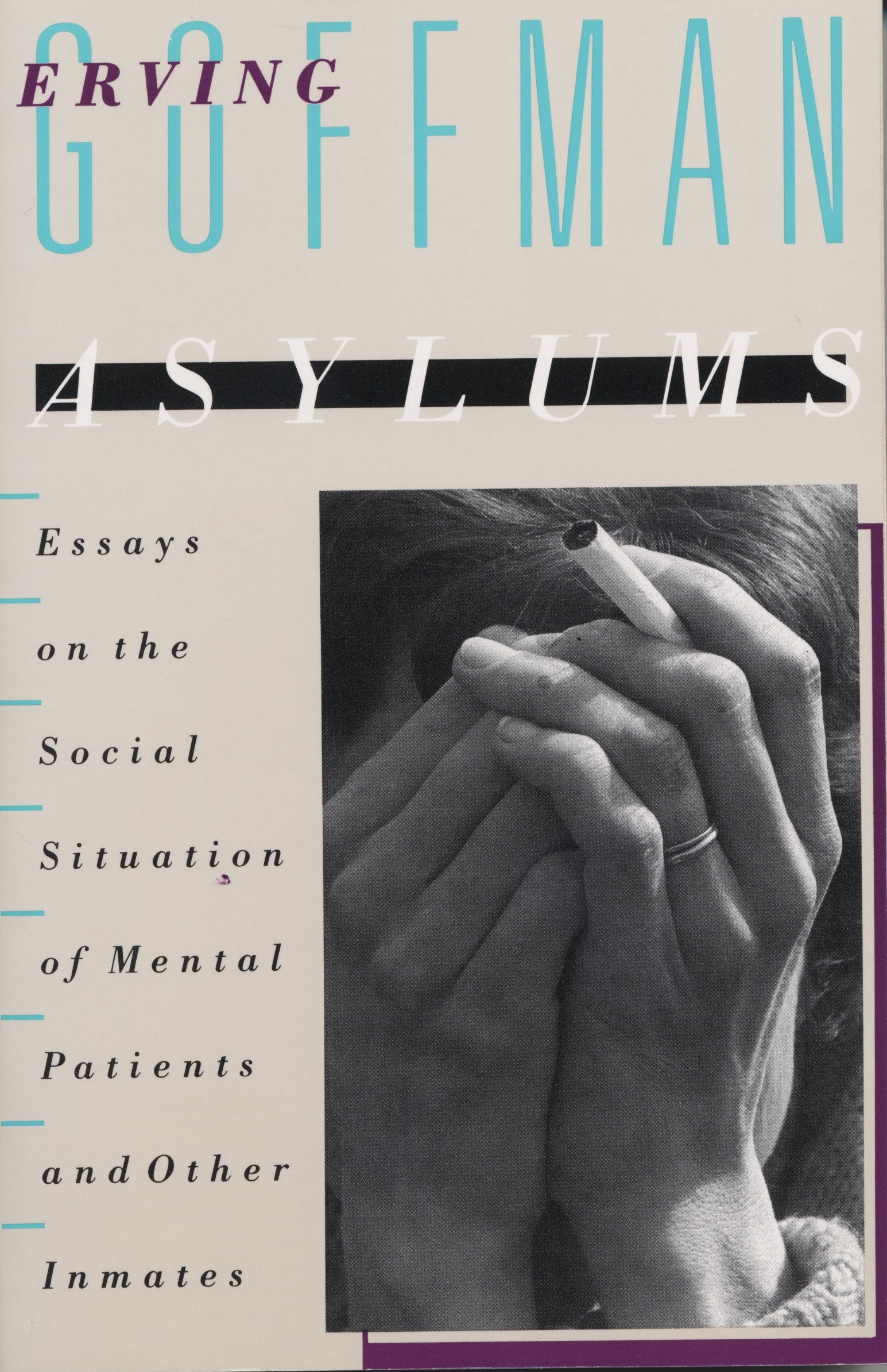
Asylums
Essays on the Social Situation of Mental Patients and Other Inmates
Goffman shifts attention from diagnosis to the institution shaping daily life and identity.
- Themes
- Institutional influence on identity, Adapting to institutional life, Effects on social relationships
Life Inside Institutions
Come here for
- A sharp account of how closed institutions reshape social life.
- Connections between mental hospitals and other regimented worlds.
Expect
- A general portrait followed by essays on relationships, adaptation, and staff.
- Fieldwork-informed attention to mental hospitals alongside other closed institutions.
Where it sits
How strongly BookFrontier reads the book as belonging to each subject.
Nearest books
Matched by our semantic model. Ordered by what its readers also loved.
 Discipline and PunishMichel Foucault49% subject matchShares Social Theory
 Night Falls FastKay Redfield Jamison42% subject match
 Madness and CivilizationMichel Foucault49% subject matchShares Social Theory
 Captive GendersEric A. Stanley, Nat Smith48% subject match
 MadnessAntonia Hylton58% subject match
 The Lives They Left BehindDarby Penney, Peter Stastny58% subject match
 CrazyPete Earley56% subject match
For younger readers: The Degenerates, Asylum 3-Book Box Set, On a Scale of One to Ten
Start with three books, and this one can be the first.
Members get a new edition every morning: a route out from their books to essays, research and talks, with the reason for each.
Sign upAbout this book
Asylums is an analysis of life in "total institutions" -- closed worlds such as prisons, army training camps, naval vessels, boarding schools, monastaries, nursing homes and mental hospitals -- where the inmates are regimented, surrounded by other inmates, and unable to leave the premises. It describes what these institutions make of the inmate, and what he or she can make of life inside them.
Continue reading
Special attention is focused on mental hospitals, drawing on the author's year of field work at St. Elizabeth's in Washington, D.C., one of America's most well-known institutions. It is the thesis of this book that the most important factor in forming a mental-hospital patient is the institution, not the illness, and that the patient's reactions and adjustments are those of inmates in other types of institutions as well.
The first essay is a general portrait of life in a total instituion. The other three consider special aspects of this existence: the initial effects of institutionlization on the inmate's previous social relationships; the ways of adapting once in the institution; and the role of the staff in presenting to the inmate the facts of his or her situation.
Publisher details
Publisher categories
- Social Psychology
- Social Theory
- Social Science Essays
- Authors
- Erving Goffman
- Publisher
- Knopf Doubleday Publishing Group
- Published
- October 18, 1961
- Format
- Print & ebook
- Reading lane
- Social Psychology