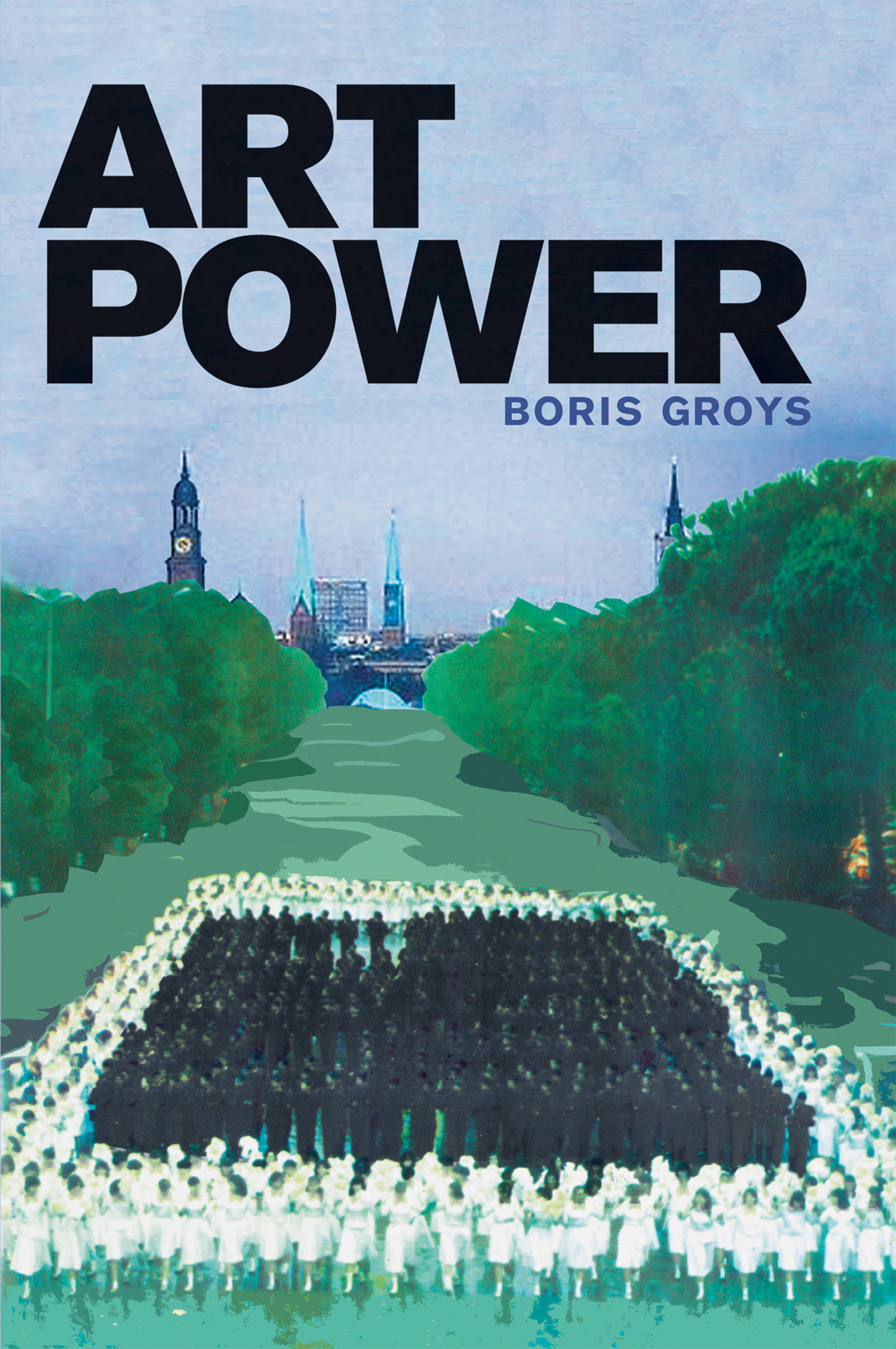
Art Power
- Who it’s for
- Readers interested in art's role in political power and ideology
- Themes
- Art and political power, Art as propaganda and commodity, Contemporary art as image critique
Where it sits
How strongly BookFrontier reads the book as belonging to each subject.
Nearest books
Matched by our semantic model. Ordered by what its readers also loved.
 Management of Art GalleriesMagnus Resch45% subject match
 Tell Them I Said NoMartin Herbert51% subject matchShares Art Criticism & Ideas and Aesthetics
 The Democratic ParadoxChantal Mouffe45% subject match
 The Photograph as Contemporary ArtCharlotte Cotton48% subject match
 The Power of ArtSimon Schama68% subject matchShares Art Criticism & Ideas
 Creative ReckoningsJessica Winegar61% subject matchShares Art & Politics
 The Politics of AestheticsJacques Ranci, Gabriel Rockhill57% subject matchShares Art & Politics, Art Criticism & Ideas and Aesthetics
 The Edifice ComplexDeyan Sudjic55% subject match
For younger readers: This Is What I Know About Art, Big Lies
Start with three books, and this one can be the first.
Members get a new edition every morning: a route out from their books to essays, research and talks, with the reason for each.
Sign upAbout this book
A new book by Boris Groys acknowledges the problem and potential of art's complex relationship to power.
Art has its own power in the world, and is as much a force in the power play of global politics today as it once was in the arena of cold war politics. Art, argues the distinguished theoretician Boris Groys, is hardly a powerless commodity subject to the art market's fiats of inclusion and exclusion.
Continue reading
In Art Power, Groys examines modern and contemporary art according to its ideological function. Art, Groys writes, is produced and brought before the public in two ways—as a commodity and as a tool of political propaganda. In the contemporary art scene, very little attention is paid to the latter function.
Arguing for the inclusion of politically motivated art in contemporary art discourse, Groys considers art produced under totalitarianism, Socialism, and post-Communism. He also considers today's mainstream Western art—which he finds behaving more and more according the norms of ideological propaganda: produced and exhibited for the masses at international exhibitions, biennials, and festivals. Contemporary art, Groys argues, demonstrates its power by appropriating the iconoclastic gestures directed against itself—by positioning itself simultaneously as an image and as a critique of the image. In Art Power, Groys examines this fundamental appropriation that produces the paradoxical object of the modern artwork.
Publisher details
Publisher categories
- Art History
- Contemporary Art History (1945-)
- Authors
- Boris Groys
- Publisher
- MIT Press
- Published
- February 8, 2013
- Format
- Print & ebook
- Reading lane
- Art History