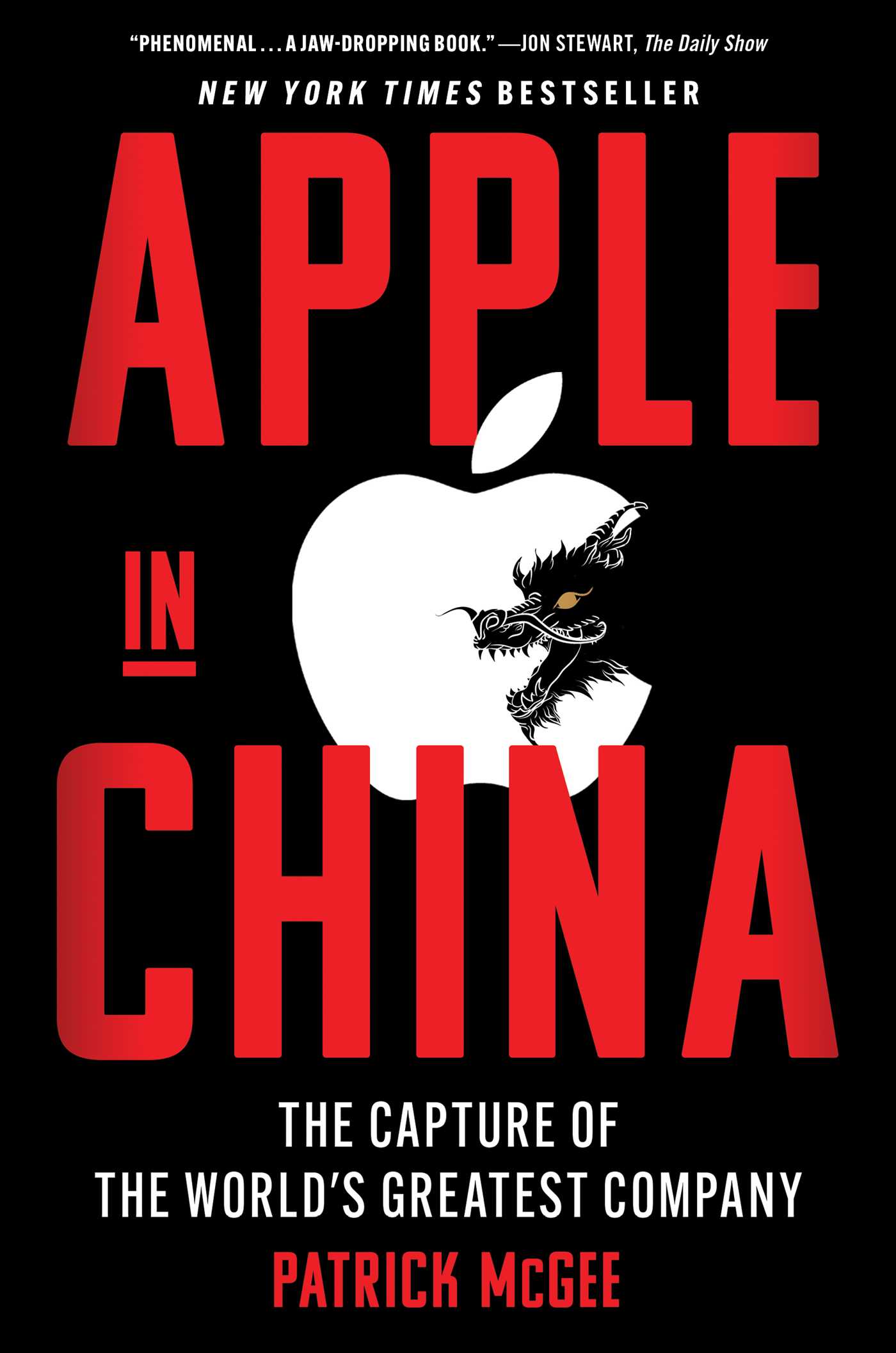
Apple in China
The Capture of the World's Greatest Company
A brisk look at how industry, politics, and global supply chains tangle around a famous company.
Power Lines
Come here for
- tech, trade, and manufacturing in one tight frame
- business history with geopolitical pressure in the mix
Expect
- serious business reporting
- a China-and-tech lens, not gadget lore
Where it sits
How strongly BookFrontier reads the book as belonging to each subject.
Nearest books
Matched by our semantic model. Ordered by what its readers also loved.
 The Thinking MachineStephen Witt59% subject match
 Chip WarChris Miller71% subject matchShares Geopolitics
 AI SuperpowersKai-Fu Lee60% subject match
 This Is How They Tell Me the World EndsNicole Perlroth55% subject match
 Flying BlindPeter Robison56% subject match
 Bad CompanyMegan Greenwell55% subject match
 1929Andrew Ross Sorkin54% subject match
 The Power LawSebastian Mallaby58% subject match
For younger readers: Steve Jobs: Insanely Great, Steve Jobs: The Man Who Thought Different
Start with three books, and this one can be the first.
Members get a new edition every morning: a route out from their books to essays, research and talks, with the reason for each.
Sign upAbout this book
“Phenomenal…a jaw-dropping book.” —Jon Stewart, The Daily Show
Continue reading
Named by The New York Times, The New Yorker, and Prospect magazine as a best book of the year, this “scrupulously reported” (The New Yorker) and “astonishing” (The Daily Telegraph, London) book rivets with its portrayal of how Apple allowed itself to become dependent on China for a huge percentage of its manufacturing, making it vulnerable and unwittingly laying the groundwork for the Asian superpower to rival the US in technological expertise.
After struggling to build products on three continents, Apple turned to China’s seemingly endless supply of cheap labor. It soon deployed thousands of engineers, trained millions of workers, and invested hundreds of billions of dollars to create the most advanced global supply chain. These efforts fueled the iPhone’s dominance—but also laid the foundation for a powerful, state-supported Chinese electronics industry. What began as a business decision evolved into a cautionary tale of global trade, tech rivalry, and national security.
Without intending to, Apple helped Beijing acquire technological influence that could now be weaponized—a central concern in the ongoing US-China tech war. Drawing on over two hundred interviews, Patrick McGee exposes never-before-reported details from Silicon Valley to Shenzhen: internal emails, secretive executive meetings, and overlooked voices inside the company’s China operations.
You’ll meet the “Gang of Eight” executives tasked with appeasing Beijing, a Mormon missionary who launched Apple retail in China, and a veteran whose dreams of improving factory conditions were crushed by both Apple’s demands and Xi Jinping’s authoritarian crackdown. From Foxconn and Tim Cook to the Chinese Communist Party and Taiwan Semiconductor, this is a revelatory look at how Apple, in seeking efficiency, became entangled in the very politics it once claimed to challenge.
For readers of Chip War, American Factory, and The Big Short, Apple in China is a searing examination of corporate power, Chinese nationalism, deglobalization, and the fragile relationship between Silicon Valley and the world’s rising superpower.
Publisher details
Publisher categories
- International Economics
- Tech Industry
- Geopolitics
- Authors
- Patrick McGee
- Publisher
- Scribner
- Published
- May 13, 2025
- Format
- Print & ebook
- Reading lane
- International Economics