
An Introduction to Buddhism
Series: Core Teachings of Dalai Lama
A clear entry point that keeps the tradition legible without sanding off its depth.
Clear Entry Point
Come here for
- clear Buddhist fundamentals
- practical, beginner-friendly orientation
Expect
- accessible, layered pacing
- philosophical and spiritual framing
Where it sits
How strongly BookFrontier reads the book as belonging to each subject.
Nearest books
Matched by our semantic model. Ordered by what its readers also loved. Most of these share its genres: Buddhist Thought and Buddhism - General.
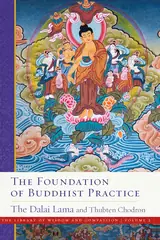 The Foundation of Buddhist PracticeDalai Lama, Thubten Chodron74% subject match
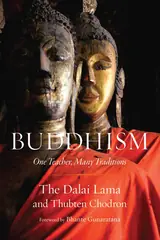 BuddhismDalai Lama, Thubten Chodron71% subject match
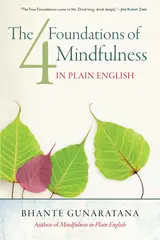 The Four Foundations of Mindfulness in Plain EnglishGunaratana61% subject match
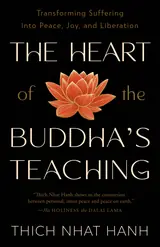 The Heart of the Buddha's TeachingThich Nhat Hanh69% subject match
 The Holy Teaching of VimalakīrtiRobert A. F. Thurman57% subject matchAlso shares Tibetan Buddhism
 What the Buddha TaughtWalpola Rahula65% subject match
 The Art of LivingThich Nhat Hanh58% subject match
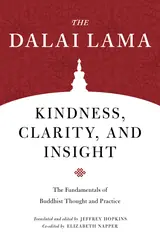 Kindness, Clarity, and InsightH.H. the Fourteenth Dalai Lama, Jeffrey Hopkins80% subject matchAlso shares Tibetan Buddhism
For younger readers: Who Is the Dalai Lama?, His Holiness the Dalai Lama in 100 Anecdotes, Wisdom Stories of Tibet
Start with three books, and this one can be the first.
Members get a new edition every morning: a route out from their books to essays, research and talks, with the reason for each.
Sign upAbout this book
His Holiness the Dalai Lama presents the perfect introduction to traditional Tibetan Buddhist thought and practice, covering the Four Noble Truths and two essential texts.
There is no one more suited to introduce beginners—and remind seasoned practitioners—of the fundamentals of Tibetan Buddhism than His Holiness the Dalai Lama. Speaking to an audience of Western students, the Dalai Lama shows us how to apply basic Buddhist principles to our day-to-day lives.
Continue reading
Starting with the very foundation of Buddhism, the Four Noble Truths, he provides the framework for understanding the Buddha’s first teachings on suffering, happiness, and peace. He follows with commentary on two of Buddhism’s most profound texts: The Eight Verses on Training the Mind and Atisha’s Lamp for the Path to Enlightenment, often referring to the former as one of his main sources of inspiration for the practice of compassion.
With clear, accessible language and the familiar sense of humor that infuses nearly all of his work, the Dalai Lama invites us all to develop innermost awareness, a proper understanding of the nature of reality, and heartfelt compassion for all beings.
This book was previously published under the title Lighting the Way.
Publisher details
Publisher categories
- Buddhist Thought
- Buddhist Practice & Ritual
- Tibetan Buddhism
- Authors
- H.H. the Fourteenth Dalai Lama
- Publisher
- Shambhala
- Published
- July 17, 2018
- Format
- Print & ebook
- Reading lane
- Buddhist Thought