
Scrum’s simplicity can unsettle old habits; case studies show its successes, failures, and lessons in practice.
- Themes
- Scrum and agile methods, Managing complex projects, Software delivery
Practice Over Prescription
Come here for
- Scrum lessons from real-world successes and failures
- Practical thinking about complex, changing software projects
Expect
- Case studies drawn from years of coaching
- A focus on inspecting and refining projects
Where it sits
How strongly BookFrontier reads the book as belonging to each subject.
Nearest books
Matched by our semantic model. Ordered by what its readers also loved. Most of these share its genre: Software Project Management.
 The Art of Agile DevelopmentJames Shore, Shane Warden67% subject match
 Agile TestingLisa Crispin, Janet Gregory58% subject match
 Implementing Lean Software DevelopmentMary Poppendieck, Tom Poppendieck62% subject matchAlso shares Project Management
 Agile Software Development with SCRUMKen Schwaber, Mike Beedle65% subject match
 Extreme Programming ExplainedKent Beck, Cynthia Andres58% subject match
 The Nature of Software DevelopmentRon Jeffries70% subject matchAlso shares Project Management
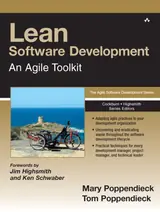 Lean Software DevelopmentMary Poppendieck, Tom Poppendieck65% subject matchAlso shares Project Management
 How Google Tests SoftwareJames A. Whittaker, Jason Arbon56% subject match
Start with three books, and this one can be the first.
Members get a new edition every morning: a route out from their books to essays, research and talks, with the reason for each.
Sign upAbout this book
The rules and practices for Scrum—a simple process for managing complex projects—are few, straightforward, and easy to learn. But Scrum’s simplicity itself—its lack of prescription—can be disarming, and new practitioners often find themselves reverting to old project management habits and tools and yielding lesser results.
Continue reading
In this illuminating series of case studies, Scrum co-creator and evangelist Ken Schwaber identifies the real-world lessons—the successes and failures—culled from his years of experience coaching companies in agile project management. Through them, you’ll understand how to use Scrum to solve complex problems and drive better results—delivering more valuable software faster.
Gain the foundation in Scrum theory—and practice—you need to:
- Rein in even the most complex, unwieldy projects
- Effectively manage unknown or changing product requirements
- Simplify the chain of command with self-managing development teams
- Receive clearer specifications—and feedback—from customers
- Greatly reduce project planning time and required tools
- Build—and release—products in 30-day cycles so clients get deliverables earlier
- Avoid missteps by regularly inspecting, reporting on, and fine-tuning projects
- Support multiple teams working on a large-scale project from many geographic locations
- Maximize return on investment!
Publisher details
Publisher categories
- Software Development
- Authors
- Ken Schwaber
- Publisher
- Pearson Education
- Published
- February 11, 2004
- Format
- Ebook
- Reading lane
- Software Development