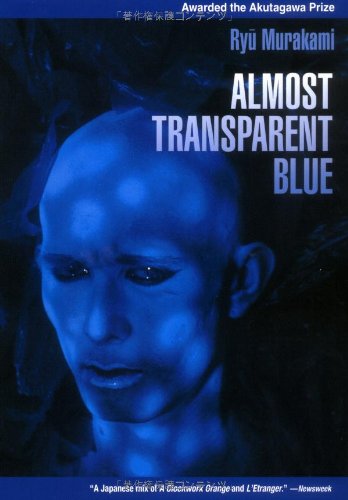
Almost Transparent Blue
Kodansha International · Print & ebook · May 16, 2003
A youth of college age, his older mistress, friends—random friends, they might be called—living near an American military base and experimenting with drugs both hard and soft.
- Themes
- Youth drug use, Alienation and self-destruction, Deteriorating relationships
- Pacing
- Mixed
- Genres
- Japanese Fiction, Literary Fiction, Coming-of-Age
Who it’s for
- Readers interested in youth drug scenes and hallucinatory imagery
- Readers drawn to stories of alienation and self-destructive lives
Nearest books
Matched by what the books are about, then ordered by what their readers also loved. Most of these share its genre: Japanese Fiction.
 The Silent CryKenzaburo Oe56% matchAlso shares Literary Fiction
 GrotesqueNatsuo Kirino60% match
 Rashomon and Other StoriesRyunosuke Akutagawa51% match
 Under the Eye of the Big BirdHiromi Kawakami54% match
 Lost JapanAlex Kerr, Bodhi Fishman60% match
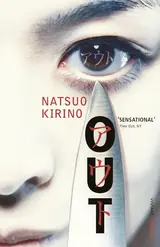 OutNatsuo Kirino, Stephen Snyder59% match
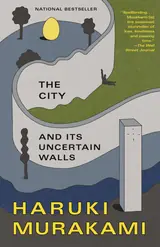 The City and Its Uncertain WallsHaruki Murakami, Philip Gabriel62% match
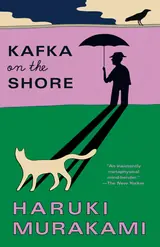 Kafka on the ShoreHaruki Murakami57% match
For younger readers: Pure Sunshine, Go, Orchards
Start with three books, and this one can be the first.
Members get a new edition every morning: a route out from their books to essays, research and talks, with the reason for each.
Join the waitlistAbout this book
A youth of college age, his older mistress, friends—random friends, they might be called—living near an American military base and experimenting with drugs both hard and soft. In rapidly sketched scenes gliding from the everyday real to the hallucinatory, the author has used what he himself calls his "narrative zoom lens." The novel is all but plotless, but the imagery is tellingly vivid, "the literary equivalent of genre painting," according to one critic.
Continue reading
The participants seem caught in their hard-rock scene, sadly unfree, having neither the will nor the energy to break away. And over all there seems to hang the heavy shadow of self-destructiveness, not only in terms of their present situation but with regard to what the future holds for them—and the question is inescapable, for human society as well? In this mirror reflecting the present, personal relations deteriorate, violence of the moment erupts, and communication inches slowly towards nullity. One asks, eventually, if the hallucinations, whatever their source, are so very far from the vague misgivings and hopeful imaginings of the man in the street. The author coolly and unsentimentally distills from this morass a feeling of something pure and unsullied. His technique, with its lack of taboos, of moral condemnation, and of the superfluous, comes very close to the insouciance of cinema verite, in which there is also a touch of surrealism. Representing a sharp and conscious turning away from the introspective trend of postwar Japanese literature, this work polarized critics and public alike and soon attracted international attention, a sign of winds of change, if not specifically of things to come.
Where it sits
| Japanese Fiction | 94% |
|---|---|
| Coming-of-Age | 41% |
| Literary Fiction | 38% |
Percentages are BookFrontier’s reading of the book.
- Authors
- Ryu Murakami
- Publisher
- Kodansha International
- Published
- May 16, 2003
- Format
- Print & ebook
- Theme
- Youth drug use · Alienation and self-destruction · Deteriorating relationships