
Henri Cartier-bresson
Photographer
Prestel Publishing · Print & ebook · August 11, 2020
This book offers an outstanding retrospective collection of the master of 20th-century photography, Henri Cartier-Bresson.
We earn from qualifying purchases.
- Genres
- Photographer Monographs, Photojournalism, Street Photography
- Published
- Prestel Publishing, August 11, 2020
Nearest books
Matched by what the books are about, then ordered by what their readers also loved.
 Richard Misrach on Landscape and MeaningRichard Misrach, Lucas Foglia54% match
 Lucian FreudWilliam Feaver52% match
 DronescapesDronestegram, Ayperi Karabuda Ecer47% match
 Stories From the City of GodPier Paolo Pasolini, Walter Siti47% match
 The Art of PhotographyBruce Barnbaum60% match
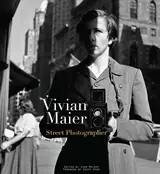 Vivian MaierVivian Maier, John Maloof64% matchShares Photographer Monographs and Street Photography
 There and BackJimmy Chin52% matchShares Photographer Monographs
 IlluminationsWalter Benjamin50% match
For younger readers: Migrant Mother, Phenomenal Moments: Revealing the Hidden Science Around US
Start with three books, and this one can be the first.
Members get a new edition every morning: a route out from their books to essays, research and talks, with the reason for each.
Join the waitlistAbout this book
This book offers an outstanding retrospective collection of the master of 20th-century photography, Henri Cartier-Bresson. Reproduced in exquisite black and white, the images in this book range from Henri Cartier-Bresson's earliest work in France, Spain, and Mexico through his postwar travels in Asia, the US, and Russia, and even include landscapes from the 1970s, when he retired his camera to pursue drawing.
Continue reading
While his instinct for capturing what he called the decisive moment was unparalleled, as a photojournalist Cartier-Bresson was uniquely concerned with the human impact of historic events. In his photographs of the liberation of France from the Nazis, the death of Ghandi, and the creation of the People's Republic of China in 1949, Cartier-Bresson focused on the reactions of the crowds rather than the subjects of the events. And while his portraits of Sartre, Giacometti, Faulkner, Capote, and other artists are iconic, he gave equal attention to those forgotten by history: a dead resistance fighter lying on the bank of the Rhine, children playing alongside the Berlin Wall, and a eunuch in Peking's Imperial Court. Divided into six thematic sections, the book presents the photographs in spare double-page spreads. In a handwritten note included at the end of the book, Cartier-Bresson writes, "In order to give meaning to the world, one must feel involved in what one singles out through the viewfinder." His work shows how he has been able to capture the decisive moment with such extreme humility and profound humanity.
Where it sits
| Photographer Monographs | 92% |
|---|---|
| Photojournalism | 54% |
| Street Photography | 26% |
Percentages are BookFrontier’s reading of the book.
Publisher categories
- Photographer Monographs
- Lifestyle Photography
- Historical Photography
- Authors
- Henri Cartier-Bresson, Yves Bonnefoy
- Publisher
- Prestel Publishing
- Published
- August 11, 2020
- Format
- Print & ebook
- Reading lane
- Photographer Monographs