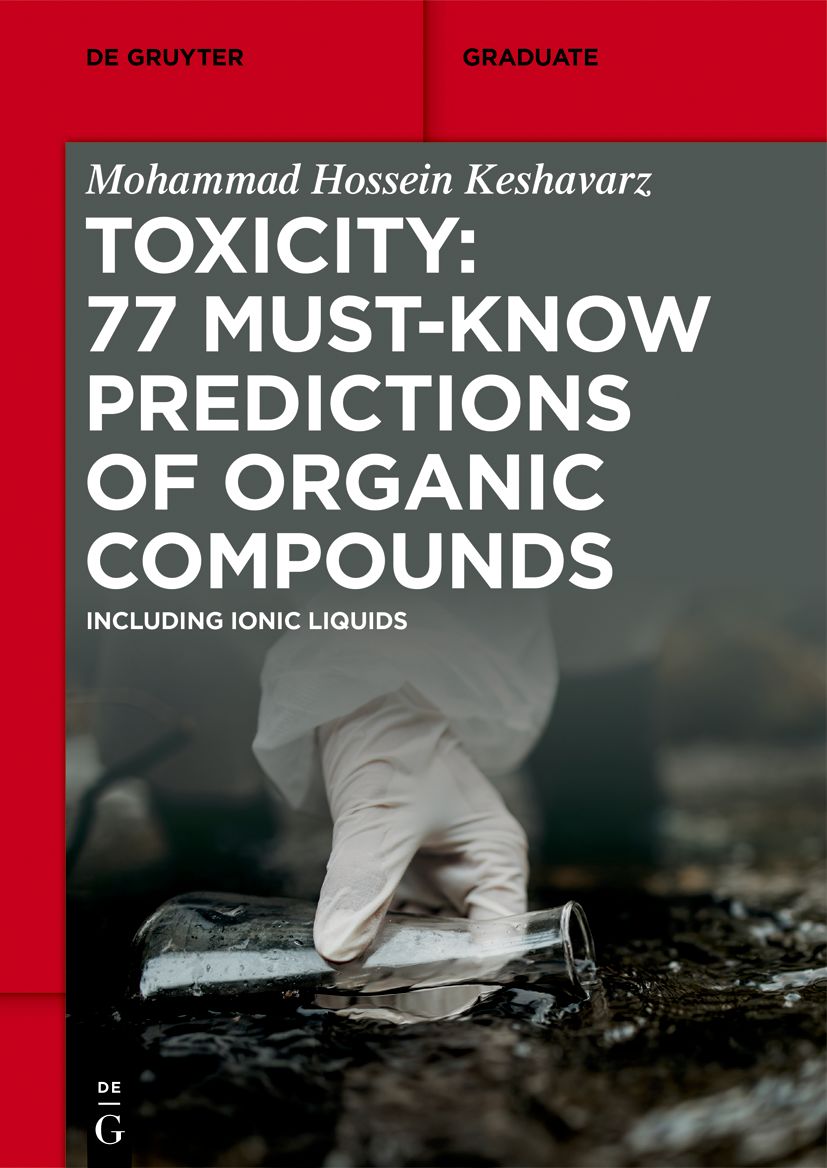
Toxicity: 77 Must-know Predictions of Organic Compounds
Including Ionic Liquids
De Gruyter · Print & ebook · October 4, 2023
Due to the advances of various methods for the prediction of toxicity of organic compounds and ionic liquids (ILs), it is necessary to review these methods for scientists and students.
We earn from qualifying purchases.
- Who it’s for
- Explore QSTR models, toxicity parameters, and comparisons of predictive methods for organic compounds and ionic liquids.
- Genres
- Toxicology, Organic Chemistry, Molecular Modeling
- Published
- De Gruyter, October 4, 2023
Nearest books
Matched by what the books are about, then ordered by what their readers also loved.
 Drug-like PropertiesLi Di, Edward H Kerns56% matchShares Toxicology
 A Practical Guide to Toxicology and Human Health Risk AssessmentLaura Robinson54% match
 Chemometrics and Cheminformatics in Aquatic ToxicologyKunal Roy54% matchShares Toxicology and Molecular Modeling
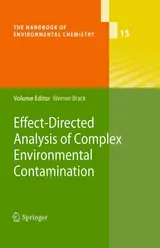 Effect-directed Analysis of Complex Environmental ContaminationWerner Brack53% matchShares Toxicology
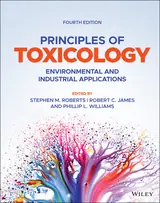 Principles of ToxicologyStephen M. Roberts, Robert C. James52% match
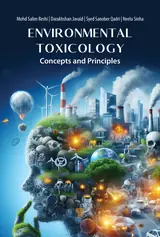 Environmental ToxicologyMohd. Salim Reshi, Darakhshan Javaid52% matchShares Toxicology
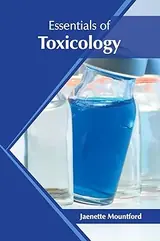 Essentials of ToxicologyJaenette Mountford52% match
 Essentials of ToxicologyBraylon Holden51% match
Start with three books, and this one can be the first.
Members get a new edition every morning: a route out from their books to essays, research and talks, with the reason for each.
Join the waitlistAbout this book
Due to the advances of various methods for the prediction of toxicity of organic compounds and ionic liquids (ILs), it is necessary to review these methods for scientists and students. It is essential to compare the advantages and shortcomings of these methods. Since many organic compounds and ILs are synthesized each year, this book introduces suitable models for the assessment of their toxicities.
Continue reading
This book reviews the best predictive methods for the prediction of toxicity of organic compounds and ILs, which were derived by in vitro or in vivo experiments. Different available quantitative structure‐toxicity relationship (QSTR) models based on various descriptors have been discussed to predict toxicity parameters such as LD50 (50% lethal dose), EC50 (the concentration of the desired IL that produces mortality of 50 percent of the bacterial population) and log(IGC50-1) (logarithm of 50% growth inhibitory concentration of T. pyriformis) of various classes of organic compounds and ILs. The reliability of these methods is compared and discussed. Each chapter contains some complimentary problems with their answers, which can improve the experience of students and researchers. The introduced subjects are suitable for advanced students in chemistry, biochemistry, medicinal chemistry, and chemical engineering.
QSTR Toxicity Models
Explore QSTR models, toxicity parameters, and comparisons of predictive methods for organic compounds and ionic liquids.
Come here for
- QSTR models for predicting toxicity in organic compounds and ionic liquids
- Comparisons of model reliability and shortcomings
Expect
- Coverage of LD₅₀, EC₅₀, and log(IGC₅₀⁻¹)
- Chapter problems with answers
Where it sits
| Toxicology | 100% |
|---|---|
| Organic Chemistry | 36% |
| Molecular Modeling | 28% |
Percentages are BookFrontier’s reading of the book.
Publisher categories
- Analytical Chemistry
- Organic Chemistry
- Physical Chemistry
- Toxicology
Show all 5 publisher categories
- Chemical & Biochemical Engineering
- Authors
- Mohammad Hossein Keshavarz
- Publisher
- De Gruyter
- Published
- October 4, 2023
- Format
- Print & ebook
- Reading lane
- Analytical Chemistry