
Quantum Chemistry
An Introduction
De Gruyter · Print & ebook · September 7, 2021
This textbook introduces the reader to quantum theory and quantum chemistry.
We earn from qualifying purchases.
- Who it’s for
- Move from quantum theory’s experimental foundations to methods for studying real chemical systems.
- Genres
- Physical Chemistry, Atomic & Molecular Physics, Molecular Modeling
- Published
- De Gruyter, September 7, 2021
Nearest books
Matched by what the books are about, then ordered by what their readers also loved. Most of these share its genres: Physical Chemistry and Molecular Modeling.
 Handbook of Computational Quantum ChemistryDavid B. Cook73% matchAlso shares Atomic & Molecular Physics
 Quantum ChemistryDonald A. McQuarrie72% match
 Physical ChemistryDonald A. McQuarrie, John D. Simon68% matchAlso shares Atomic & Molecular Physics
 Quantum ChemistryIra Levine, Ira N. Levine67% match
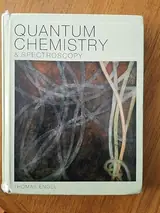 Quantum Chemistry and SpectroscopyThomas Engel66% matchAlso shares Atomic & Molecular Physics
 Quantum ElectrodynamicsRichard Phillips Feynman, Richard P. Feynman63% match
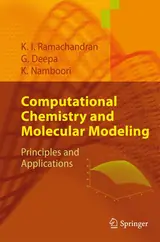 Computational Chemistry and Molecular ModelingK. I. Ramachandran, Gopakumar Deepa63% match
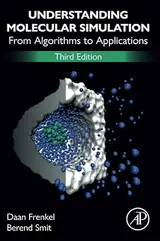 Understanding Molecular SimulationDaan Frenkel, Berend Smit60% matchAlso shares Atomic & Molecular Physics
For younger readers: CHEM MAT & CHG SE, Everything You Need to Ace Chemistry in One Big Fat Notebook, Super Simple Chemistry
Start with three books, and this one can be the first.
Members get a new edition every morning: a route out from their books to essays, research and talks, with the reason for each.
Join the waitlistAbout this book
This textbook introduces the reader to quantum theory and quantum chemistry. The textbook is meant for 2nd – 3rd year bachelor students of chemistry or physics, but also for students of related disciplines like materials science, pharmacy, and bioinformatics. At first, quantum theory is introduced, starting with experimental results that made it inevitable to go beyond classical physics. Subsequently, the Schrödinger equation is discussed in some detail.
Continue reading
Some few examples for which the Schrödinger equation can be solved exactly are treated with special emphasis on relating the results to real systems and interpreting the mathematical results in terms of experimental observations. Ultimately, approximate methods are presented that are used when applying quantum theory in the field of quantum chemistry for the study of real systems like atoms, molecules, and crystals. Both the foundations for the different methods and a broader range of examples of their applications are presented. The textbook assumes no prior knowledge in quantum theory. Moreover, special emphasis is put on interpreting the mathematical results and less on an exact mathematical derivations of those. Finally, each chapter closes with a number of questions and exercises that help in focusing on the main results of the chapter. Many of the exercises include answers.
From Equation to Systems
Move from quantum theory’s experimental foundations to methods for studying real chemical systems.
Come here for
- Quantum theory, the Schrödinger equation, and exactly solvable examples
- Approximate methods applied to atoms, molecules, and crystals
Expect
- Mathematical results interpreted through experimental observations
- Chapter-ending questions and exercises, many with answers
Where it sits
| Physical Chemistry | 90% |
|---|---|
| Atomic & Molecular Physics | 46% |
| Molecular Modeling | 37% |
Percentages are BookFrontier’s reading of the book.
Publisher categories
- Molecular Modeling
- Materials Science
- Nanotech & MEMS
- Authors
- Michael Springborg, Meijuan Zhou
- Publisher
- De Gruyter
- Published
- September 7, 2021
- Format
- Print & ebook
- Reading lane
- Molecular Modeling