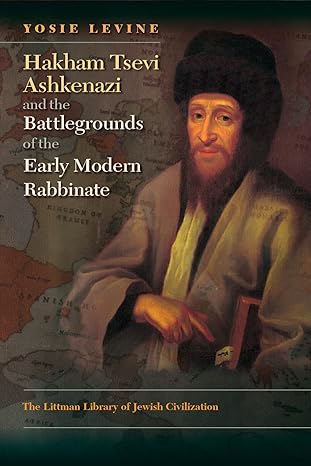
Hakham Tsevi Ashkenazi and the Battlegrounds of the Early Modern Rabbinate
Liverpool University Press · Hardcover · November 19, 2024
With the social and cultural upheavals of early modern Europe, rabbis were constantly struggling to preserve Jewish tradition.
We earn from qualifying purchases.
- Who it’s for
- Explore Hakham Tsevi’s rabbinic battles and their lasting place in halakhic discourse.
- Genres
- Jewish Lives, Jewish History, The Talmud
- Published
- Liverpool University Press, November 19, 2024
Nearest books
Matched by what the books are about, then ordered by what their readers also loved. Most of these share its genre: Jewish History.
 Brothers From AfarEphraim Kanarfogel55% match
 The People and the BooksAdam Kirsch46% match
 Defenders of the FaithJudith Bleich56% match
For younger readers: Tough Questions Jews Ask 2/e, Scorpions Ascent, The Entertainer and the Dybbuk
Start with three books, and this one can be the first.
Members get a new edition every morning: a route out from their books to essays, research and talks, with the reason for each.
Join the waitlistAbout this book
With the social and cultural upheavals of early modern Europe, rabbis were constantly struggling to preserve Jewish tradition. Hakham Tsevi Ashkenazi (1658―1718), the independent-minded chief rabbi of Amsterdam, came to be regarded as one of the leading halakhic authorities of this tumultuous era. The battles he waged changed Jewish practice in his lifetime and came to define rabbinic norms in the decades that followed, with relevance to the present day.
Continue reading
The challenges for a leading rabbi in a time of ferment were many. With advances in communication and the early stirrings of political emancipation in Jewish and secular society, how could one establish halakhic authority? How were rabbis to navigate the new reality in which mystical texts―once the exclusive province of the elite―became accessible to the masses? As geographical boundaries shifted and cultural barriers crumbled, how could one build a bridge between the worlds of Ashkenaz and Sepharad? How were the keepers of tradition meant to respond to the religious laxity that accompanied acculturation? And how could the religious establishment engage sectarians in general, and crypto-Sabbatians in particular? Hakham Tsevi didn’t always win the battles he fought, but his arguments have endured. Products of his fierce independence, some of his responsa have attained near-canonical status., Today’s halakhic discussions of such contemporary issues as brain death and artificial intelligence often begin with the words he committed to posterity. Hundreds of years after his death, Hakham Tsevi and his work remain at the frontier of halakhic discourse. Read more
Hakham Tsevi’s Responsa
Explore Hakham Tsevi’s rabbinic battles and their lasting place in halakhic discourse.
Come here for
- Hakham Tsevi’s arguments on halakhic authority and Jewish practice
- Questions of mysticism, acculturation, and Ashkenaz-Sepharad relations
Expect
- Early modern challenges to rabbinic authority
- His responsa and their continuing relevance
Where it sits
| Jewish History | 51% |
|---|---|
| Jewish Lives | 40% |
| The Talmud | 34% |
Percentages are BookFrontier’s reading of the book.
Publisher categories
- Jewish Lives
- Western European History
- Jewish History
- Orthodox Judaism
- Authors
- Yosie Levine
- Publisher
- Liverpool University Press
- Published
- November 19, 2024
- Format
- Hardcover
- Reading lane
- Jewish Lives