
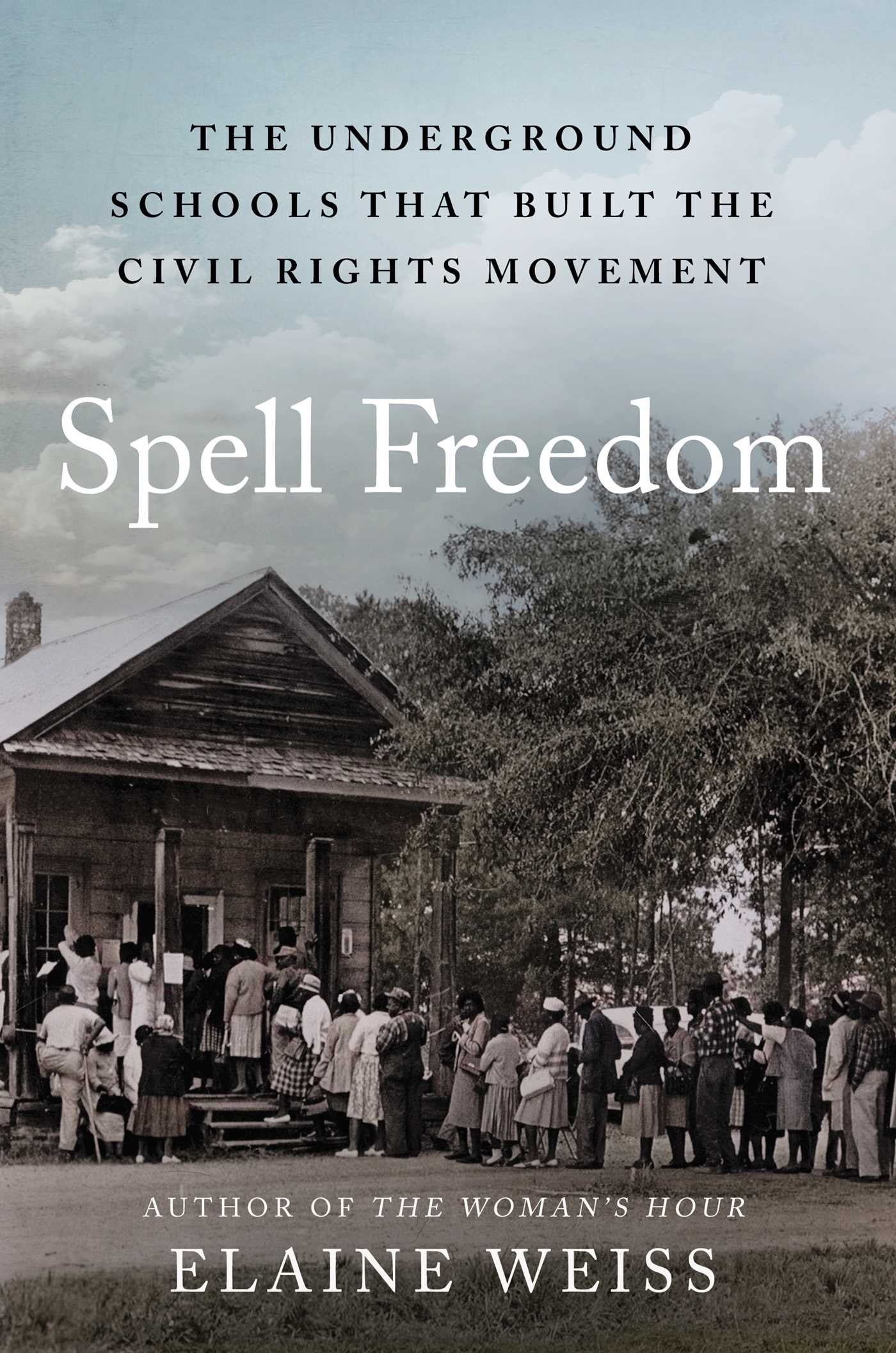
Book
Spell Freedom
The Underground Schools That Built the Civil Rights Movement
Elaine Weiss
Atria/One Signal Publishers · Print & ebook · March 4, 2025
Reading lane: Civil & Human Rights for Teens
The acclaimed author of the “stirring, definitive, and engrossing” (NPR) The Woman’s Hour returns with the story of four activists whose audacious plan to restore voting rights to Black Americans laid the groundwork for the Civil Rights Movement.
At a Glance
Why This Clicks
Rights, Made Teachable
A grounded history of how citizenship schools helped prepare Black southerners to claim the vote.
Come here for
- Grassroots organizing told through the work of four activists
- A close look at literacy tests as tools of disenfranchisement
Expect
- An account spanning 1954 to the Voting Rights Act of 1965
- The schools’ role in nurturing a generation of activists
Book Details
- Authors
- Elaine Weiss
- Publisher
- Atria/One Signal Publishers
- Published
- March 4, 2025
- Format
- Print & ebook
- Theme
- Civil & Human Rights for Teens · 20th Century America for Teens
- Reading lane
- Civil & Human Rights for Teens
Affinity
Publisher Categories
20th-Century America
Civil Rights
Race & Ethnic Relations
About This Book
The acclaimed author of the “stirring, definitive, and engrossing” (NPR) The Woman’s Hour returns with the story of four activists whose audacious plan to restore voting rights to Black Americans laid the groundwork for the Civil Rights Movement. In the summer of 1954, educator Septima Clark and small businessman Esau Jenkins travelled to rural Tennessee’s Highlander Folk School, an interracial training center for social change founded by Myles Horton, a white southerner wit...
Read full description
Similar Books

Freedom Summer for Young People
Bruce Watson · Seven Stories Press
Affinity signal
20th Century America for Teens
Civil & Human Rights for Teens

Stolen Justice: the Struggle for African American Voting Rights (scholastic Focus)
Lawrence Goldstone · Scholastic Inc.
Affinity signal
Civil & Human Rights for Teens
African American U.S. History for Teens

Turning 15 on the Road to Freedom
Lynda Blackmon Lowery · Penguin Young Readers Group
Affinity signal
African American U.S. History for Teens
Prejudice & Racism for Teens

The Woman's Hour
Elaine Weiss, Elaine F. Weiss · Penguin Publishing Group
Affinity signal
Women's Lives
20th-Century America
Stride Toward Freedom
Dr. Martin Luther King, Jr. · Beacon Press
Affinity signal
Black & African American Lives
African American U.S. History for Teens
At the Dark End of the Street
Danielle L. McGuire · Knopf Doubleday Publishing Group
Affinity signal
Prejudice & Racism for Teens
Black & African American Lives