

Book
Car Guys Vs. Bean Counters
The Battle for the Soul of American Business
Bob Lutz
Penguin Publishing Group · Print & ebook · May 28, 2013
Reading lane: Business Lives
Car Guys Vs.
At a Glance
Who It's For
Book Details
- Authors
- Bob Lutz
- Publisher
- Penguin Publishing Group
- Published
- May 28, 2013
- Format
- Print & ebook
- Theme
- Business Lives · Macroeconomics
- Reading lane
- Business Lives
Affinity
- 100%
- 100%
- 100%
Publisher Categories
Business Lives
Macroeconomics
Management
About This Book
“One of the most acute books about management and how companies work in practice that I have read in a long time. If anyone wants to know exactly how the U.S. auto industry got into trouble, here is your guide.” —John Gapper, FINANCIAL TIMES When Bob Lutz got into the auto business in the early 1960s, CEOs knew that if you captured the public’s imagination with innovative car design and top-quality craftsmanship, the money would follow. The “car guys” held sway, and GM do...
Read full description
Similar Books

Driven
David Kiley · Wiley
Affinity signal
Advertising & Promotion

Everybody Matters
Bob Chapman, Raj Sisodia · Penguin Publishing Group
Affinity signal
Business Ethics
Leadership

Crash Course
Paul Ingrassia · Random House Publishing Group
Affinity signal
Automobile Industry
How Transportation Works

American Drive
Richard E. Dauch, Hank H. Cox · St. Martin's Press
Affinity signal
Automobile Industry
Manufacturing Industry

Auto Biography
Earl Swift · HarperCollins
Affinity signal
Automobile Industry
Automotive History

American Icon
Bryce G. Hoffman · Crown
Affinity signal
Automobile Industry
How Transportation Works

American Wheels, Chinese Roads
Michael J. Dunne · Wiley
Affinity signal
Automobile Industry
How Transportation Works
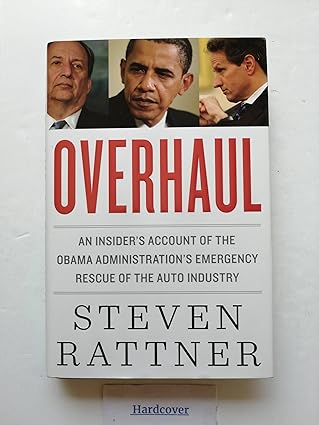
Overhaul
Steven Rattner, Peter Petre · Houghton Mifflin Harcourt
Affinity signal
Automobile Industry
How Transportation Works