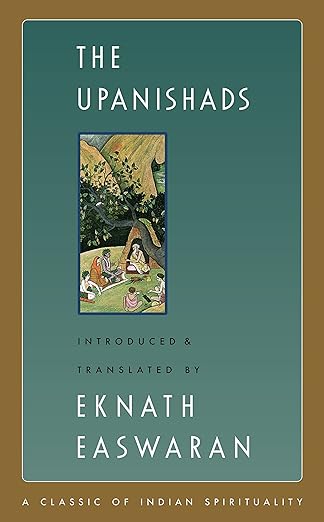
The Upanishads
Nilgiri Press · Paperback · September 7, 2007
Easwaran’s best-selling translation of the ancient wisdom texts called the Upanishads is reliable, readable, and profound.
We earn from qualifying purchases.
- Who it’s for
- A spare entry point into Upanishadic thought for study, reflection, and teaching.
- Genres
- Hindu Sacred Writings, Hindu Thought, Mysticism
- Published
- Nilgiri Press, September 7, 2007
Nearest books
Matched by what the books are about, then ordered by what their readers also loved. Most of these share its genre: Hindu Sacred Writings.
 MeditationsMarcus Aurelius, Robin Waterfield46% match
 The Yoga Sutras of PatanjaliPatañjali55% matchAlso shares Hindu Thought
 The RamayanaRamesh Menon53% match
For younger readers: You Are the Universe
Start with three books, and this one can be the first.
Members get a new edition every morning: a route out from their books to essays, research and talks, with the reason for each.
Join the waitlistAbout this book
Easwaran’s best-selling translation of the ancient wisdom texts called the Upanishads is reliable, readable, and profound. In the Upanishads, illumined sages share flashes of insight, the results of their investigation into consciousness itself. In extraordinary visions, they experience directly a transcendent Reality which is the essence, or Self, of each created being.
Continue reading
They teach that each of us, each Self, is eternal, deathless, one with the power that created the universe. Easwaran’s best-selling translation of selections taken from the principal Upanishads and five others is reliable and accessible. It includes an overview of the cultural and historical setting, with chapter introductions, notes, and a Sanskrit glossary. But it is Easwaran’s understanding of the wisdom of the Upanishads, and their relevance to the modern reader, that makes this edition truly outstanding. Each sage, each Upanishad, appeals in different ways to the reader’s head and heart. As Easwaran writes, “The Upanishads belong not just to Hinduism. They are India’s most precious legacy to humanity, and in that spirit they are offered here.”
Quiet Study
A spare entry point into Upanishadic thought for study, reflection, and teaching.
Come here for
- classroom-ready sacred texts
- contemplative spiritual study
Expect
- philosophy in English
- guide-like, reflective pacing
Where it sits
| Hindu Sacred Writings | 93% |
|---|---|
| Hindu Thought | 56% |
| Mysticism | 27% |
Percentages are BookFrontier’s reading of the book.
Publisher categories
- Eastern Philosophy
- Hindu Sacred Writings
- Spirituality
- Authors
- Eknath Easwaran, Anonymous
- Publisher
- Nilgiri Press
- Published
- September 7, 2007
- Format
- Paperback
- Reading lane
- Eastern Philosophy