
Ontario Boys
Masculinity and the Idea of Boyhood in Postwar Ontario, 1945--1960
Wilfrid Laurier University Press · Print & ebook · February 4, 2014
We earn from qualifying purchases.
- Who it’s for
- A study of how postwar Ontario linked ideals of boyhood to citizenship and national survival.
- Genres
- Post-Confederation Canada, Gender Studies, Social History
- Published
- Wilfrid Laurier University Press, February 4, 2014
Nearest books
Matched by what the books are about, then ordered by what their readers also loved.
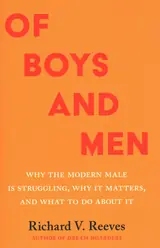 Of Boys and MenRichard V. Reeves58% matchShares Gender Studies
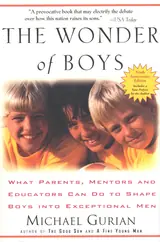 The Wonder of BoysMichael Gurian56% match
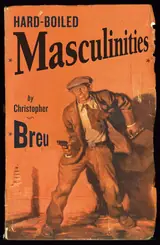 Hard-boiled MasculinitiesChristopher Breu53% matchShares Gender Studies
 HeRobert A. Johnson53% match
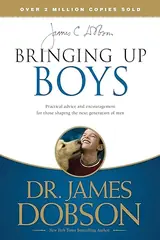 Bringing Up BoysJames C. Dobson53% match
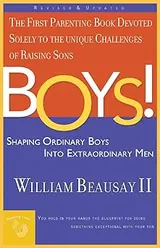 Boys!William Beausay52% match
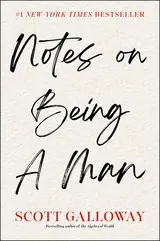 Notes on Being a ManScott Galloway51% match
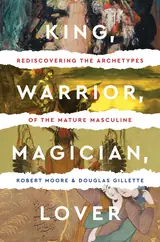 King, Warrior, Magician, LoverRobert Moore, Doug Gillette51% match
For younger readers: Puberty Boy, What's Going on Down There?, Boys Will Be Human
Start with three books, and this one can be the first.
Members get a new edition every morning: a route out from their books to essays, research and talks, with the reason for each.
Join the waitlistAbout this book
Ontario Boys explores the preoccupation with boyhood in Ontario during the immediate postwar period, 1945–1960.
Continue reading
It argues that a traditional version of boyhood was being rejuvenated in response to a population fraught with uncertainty, and suffering from insecurity, instability, and gender anxiety brought on by depression-era and wartime disruptions in marital, familial, and labour relations, as well as mass migration, rapid postwar economic changes, the emergence of the Cold War, and the looming threat of atomic annihilation. In this sociopolitical and cultural context, concerned adults began to cast the fate of the postwar world onto children, in particular boys. In the decade and a half immediately following World War II, the version of boyhood that became the ideal was one that stressed selflessness, togetherness, honesty, fearlessness, frank determination, and emotional toughness. It was thought that investing boys with this version of masculinity was essential if they were to grow into the kind of citizens capable of governing, protecting, and defending the nation, and, of course, maintaining and regulating the social order. Drawing on a wide variety of sources, Ontario Boys demonstrates that, although girls were expected and encouraged to internalize a “special kind” of citizenship, as caregivers and educators of children and nurturers of men, the gendered content and language employed indicated that active public citizenship and democracy was intended for boys. An “appropriate” boyhood in the postwar period became, if nothing else, a metaphor for the survival of the nation.
Postwar Boyhood
A study of how postwar Ontario linked ideals of boyhood to citizenship and national survival.
Come here for
- Postwar ideals of boyhood, masculinity, and citizenship in Ontario
- How national uncertainty shaped expectations of boys
Expect
- Coverage of 1945–1960
- Attention to girls’ expected roles as caregivers and educators
Where it sits
| Gender Studies | 50% |
|---|---|
| Post-Confederation Canada | 49% |
| Social History | 32% |
Percentages are BookFrontier’s reading of the book.
Publisher categories
- History of Education
- Post-Confederation Canada
- Social History
- Authors
- Christopher J. Greig
- Publisher
- Wilfrid Laurier University Press
- Published
- February 4, 2014
- Format
- Print & ebook
- Reading lane
- History of Education