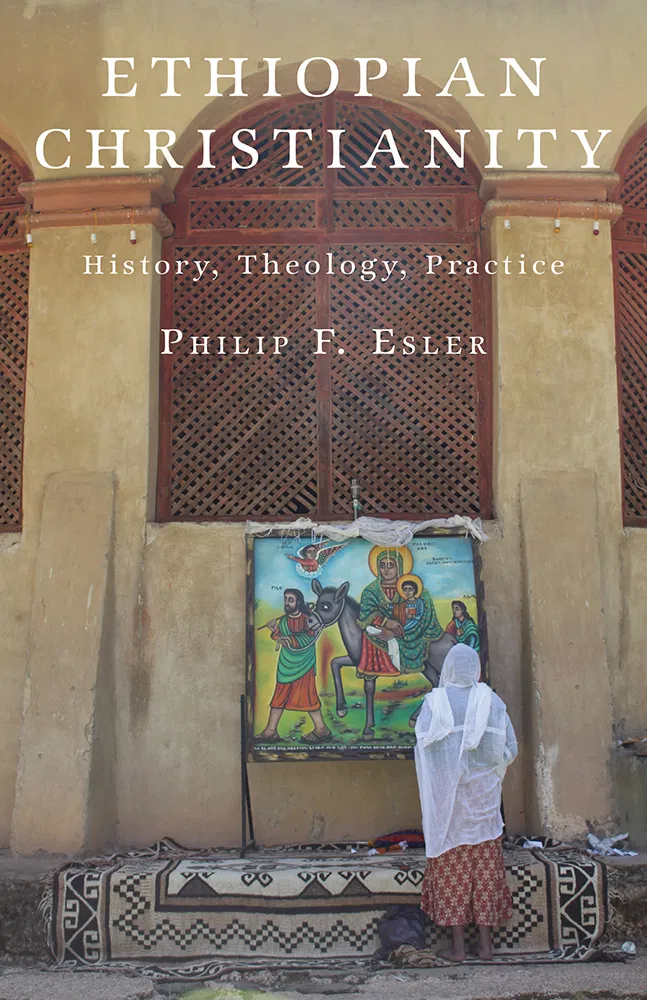
Ethiopian Christianity
History, Theology, Practice
Baylor University Press · Print & ebook · November 1, 2021
In Ethiopian Christianity Philip Esler presents a rich and comprehensive history of Christianity?s flourishing.
We earn from qualifying purchases.
- Who it’s for
- A history of Ethiopian Christianity in its political, cultural, and religious contexts.
- Genres
- Christian History, Orthodox Christianity, East African History
- Published
- Baylor University Press, November 1, 2021
Nearest books
Matched by what the books are about, then ordered by what their readers also loved.
 Ethiopia - Culture Smart!Culture Smart!, Sarah Howard MS58% matchShares East African History
 Early North African ChristianityDavid L. Eastman56% match
 The Lost History of ChristianityPhilip Jenkins56% matchShares Christian History
For younger readers: God’s Timeline, Who Was Jesus?
Start with three books, and this one can be the first.
Members get a new edition every morning: a route out from their books to essays, research and talks, with the reason for each.
Join the waitlistAbout this book
In Ethiopian Christianity Philip Esler presents a rich and comprehensive history of Christianity?s flourishing. But Esler is ever careful to situate this growth in the context of Ethiopia?s politics and culture. In so doing, he highlights the remarkable uniqueness of Christianity in Ethiopia. Ethiopian Christianity begins with ancient accounts of Christianity?s introduction to Ethiopia by St. Frumentius and King Ezana in the early 300s CE.
Continue reading
Esler traces how the church and the monarchy closely coexisted, a reality that persisted until the death of Haile Selassie in 1974. This relationship allowed the emperor to consider himself the protector of Orthodox Christianity. The emperor's position, combined with Ethiopia?s geographical isolation, fostered a distinct form of Christianity--one that features the inextricable intertwining of the ordinary with the sacred and rejects the two-nature Christology established at the Council of Chalcedon. In addition to his historical narrative, Esler also explores the cultural traditions of Ethiopian Orthodoxy by detailing its intellectual and literary practices, theology, and creativity in art, architecture, and music. He provides profiles of the flourishing Protestant denominations and Roman Catholicism. He also considers current challenges that Ethiopian Christianity faces--especially Orthodoxy?s relations with other religions within the country, in particular Islam and the Protestant and Roman Catholic churches. Esler concludes with thoughtful reflections on the long-standing presence of Christianity in Ethiopia and hopeful considerations for its future in the country?s rapidly changing politics, ultimately revealing a singular form of faith found nowhere else.
Faith and Monarchy
A history of Ethiopian Christianity in its political, cultural, and religious contexts.
Come here for
- The church’s close relationship with the monarchy, through Haile Selassie’s death in 1974
- Ethiopian Orthodox theology, literature, art, architecture, and music
Expect
- Profiles of Protestant denominations and Roman Catholicism
- Discussion of relations with Islam and other Christian churches
Where it sits
| Orthodox Christianity | 57% |
|---|---|
| Christian History | 44% |
| East African History | 31% |
Percentages are BookFrontier’s reading of the book.
Publisher categories
- East African History
- Christian History
- Orthodox Christianity
- Authors
- Philip F. Esler
- Publisher
- Baylor University Press
- Published
- November 1, 2021
- Format
- Print & ebook
- Reading lane
- East African History