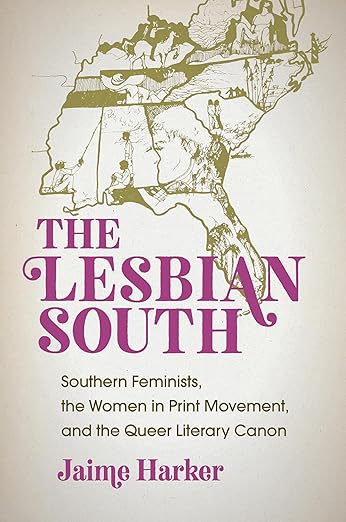
The Lesbian South
Southern Feminists, the Women in Print Movement, and the Queer Literary Canon
The University of North Carolina Press · Print & ebook · October 15, 2018
In this book, Jaime Harker uncovers a largely forgotten literary renaissance in southern letters.
We earn from qualifying purchases.
- Genres
- Queer Literary Criticism, Lesbian Studies, Regional American Literature
- Published
- The University of North Carolina Press, October 15, 2018
Nearest books
Matched by what the books are about, then ordered by what their readers also loved.
 A Woman Like ThatVarious, Joan Larkin55% matchShares Lesbian Studies
 The Book of Awesome Women Writers: Medieval Mystics, Pioneering Poets, Fierce Feminists and First Ladies of LiteratureBecca Anderson54% match
 The Black Feminist ReaderJoy James, T. Denean Sharpley-Whiting54% match
 Queer EnlightenmentsDr. Anthony Delaney, Anthony Delaney54% match
 Queer StudiesBrett Beemyn, Michele Eliason54% match
 Critical Race TheoryKimberle Crenshaw, Neil Gotanda53% match
For younger readers: Blue Thread, Wonderful Women of the World, Juliet Takes a Breath
Start with three books, and this one can be the first.
Members get a new edition every morning: a route out from their books to essays, research and talks, with the reason for each.
Join the waitlistAbout this book
In this book, Jaime Harker uncovers a largely forgotten literary renaissance in southern letters. Anchored by a constellation of southern women, the Women in Print movement grew from the queer union of women’s liberation, civil rights activism, gay liberation, and print culture. Broadly influential from the 1970s through the 1990s, the Women in Print movement created a network of writers, publishers, bookstores, and readers that fostered a remarkable array of literature.
Continue reading
With the freedom that the Women in Print movement inspired, southern lesbian feminists remade southernness as a site of intersectional radicalism, transgressive sexuality, and liberatory space. Including in her study well-known authors—like Dorothy Allison and Alice Walker—as well as overlooked writers, publishers, and editors, Harker reconfigures the southern literary canon and the feminist canon, challenging histories of feminism and queer studies to include the south in a formative role.
Where it sits
| Queer Literary Criticism | 56% |
|---|---|
| Regional American Literature | 46% |
| Lesbian Studies | 39% |
Percentages are BookFrontier’s reading of the book.
Publisher categories
- Feminist Lit Crit
- Queer Literary Criticism
- Authors
- Jaime Harker
- Publisher
- The University of North Carolina Press
- Published
- October 15, 2018
- Format
- Print & ebook
- Reading lane
- Feminist Lit Crit