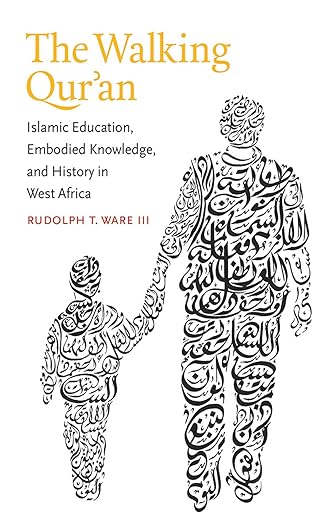
The Walking Qur'an
Islamic Education, Embodied Knowledge, and History in West Africa
The University of North Carolina Press · Print & ebook · June 16, 2014
Spanning a thousand years of history — and bringing the story to the present through ethnographic fieldwork in Senegal, Gambia, and Mauritania — Rudolph Ware documents the profound significance of Qur'an schools for West African Muslim communities.
We earn from qualifying purchases.
- Genres
- Islamic History, West African History, The Koran & Commentary
- Published
- The University of North Carolina Press, June 16, 2014
Nearest books
Matched by what the books are about, then ordered by what their readers also loved.
 Hidden Origins of IslamKarl-Heinz Ohlig, Gerd- R. Puin61% matchShares Islamic History and The Koran & Commentary
 Sectarian MilieuJohn E. Wansbrough, John Wansbrough58% matchShares Islamic History
 Aspects of IslamRon Geaves, Ronald Geaves57% match
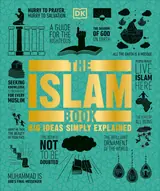 The Islam BookDK, D.K. Publishing54% matchShares The Koran & Commentary
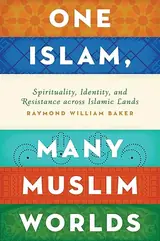 One Islam, Many Muslim WorldsRaymond William Baker54% match
For younger readers: The Genius of Islam, The Royal Kingdoms of Ghana, Mali, and Songhay, No God But God: the Origins and Evolution of Islam
Start with three books, and this one can be the first.
Members get a new edition every morning: a route out from their books to essays, research and talks, with the reason for each.
Join the waitlistAbout this book
Spanning a thousand years of history — and bringing the story to the present through ethnographic fieldwork in Senegal, Gambia, and Mauritania — Rudolph Ware documents the profound significance of Qur'an schools for West African Muslim communities. Such schools peacefully brought Islam to much of the region, becoming striking symbols of Muslim identity.
Continue reading
Ware shows how in Senegambia the schools became powerful channels for African resistance during the eras of the slave trade and colonization. While illuminating the past, Ware also makes signal contributions to understanding contemporary Islam by demonstrating how the schools' epistemology of embodiment gives expression to classical Islamic frameworks of learning and knowledge. Today, many Muslims and non-Muslims find West African methods of Qur'an schooling puzzling and controversial. In fascinating detail, Ware introduces these practices from the viewpoint of the practitioners, explicating their emphasis on educating the whole human being as if to remake it as a living replica of the Qur'an. From this perspective, the transference of knowledge in core texts and rituals is literally embodied in people, helping shape them — like the Prophet of Islam — into vital bearers of the word of God.
Where it sits
| West African History | 75% |
|---|---|
| Islamic History | 56% |
| The Koran & Commentary | 36% |
Percentages are BookFrontier’s reading of the book.
Publisher categories
- West African History
- The Koran & Commentary
- Authors
- Rudolph T. Ware III, Rudolph T. Ware
- Publisher
- The University of North Carolina Press
- Published
- June 16, 2014
- Format
- Print & ebook
- Reading lane
- West African History