
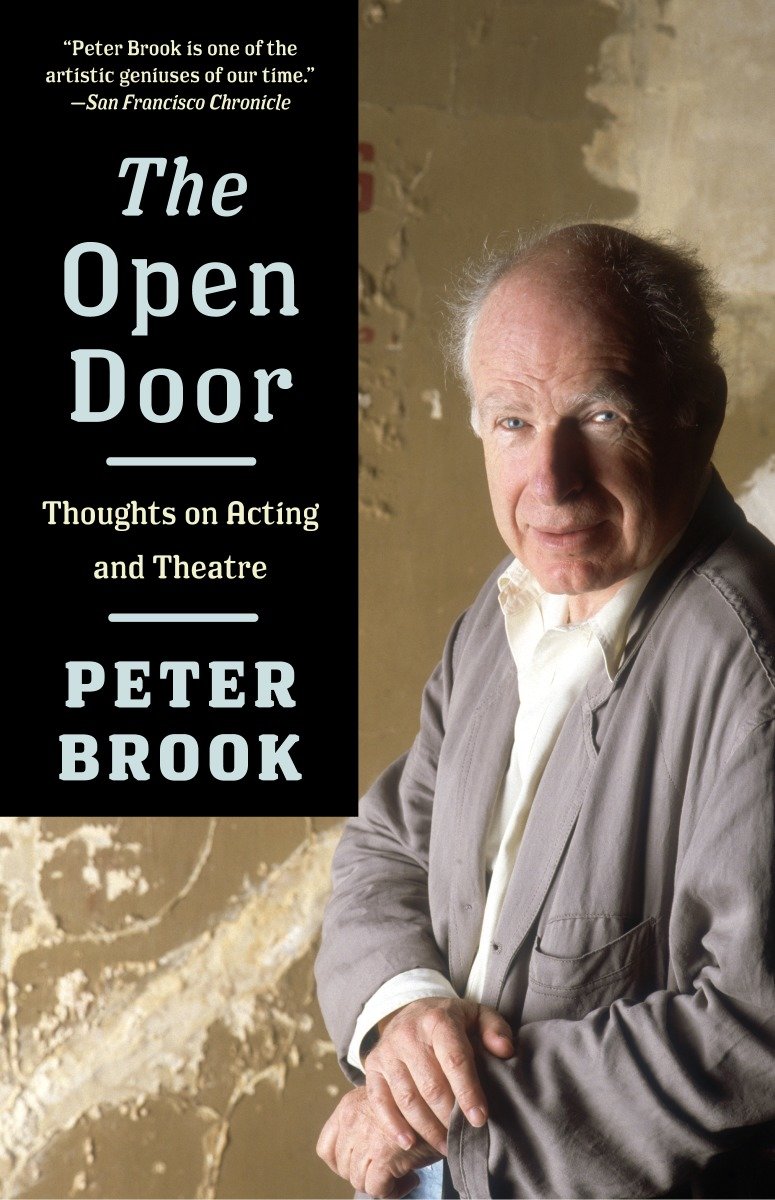
Book
The Open Door
Thoughts on Acting and Theatre
Peter Brook
Knopf Doubleday Publishing Group · Print & ebook · January 4, 2005
Reading lane: Theater Production & Direction
From King Lear to the Tragedy of Carmen , from Marat/Sade to the epic Mahabharata , Peter Brook has reinvented modern theatre, not once but again and again.
At a Glance
Why This Clicks
Theatre’s Paradoxes
Peter Brook explores theatre’s paradoxes through lucid reflections and anecdotes from a long directing career.
Come here for
- The tension between painstaking preparation and letting go
- Ideas about what theatre can make possible
Expect
- Anecdotes spanning Shakespeare, Chekhov, and theatres of India and Iran
- A view of the stage and the work behind it
Book Details
- Authors
- Peter Brook
- Publisher
- Knopf Doubleday Publishing Group
- Published
- January 4, 2005
- Format
- Print & ebook
- Theme
- Theater Production & Direction · Theater History & Criticism
- Reading lane
- Theater Production & Direction
Affinity
Publisher Categories
Theater
Theater Production & Direction
Director Studies
About This Book
From King Lear to the Tragedy of Carmen , from Marat/Sade to the epic Mahabharata , Peter Brook has reinvented modern theatre, not once but again and again. In The Open Door the visionary director and theorist offers a lucid, comprehensive exposition of the philosophy that underlies his work. It is a philosophy of paradoxes: We come to the theatre to find life, but that life must be different from the life we find outside. Actors have to prepare painstakingly yet be willing...
Read full description
Similar Books

Playwrights on Playwriting
Toby Cole · Lyons
Affinity signal
Playwriting
Theater History & Criticism

The Theater of War
Bryan Doerries · Knopf Doubleday Publishing Group
Affinity signal
Playwriting
Theater History & Criticism

Playing Shakespeare
John Barton · Knopf Doubleday Publishing Group
Affinity signal
Theater History & Criticism
Playwriting

Thinking Like a Director
Michael Bloom · Farrar Straus & Giroux
Affinity signal
Theater Production & Direction
Stagecraft

Writing
Robert Emmet Long · Continuum: 33 1/3
Affinity signal
Theater Production & Direction
Theater History & Criticism

Brecht on Theatre
Bertolt Brecht, Steve Giles · Farrar Straus & Giroux
Affinity signal
Theater History & Criticism
Playwriting
On Broadway
Drew Hodges · Rizzoli
Affinity signal
Theater Production & Direction
Theater History & Criticism

Producing and the Theatre Business
Robert Emmet Long · Continuum: 33 1/3
Affinity signal
Theater Production & Direction
Stagecraft