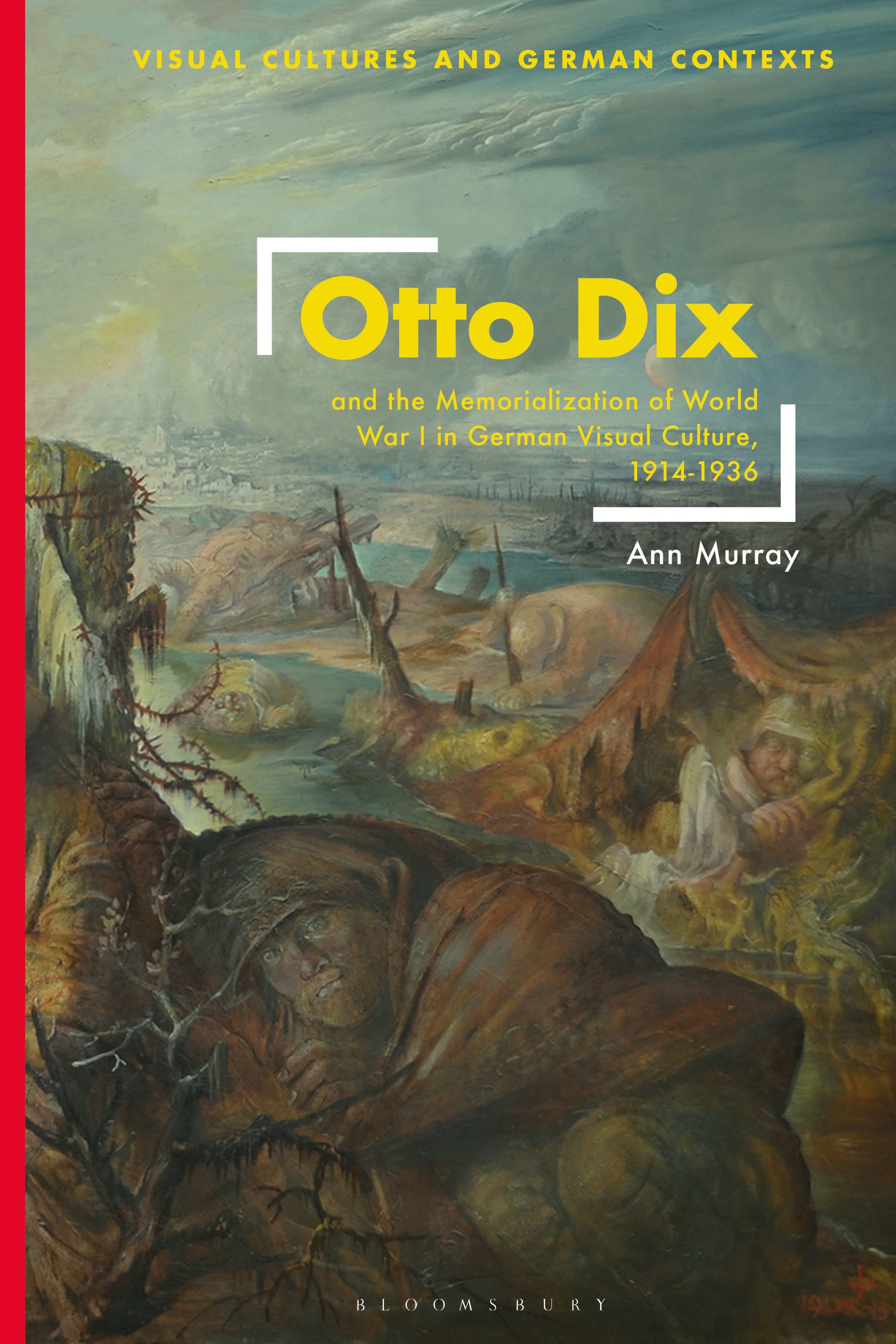
Otto Dix and the Memorialization of World War I in German Visual Culture, 1914-1936
Kindle Edition
Bloomsbury Visual Arts · Ebook · September 4, 2025
The harsh realities of wartime and Weimar-era Germany called for a new kind of art.Dada, followed by Neue Sachlichkeit (New Objectivity), confronted social and political issues in new and bold ways.
We earn from qualifying purchases.
- Who it’s for
- Ann Murray examines how Otto Dix’s war pictures worked as modernist art and war commemoration.
- Genres
- Artist Monographs, World War I History, Modern Art History (to 1945)
- Published
- Bloomsbury Visual Arts, September 4, 2025
Nearest books
Matched by what the books are about, then ordered by what their readers also loved.
 World War IIDK, Richard Holmes61% match
 World War IDK, D.K. Publishing60% matchShares World War I History
 On the Natural History of DestructionW.G. Sebald, Anthea Bell60% match
 Gerhard RichterBenjamin H. D. Buchloh58% matchShares Artist Monographs
 A Higher Form of KillingDiana Preston58% matchShares World War I History
 Path to BlitzkriegRobert M. Citino56% match
For younger readers: World War One: 1914-1918, World War Two: Under the Shadow of the Swastika, The Great War
Start with three books, and this one can be the first.
Members get a new edition every morning: a route out from their books to essays, research and talks, with the reason for each.
Join the waitlistAbout this book
The harsh realities of wartime and Weimar-era Germany called for a new kind of art.Dada, followed by Neue Sachlichkeit (New Objectivity), confronted social and political issues in new and bold ways. This book highlights how Otto Dix (1891-1969) - one of the leading artists connected to these artistic movements - employed these new approaches to reveal the injustices of wartime and post-World War I Germany.
Continue reading
Having spent 38 months on the frontline, his pictures revealed the brutalities of the conflict and helped establish him as one of Europe's leading modernists. Offering substantial new research and presenting numerous primary sources to an English readership for the first time, the book examines Dix's war pictures within the broader visual culture of war in order to assess how they functioned alternatively as cutting-edge modernist art and transgressive war commemoration. Each chapter provides a case study of the first public display of one or more of Dix's war pictures at key exhibitions and explores how their reception was subjected to changing socio-political and cultural conditions as well as divergent attitudes to the lost war. It pulls together a number of key approaches and texts: contemporary reviews, contemporary cultural productions (such as novels and cartoons), and theoretical and historical approaches from history, memory studies and art history. Bringing a unique perspective and original scholarship to Dix's war works, this book is essential reading for art historians of World War I and the visual culture of Weimar Germany.
Dix’s War Pictures
Ann Murray examines how Otto Dix’s war pictures worked as modernist art and war commemoration.
Come here for
- Dix’s war pictures in the visual culture of wartime and Weimar Germany
- Case studies of the pictures’ first public exhibitions
Expect
- Contemporary reviews, novels, cartoons, and historical and theoretical approaches
- Changing responses shaped by social, political, and cultural conditions
Where it sits
| World War I History | 74% |
|---|---|
| Artist Monographs | 53% |
| Modern Art History (to 1945) | 28% |
Percentages are BookFrontier’s reading of the book.
Publisher categories
- Art
- Authors
- Ann Murray, Deborah Ascher Barnstone, Thomas O. Haakenson
- Publisher
- Bloomsbury Visual Arts
- Published
- September 4, 2025
- Format
- Ebook
- Reading lane
- Art