
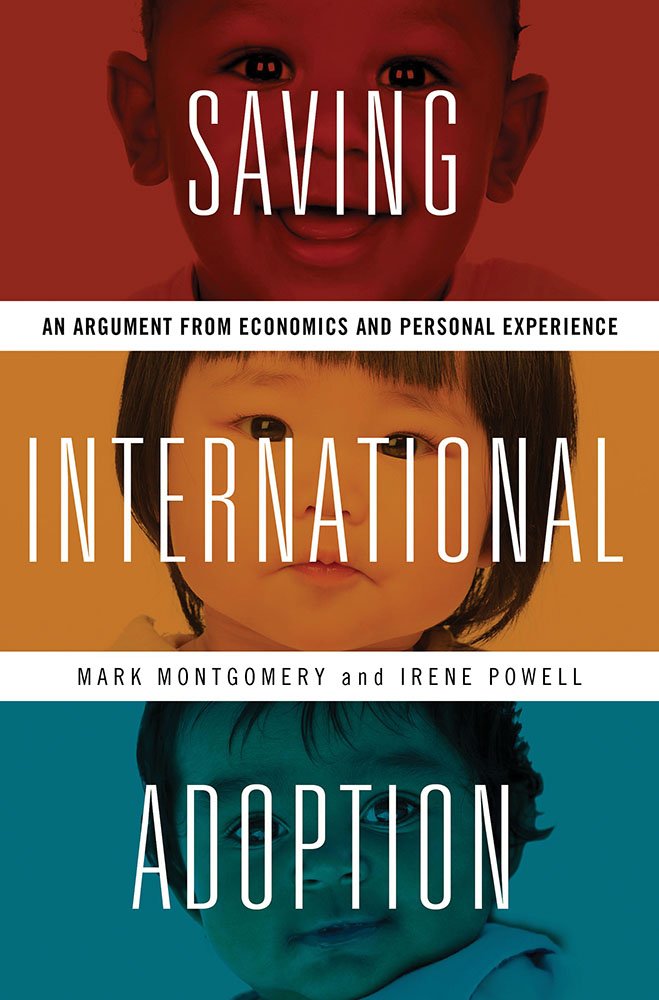
Book
Saving International Adoption
An Argument From Economics and Personal Experience
Mark Montgomery, Irene Powell
Vanderbilt University Press · Print & ebook · January 30, 2018
Reading lane: Marriage & Family
Choice Outstanding Academic Title of 2018 International adoption is in a state of virtual collapse, rates having fallen by more than half since 2004 and continuing to fall.
At a Glance
Who It's For
Book Details
- Authors
- Mark Montgomery, Irene Powell
- Publisher
- Vanderbilt University Press
- Published
- January 30, 2018
- Format
- Print & ebook
- Theme
- Marriage & Family · Human Rights
- Reading lane
- Marriage & Family
Affinity
Publisher Categories
Economics
Adoption & Fostering
Child & Custody Law
About This Book
Choice Outstanding Academic Title of 2018 International adoption is in a state of virtual collapse, rates having fallen by more than half since 2004 and continuing to fall. Yet around the world millions of orphaned and vulnerable children need permanent homes, and thousands of American and European families are eager to take them in. Many government officials, international bureaucrats, and social commentators claim these adoptions are not "in the best interests" of the chil...
Read full description
Similar Books

"you Should Be Grateful"
Angela Tucker · Beacon Press
Affinity signal
Adoption
Adoption Stories

The Choice
Robert Whitlow · Thomas Nelson
Affinity signal
Contemporary Christian Fiction
YA Adoption Stories

The How & the Why
Cynthia Hand · HarperCollins
Affinity signal
YA Adoption Stories
YA Stories About Parents
Blinders
Thomas W. Hilgers · Beaufort Books
Affinity signal
Marriage & Family
Social Theory

To the End of June
Cris Beam · HarperCollins
Affinity signal
Child Abuse
Orphans & Foster Kids

Our Wish for You
Dano Moreno · Charlesbridge
Affinity signal
Adoption Stories
Alternative Families