
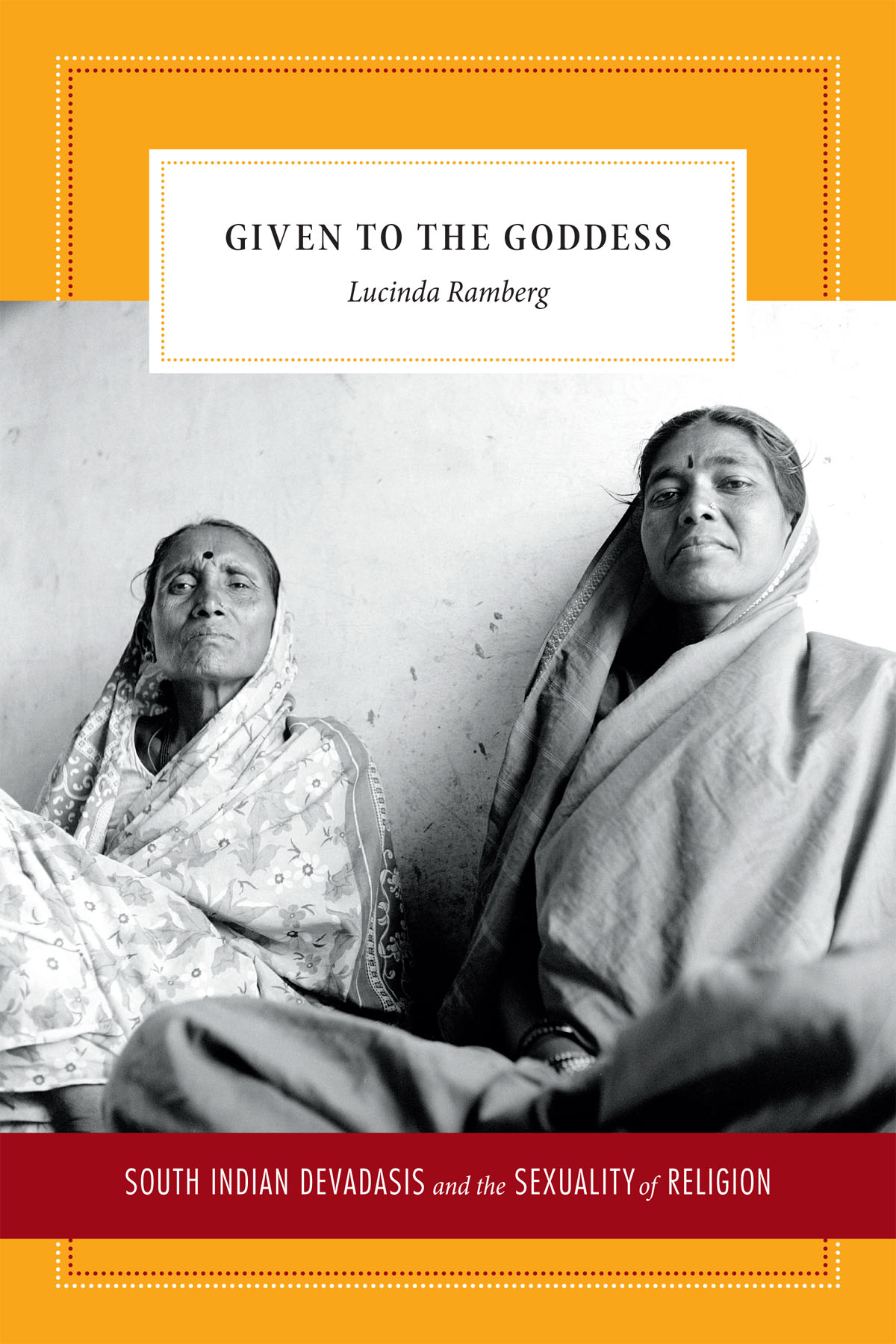
Book
Given to the Goddess
South Indian Devadasis and the Sexuality of Religion
Lucinda Ramberg
Duke University Press · Print & ebook · September 17, 2014
Reading lane: Hindu Rituals & Practice
Who and what are marriage and sex for?
At a Glance
Who It's For
Book Details
- Authors
- Lucinda Ramberg
- Publisher
- Duke University Press
- Published
- September 17, 2014
- Format
- Print & ebook
- Theme
- Hindu Rituals & Practice · Hindu History
- Reading lane
- Hindu Rituals & Practice
Affinity
Publisher Categories
Hindu Rituals & Practice
How Cultures Work
Gender Studies
About This Book
Who and what are marriage and sex for? Whose practices and which ways of talking to god can count as religion? Lucinda Ramberg considers these questions based upon two years of ethnographic research on an ongoing South Indian practice of dedication in which girls, and sometimes boys, are married to a goddess. Called devadasis , or jogatis , those dedicated become female and male women who conduct the rites of the goddess outside the walls of her main temple and transact in s...
Read full description
Similar Books

The Hindus
Wendy Doniger, Amy Landon · Penguin Publishing Group
Affinity signal
Hindu History
Hindu Theology

Hinduism
Swami Nikhilananda, Nikhilananda · Prakash Books
Affinity signal
Hindu History
Hindu Theology
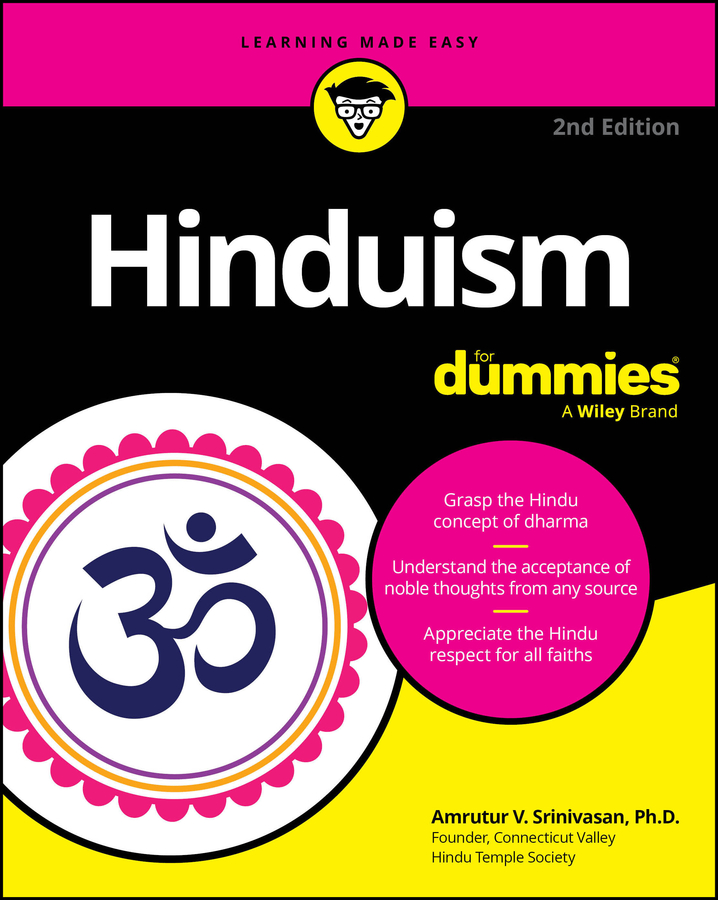
Hinduism for Dummies
Amrutur V. Srinivasan, A.V. Srinivasan · Wiley
Affinity signal
Hindu Theology
Hindu Rituals & Practice

Tantric Knowledge
Gavin Flood, The Oxford Centre for Hindu Studies · Mandala Publishing
Affinity signal
Hindu Rituals & Practice
Hindu History
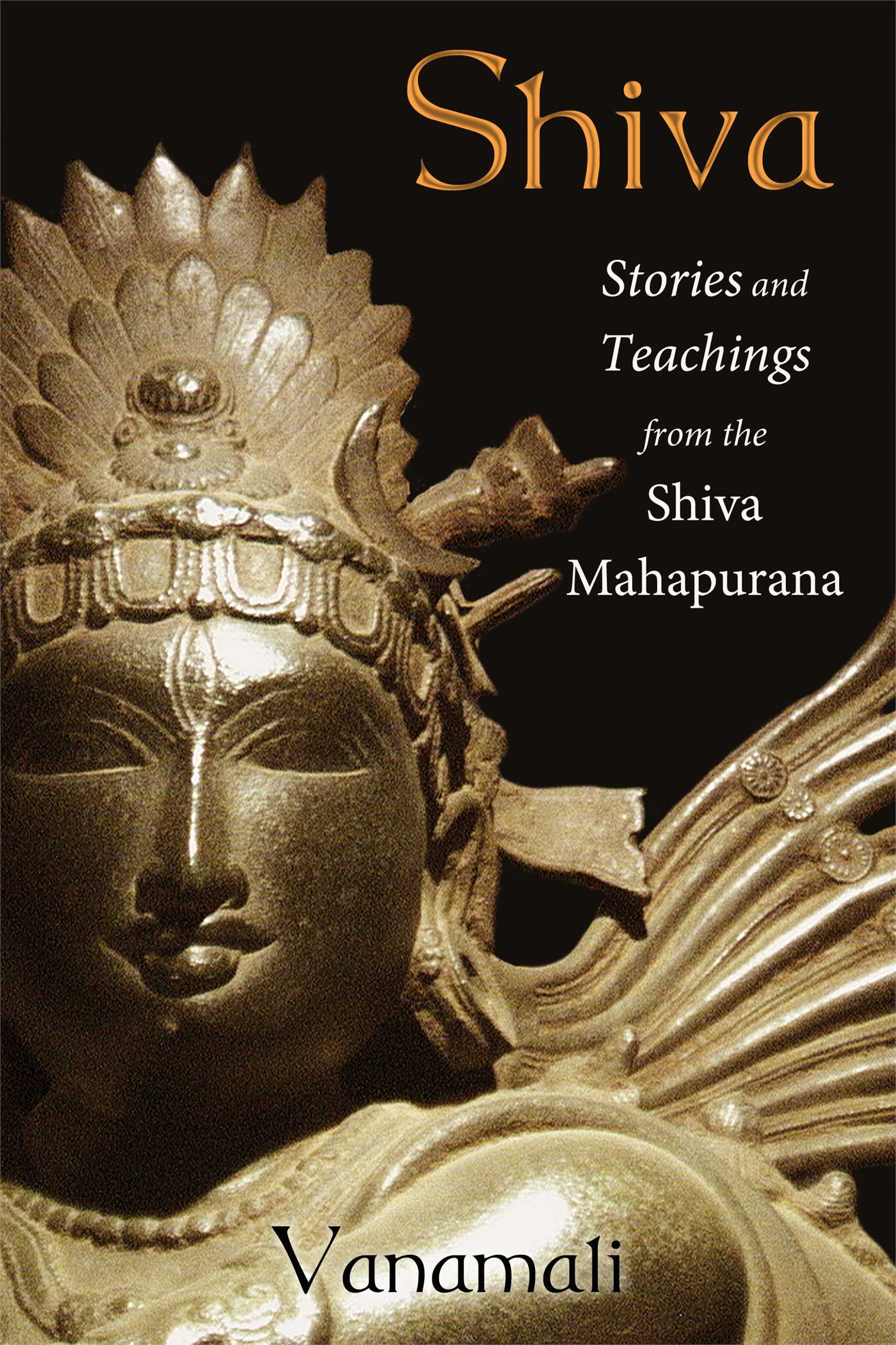
Shiva
Vanamali · Inner Traditions/Bear & Company
Affinity signal
Hindu Theology
Hindu History
Vedanta
Loly Rosset, Hans Torwestern · Grove/Atlantic
Affinity signal
Hindu Theology
Hindu History

Namaha
Abhishek Singh · Prakash Books
Affinity signal
Hindu History
Hindu Rituals & Practice

Sonic Theology
Guy L. Beck · University of South Carolina Press
Affinity signal
Hindu History
Hindu Rituals & Practice