
Israeli Stories
A Selection of the Best Contemporary Hebrew Writing
Knopf Doubleday Publishing Group · Print & ebook · January 13, 1965
A selection of the Best Writing in Israel Today Edited by Joel Blocker, introduction by Robert Alter The present volume of Israeli stories reassuringly illustrates the other half of a frequently asserted half-truth.
We earn from qualifying purchases.
- Who it’s for
- Israeli stories complicate the claim that Hebrew literature leaves individual lives at the margins.
- Genres
- Jewish Fiction, Middle Eastern Literary Collections
- Published
- Knopf Doubleday Publishing Group, January 13, 1965
Nearest books
Matched by what the books are about, then ordered by what their readers also loved. Most of these share its genre: Jewish Fiction.
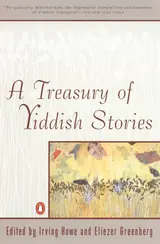 A Treasury of Yiddish StoriesIrving Howe, Eliezer Greenberg67% match
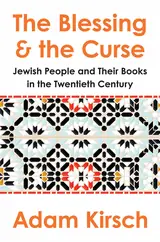 The Blessing and the CurseAdam Kirsch66% match
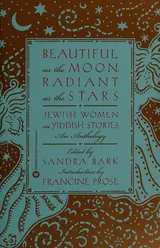 Beautiful As the Moon, Radiant As the StarsSandra Bark65% match
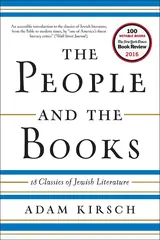 The People and the BooksAdam Kirsch65% match
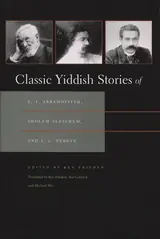 Classic Yiddish Stories of S. Y. Abramovitsh, Sholem Aleichem, and I. L. PeretzKen Frieden, Ted Gorelick63% match
For younger readers: It's a Whole Spiel, Under the Domim Tree, What Jewish Looks Like
Start with three books, and this one can be the first.
Members get a new edition every morning: a route out from their books to essays, research and talks, with the reason for each.
Join the waitlistAbout this book
A selection of the Best Writing in Israel Today Edited by Joel Blocker, introduction by Robert Alter The present volume of Israeli stories reassuringly illustrates the other half of a frequently asserted half-truth. Modern Hebrew literature, it is claimed, liked Yiddish literature, does not really share the large concerns of serious literary activity in the West.
Continue reading
The Hebrew writer ordinarily does not address himself to the human situation with all of its far-reaching possibilities of tragedy of comedy, but to the Jewish situation, which is quite another thing. Consequently, Hebrew and Yiddish writers—so goes the claim—develop a system of typology rather than methods of characterization, for they are most essentially interested in the Jewish people, its particular qualities and its present fate or ultimate destiny, while the individual, who is central in other modern literatures, stands at the periphery of their vision.
Hebrew and Individual
Israeli stories complicate the claim that Hebrew literature leaves individual lives at the margins.
Come here for
- Contemporary Israeli stories
- A literary argument about individual lives and collective Jewish concerns
Expect
- An introduction by Robert Alter
- A discussion of characterization and the Jewish situation
Where it sits
| Middle Eastern Literary Collections | 86% |
|---|---|
| Jewish Fiction | 56% |
Percentages are BookFrontier’s reading of the book.
Publisher categories
- Middle Eastern Literary Collections
- Jewish Literary Criticism
- Middle Eastern Lit Crit
- Authors
- Joel Blocker, Robert Alter
- Publisher
- Knopf Doubleday Publishing Group
- Published
- January 13, 1965
- Format
- Print & ebook
- Reading lane
- Middle Eastern Literary Collections