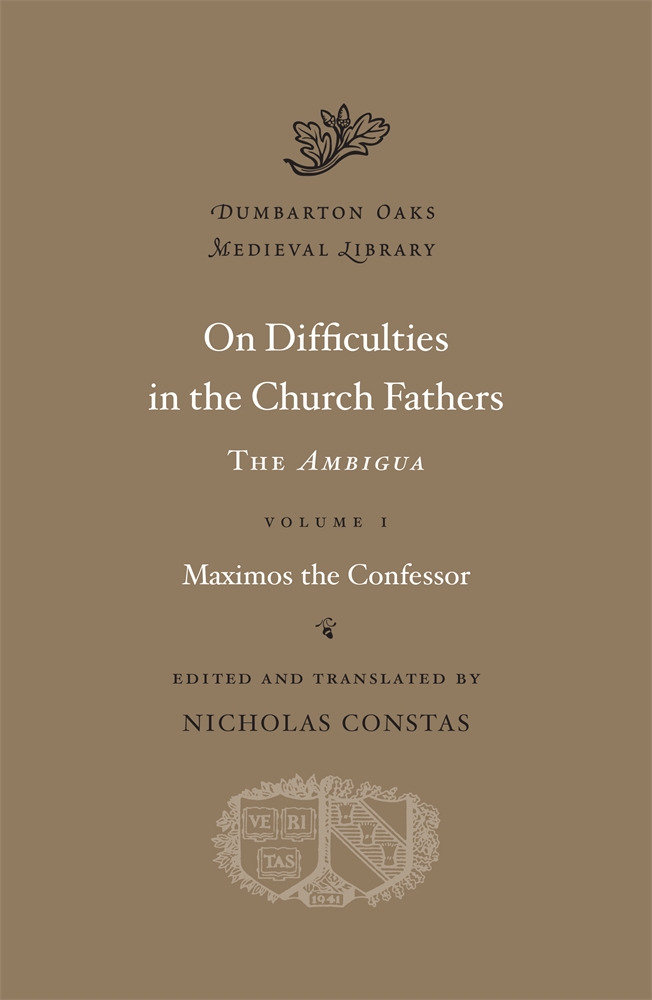
On Difficulties in the Church Fathers: the Ambigua
WW Norton · Print & ebook · April 28, 2014
A Theology pick for readers exploring On Difficulties in the Church Fathers: the Ambigua.
We earn from qualifying purchases.
- Genres
- Orthodox Christianity, Theology, Religion & Philosophy
- Published
- WW Norton, April 28, 2014
Nearest books
Matched by what the books are about, then ordered by what their readers also loved.
 Classic ChristianityThomas C. Oden46% match
 Genesis 1-11Andrew Louth, Thomas C. Oden42% match
 20th-century TheologyStanley J. Grenz, Roger E. Olson41% match
 TimaeusPlato, Benjamin Jowett46% match
 The Cloud of UnknowingAnonymous, Evelyn Underhill43% matchShares Theology and Religion & Philosophy
 ConfessionsSaint Augustine, R. S. Pine-Coffin49% matchShares Theology
 God: an AnatomyFrancesca Stavrakopoulou41% matchShares Theology
 The Imitation of ChristThomas à Kempis42% match
Start with three books, and this one can be the first.
Members get a new edition every morning: a route out from their books to essays, research and talks, with the reason for each.
Join the waitlistAbout this book
Maximos the Confessor (580–662) occupies a unique position in the history of Byzantine philosophy, theology, and spirituality. His profound spiritual experiences and penetrating theological vision found complex and often astonishing expression in his unparalleled command of Greek philosophy, making him one of the most challenging and original Christian thinkers of all time.
Continue reading
So thoroughly did his thought come to influence the Byzantine theological tradition that it is impossible to trace the subsequent history of Orthodox Christianity without knowledge of his work. The Ambigua (or “Book of Difficulties”) is Maximos’s greatest philosophical and doctrinal work, in which his daring originality, prodigious talent for speculative thinking, and analytical acumen are on lavish display. In the Ambigua, a broad range of theological topics—cosmology, anthropology, the philosophy of mind and language, allegory, asceticism, and metaphysics—are transformed in a synthesis of Aristotelian logic, Platonic metaphysics, Stoic psychology, and the arithmetical philosophy of a revived Pythagoreanism. The result is a labyrinthine map of the mind’s journey to God that figured prominently in the Neoplatonic revival of the Komnenian Renaissance and the Hesychast Controversies of the Late Byzantine period. This remarkable work has never before been available in a critically-based edition or English translation.
Where it sits
| Orthodox Christianity | 65% |
|---|---|
| Religion & Philosophy | 27% |
| Theology | 18% |
Percentages are BookFrontier’s reading of the book.
Publisher categories
- Medieval History
- History of Religion
- Theology
- Authors
- Maximos the Confessor, Nicholas Constas, Maximus the Confessor
- Publisher
- WW Norton
- Published
- April 28, 2014
- Format
- Print & ebook
- Reading lane
- Medieval History