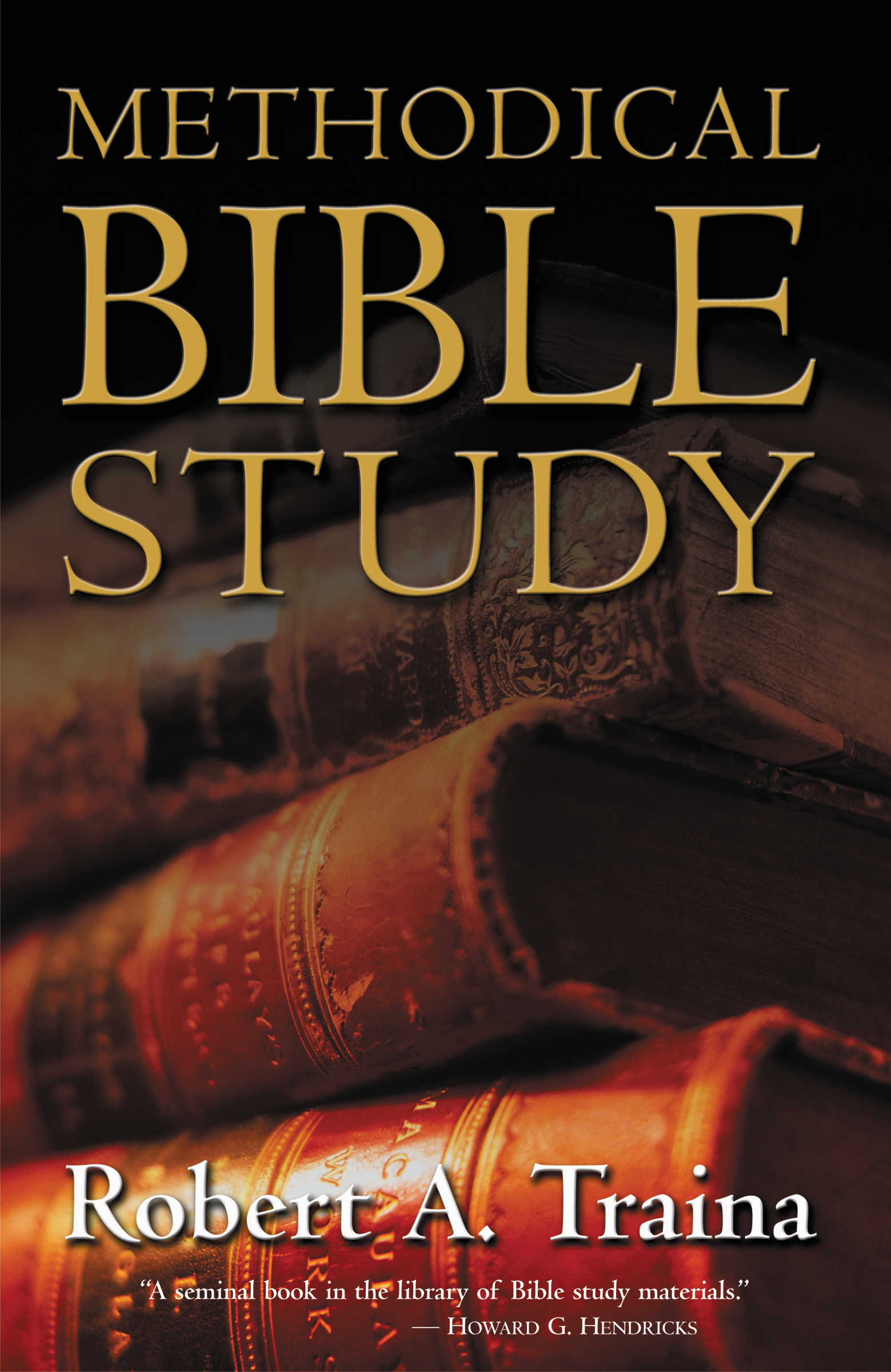
Methodical Bible Study
Zondervan Academic · Paperback · January 17, 2002
Inductive study compares related Bible texts in order to let the Bible interpret itself, rather than approaching Scripture with predetermined notions of what it will say.
We earn from qualifying purchases.
- Genres
- Exegesis & Hermeneutics, Bible Study Guides, Christian Education
- Published
- Zondervan Academic, January 17, 2002
Nearest books
Matched by what the books are about, then ordered by what their readers also loved.
 Finding Favour in the Sight of GodRichard P. Belcher Jr.53% match
 First CorinthiansRichard B. Hays53% match
 The Letters of JohnJohn Stott, John R.W. Stott57% match
 Bible Doctrine, Second EditionWayne A. Grudem, Alexander Grudem57% match
 How to Read the Bible Like a Seminary ProfessorMark Yarbrough62% matchShares Exegesis & Hermeneutics and Bible Study Guides
 Introduction to Biblical InterpretationWilliam W. Klein, Craig L. Blomberg60% matchShares Exegesis & Hermeneutics and Bible Study Guides
 Dominion and DynastyStephen G. Dempster60% matchShares Exegesis & Hermeneutics
 1 & 2 Timothy and TitusN. T. Wright, Phyllis J. Le Peau59% matchShares Bible Study Guides
Start with three books, and this one can be the first.
Members get a new edition every morning: a route out from their books to essays, research and talks, with the reason for each.
Join the waitlistAbout this book
Inductive study compares related Bible texts in order to let the Bible interpret itself, rather than approaching Scripture with predetermined notions of what it will say. Dr. Traina’s Methodical Bible Study was not intended to be the last word in inductive Bible study; but since its first publication in 1952, it has become a foundational text in this field.
Continue reading
Christian colleges and seminaries have made it required reading for beginning Bible students, while many churches have used it for their lay Bible study groups. Dr. Traina summarizes its success in this comment: "If the truths of the Bible already resided in man, there would be no need for the Bible and this manual would be superfluous. But the fact is the Bible is an objective body of literature which exists because man needs to know certain truths which he himself cannot know. There are two main approaches open to the Bible student. One is deduction, which begins with generalizations and moves for their support to the particulars. By its very nature deduction tends to be subjective and prejudicial. Its opposite, induction, is objective and impartial; for it demands that one first examine the particulars of the Scriptures and that one’s conclusions be based on those particulars. Such an approach is sound because, being objective, it corresponds to the objective nature of the Scriptures." This book fills the need for a simple, practical textbook in hermeneutics. It encourages the serious Bible student to practice the best kind of hermeneutic, which allows the Word of God to speak for itself.
Where it sits
| Exegesis & Hermeneutics | 94% |
|---|---|
| Bible Study Guides | 81% |
| Christian Education | 25% |
Percentages are BookFrontier’s reading of the book.
Publisher categories
- Old Testament Interpretation
- Exegesis & Hermeneutics
- Bible Handbooks
- Bible Study Guides
- Authors
- Robert A. Traina
- Publisher
- Zondervan Academic
- Published
- January 17, 2002
- Format
- Paperback
- Reading lane
- Old Testament Interpretation