
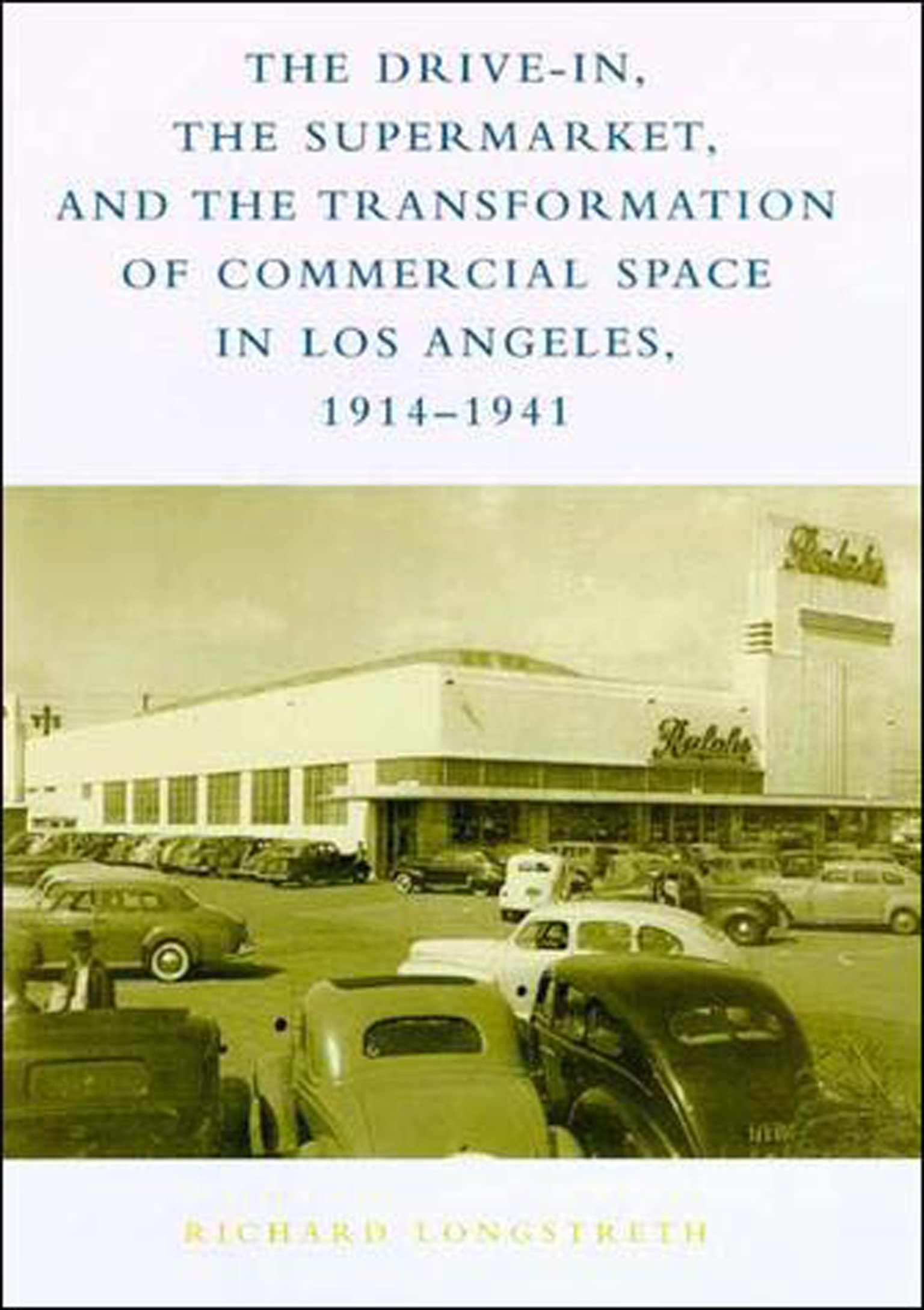
Book
The Drive-in, the Supermarket, and the Transformation of Commercial Space in Los Angeles, 1914-1941
Richard W. Longstreth
MIT Press · Paperback · August 25, 2000
Reading lane: Modern Architecture (to 1945)
Longstreth explores the early development of two kinds of retail space that have become ubiquitous in the United States in the second half of the twentieth century.
At a Glance
Who It's For
Book Details
- Authors
- Richard W. Longstreth
- Publisher
- MIT Press
- Published
- August 25, 2000
- Format
- Paperback
- Theme
- Modern Architecture (to 1945) · Landmarks & Monuments
- Reading lane
- Modern Architecture (to 1945)
Affinity
Publisher Categories
Modern Architecture (to 1945)
Public & Commercial Buildings
Western U.S. History
About This Book
Longstreth explores the early development of two kinds of retail space that have become ubiquitous in the United States in the second half of the twentieth century. Richard Longstreth is one of the few historians to focus on ordinary commercial buildings—buildings usually associated with commercial builders and real estate developers rather than architects and thus generally overlooked by historians of "high" architecture. Here Longstreth explores the early development of tw...
Read full description
Similar Books

A Paradise of Small Houses
Max Podemski · Beacon Press
Affinity signal
Urban Life
Contemporary Architecture (1945-)
Paved Paradise
Henry Grabar · Penguin Publishing Group
Affinity signal
Urban Life
How Transportation Works
The Death and Life of Great American Cities
Jane Jacobs · Knopf Doubleday Publishing Group
Affinity signal
Urban Life
Middle Atlantic History