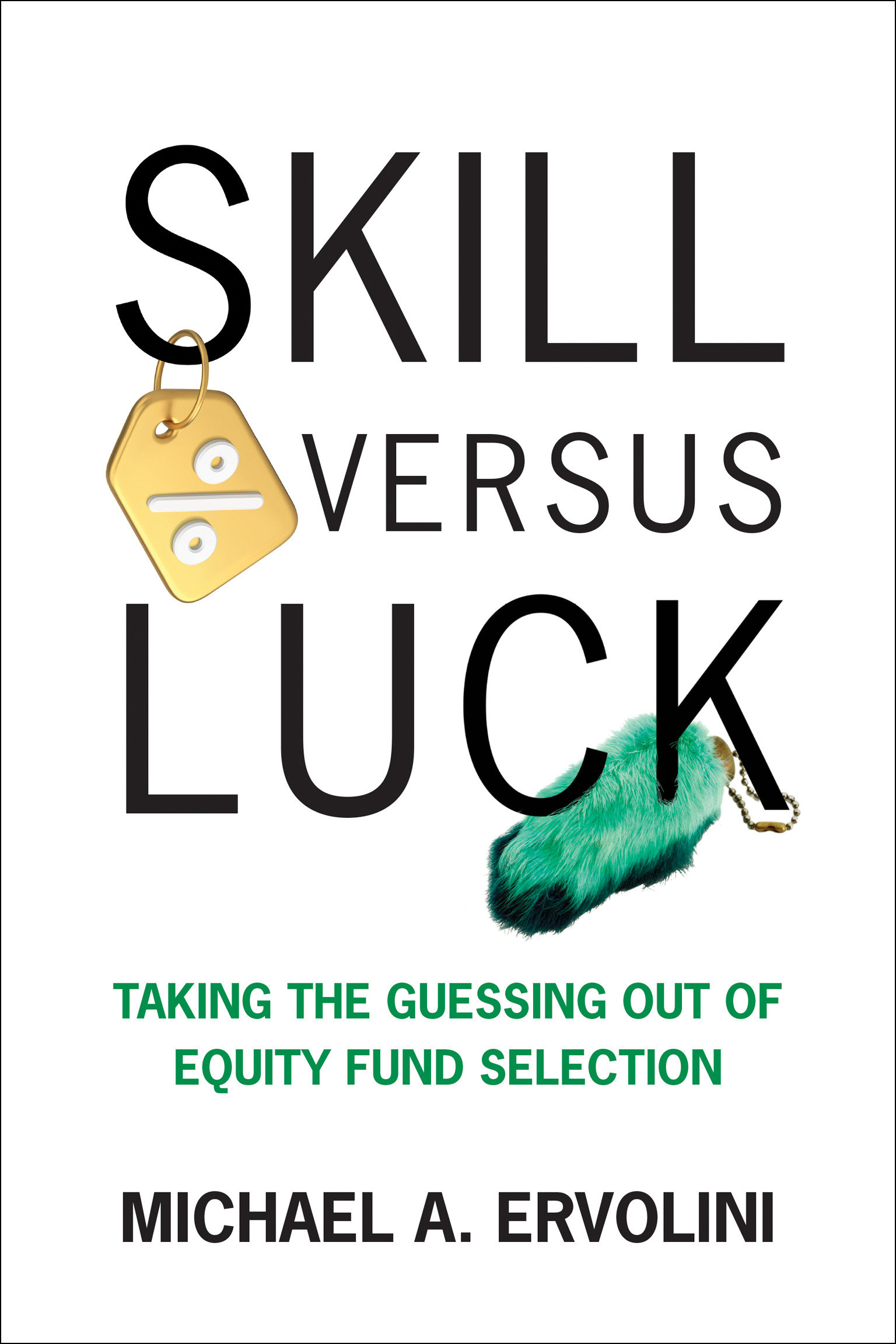
Skill Versus Luck
Taking the Guessing Out of Equity Fund Selection
MIT Press · Print & ebook · February 3, 2026
How to move beyond guessing about manager skill with decision-based analytics, not the outcome-based analytics used at present.
We earn from qualifying purchases.
- Who it’s for
- Decision-based analytics connect managers’ investment decisions to excess returns to measure skill.
- Genres
- Portfolio Management, Investment & Trading Strategies, Mutual Funds & ETFs
- Published
- MIT Press, February 3, 2026
Nearest books
Matched by what the books are about, then ordered by what their readers also loved. Most of these share its genre: Portfolio Management.
 Winning at Active ManagementWilliam W. Priest, Steven D. Bleiberg55% matchAlso shares Investment & Trading Strategies
 The Intelligent Asset Allocator: How to Build Your Portfolio to Maximize Returns and Minimize RiskWilliam J. Bernstein51% match
 What Wall Street Doesn't Want You to KnowLarry E. Swedroe50% matchAlso shares Mutual Funds & ETFs
 The Allocator's EdgePhil Huber, Clifford Asness49% match
 Investing Amid Low Expected ReturnsAntti Ilmanen47% match
 Heads I Win, Tails I WinSpencer Jakab47% matchAlso shares Mutual Funds & ETFs
 Unconventional SuccessDavid F. Swensen46% matchAlso shares Mutual Funds & ETFs
 Morningstar Guide to Mutual FundsChristine Benz46% matchAlso shares Mutual Funds & ETFs
Start with three books, and this one can be the first.
Members get a new edition every morning: a route out from their books to essays, research and talks, with the reason for each.
Join the waitlistAbout this book
How to move beyond guessing about manager skill with decision-based analytics, not the outcome-based analytics used at present. Skill is the raison d’être for active equity management. Yet precious little is known about manager skill. What is skill? Who has it? How should it be measured? Is a manager’s skill improving, declining, or remaining consistent?
Continue reading
Without answers to such fundamental questions, capital allocators have no choice but to rely on inferences, hunches, and guesswork. In Skill Versus Luck, Michael Ervolini explains how to move beyond skill fog with newer analytics developed over the past decade. Unlike conventional analytics that simply rehash fund outcomes, the newer cause-and-effect analytics relate a manager’s decisions to fund excess returns, providing rigorous measures of manager skill. Results from these newer analytics enable capital allocators to understand manager skill for the first time and make more effective allocation decisions.
Measuring Manager Skill
Decision-based analytics connect managers’ investment decisions to excess returns to measure skill.
Come here for
- How decisions are linked to fund excess returns
- Questions about whether skill improves, declines, or holds steady
Expect
- A contrast with outcome-based analytics
- A focus on equity fund allocation decisions
Where it sits
| Portfolio Management | 53% |
|---|---|
| Investment & Trading Strategies | 40% |
| Mutual Funds & ETFs | 38% |
Percentages are BookFrontier’s reading of the book.
Publisher categories
- Private Equity
- Investment & Trading Strategies
- Portfolio Management
- Authors
- Michael A. Ervolini
- Publisher
- MIT Press
- Published
- February 3, 2026
- Format
- Print & ebook
- Reading lane
- Private Equity