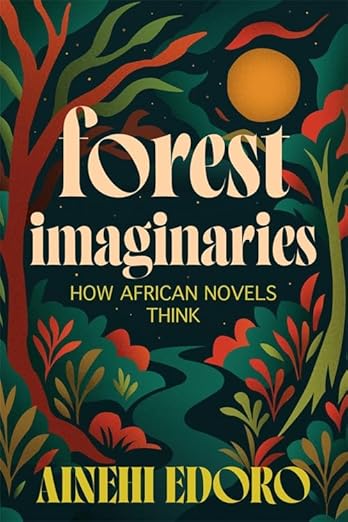
Forest Imaginaries
How African Novels Think
Columbia University Press · Print & ebook · January 20, 2026
Forests in fiction are often understood simply as settings, symbols, or remnants of a premodern past.
We earn from qualifying purchases.
- Who it’s for
- Ainehi Edoro traces how African writers use forests to reshape the novel’s possibilities.
- Genres
- African Lit Crit, Nature in Literature, Forests & Rainforests
- Published
- Columbia University Press, January 20, 2026
Nearest books
Matched by what the books are about, then ordered by what their readers also loved.
 African FolktalesRoger Abrahams57% match
 Something Torn and NewNgugi Ngugi Wa Thiong'o, Ngũgĩ wa Thiong'o57% matchShares African Lit Crit
 Literature of AfricaDouglas Killam, G.D. Killam55% matchShares African Lit Crit
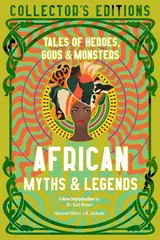 African Myths & LegendsJ.K. Jackson, Sola Owonibi53% match
For younger readers: A Pride of African Tales, The Great Kapok Tree, Tree of Dreams
Start with three books, and this one can be the first.
Members get a new edition every morning: a route out from their books to essays, research and talks, with the reason for each.
Join the waitlistAbout this book
Forests in fiction are often understood simply as settings, symbols, or remnants of a premodern past. Yet many African novelists have turned to the forest to experiment with worldbuilding and to imagine new futures. This groundbreaking book explores the life of the forest in African fiction, showing how writers have used it to reinvent the novel’s formal, aesthetic, and political possibilities.
Continue reading
Ainehi Edoro argues that forests in African fiction are laboratories for unmaking and remaking the world, where writers break apart familiar forms to test alternate forms of life, knowledge, and power. Instead of treating the forest as a backdrop, these writers imagine it as a living structure: a space where politics, history, myth, violence, technology, the magical, and creativity animate fictional worlds. Spanning indigenous African narratives and contemporary science fiction, Forest Imaginaries traces the lineage of forest worlds in African literature: Chinua Achebe’s evil forest, the cosmic forest in Wọle Ṣóyínká’s mythic imagination, Thomas Mofolo’s forest of imperial dreams, Amos Tutuola’s endless fractal forest, and Nnedi Okorafor’s aquatic forest of new ecological futures. This book rethinks African literary history by showing how African writers draw on the forest—and the wealth of Indigenous ideas about time, space, and storytelling it conjures—to transform the novel’s aesthetic, political, and philosophical horizons.
African Forest Worlds
Ainehi Edoro traces how African writers use forests to reshape the novel’s possibilities.
Come here for
- A lineage from Achebe’s evil forest to Okorafor’s aquatic forest
- Forests as sites of politics, myth, technology, and creativity
Expect
- Indigenous narratives alongside contemporary science fiction
- Attention to forests as living structures, not mere backdrops
Where it sits
| African Lit Crit | 97% |
|---|---|
| Nature in Literature | 48% |
| Forests & Rainforests | 22% |
Percentages are BookFrontier’s reading of the book.
Publisher categories
- African Literary Collections
- 20th-Century Literary Criticism
- 21st Century Literature
- Nature in Literature
- Authors
- Ainehi Edoro
- Publisher
- Columbia University Press
- Published
- January 20, 2026
- Format
- Print & ebook
- Reading lane
- African Literary Collections