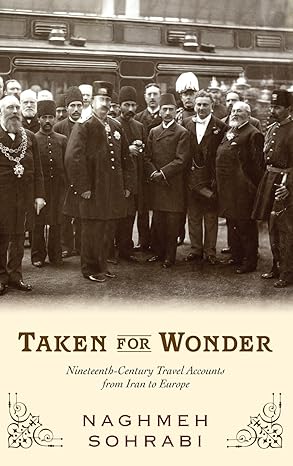
Taken for Wonder
Nineteenth Century Travel Accounts From Iran to Europe
Oxford University Press · Print & ebook · May 31, 2012
We earn from qualifying purchases.
- Who it’s for
- Naghmeh Sohrabi reads travel writing as rhetoric, not simply as a record of European destinations.
- Genres
- Iranian History, Travel Writing, Middle Eastern Lit Crit
- Published
- Oxford University Press, May 31, 2012
Nearest books
Matched by what the books are about, then ordered by what their readers also loved.
 Words, Not SwordsFarzaneh Milani56% matchShares Middle Eastern Lit Crit
 A History of IranMichael Axworthy54% matchShares Iranian History
 In EuropeGeert Mak54% match
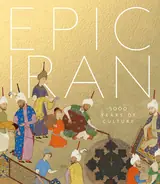 Epic IranJohn Curtis, Ina Sarikhani Sandmann53% matchShares Iranian History
 Imperial EyesMary Louise Pratt52% match
For younger readers: Traveling Man, The Teacher of Nomad Land, Imperialism
Start with three books, and this one can be the first.
Members get a new edition every morning: a route out from their books to essays, research and talks, with the reason for each.
Join the waitlistAbout this book
Taken for Wonder focuses on nineteenth century travelogues authored by Iranians in Europe and argues for a methodological shift from the study of travel to that of writing travel.
Continue reading
This shift allows for a different interpretive framework that moves away from an over-emphasis on the destinations of travel (particularly in cases where the destination, like Europe, signifies larger meanings such as modernity) and which historicizes the travelogue itself as a rhetorical text in the service of its origin's concerns and developments. Within this framework, this book demonstrates the ways in which travel writings to Europe were used to position Qajar Iran (1917-1925) within a global context, i.e. narration of travel to Europe was also narrating the power of the Qajar court even when political events were tipped against it; and relatedly, how both travel to Europe and also translations of travel narratives into Persian should be included in our understanding of the importance of geography and mapping to the Qajars, especially during the latter half of the nineteenth century. In this process, it also re-examines the notion that Iranian modernity was the chief outcome of Iranians travelling in and writing about Europe.
Qajar Travel Writing
Naghmeh Sohrabi reads travel writing as rhetoric, not simply as a record of European destinations.
Come here for
- A study of nineteenth-century Iranian travelogues written in Europe
- How Persian translations and geographic thinking figure in Qajar history
Expect
- A reframing of Qajar travel narratives within global context
- A reassessment of travel writing’s role in accounts of Iranian modernity
Where it sits
| Iranian History | 93% |
|---|---|
| Travel Writing | 62% |
| Middle Eastern Lit Crit | 40% |
Percentages are BookFrontier’s reading of the book.
Publisher categories
- Middle Eastern Lit Crit
- Authors
- Naghmeh Sohrabi
- Publisher
- Oxford University Press
- Published
- May 31, 2012
- Format
- Print & ebook
- Reading lane
- Middle Eastern Lit Crit