
Escaping Salem
The Other Witch Hunt of 1692
Oxford University Press · Print & ebook · May 30, 2005
The Salem witch hunt of 1692 is among the most infamous events in early American history; however, it was not the only such episode to occur in New England that year.
We earn from qualifying purchases.
- Who it’s for
- A clear, compact take on a less-told corner of Salem-era history.
- Genres
- Colonial America (to 1775), Witchcraft, New England History
- Published
- Oxford University Press, May 30, 2005
Nearest books
Matched by what the books are about, then ordered by what their readers also loved.
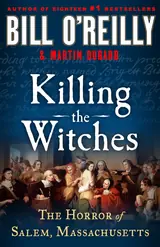 Killing the WitchesBill O'Reilly, Martin Dugard78% matchShares Colonial America (to 1775) and New England History
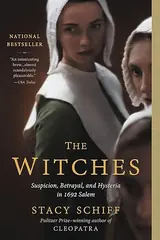 The WitchesStacy Schiff77% matchShares Colonial America (to 1775) and New England History
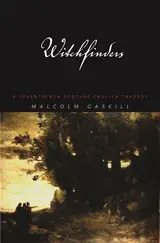 WitchfindersMalcolm Gaskill72% matchShares Witchcraft
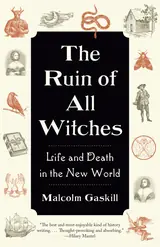 The Ruin of All WitchesMalcolm Gaskill, Kristin Atherton67% matchShares Colonial America (to 1775), Witchcraft and New England History
 Everyday Life in Early AmericaDavid Freeman Hawke48% matchShares Colonial America (to 1775)
 The Discoverie of WitchcraftReginald Scot64% matchShares Witchcraft
 The Last WitchfinderJames Morrow61% match
 A Head Full of GhostsPaul Tremblay46% match
For younger readers: Witches, Women of Colonial America, Who Was Accused in the Salem Witch Trials?: Tituba
Start with three books, and this one can be the first.
Members get a new edition every morning: a route out from their books to essays, research and talks, with the reason for each.
Join the waitlistAbout this book
The Salem witch hunt of 1692 is among the most infamous events in early American history; however, it was not the only such episode to occur in New England that year. Escaping Salem reconstructs the "other witch hunt" of 1692 that took place in Stamford, Connecticut. Concise and accessible, the book takes students on a revealing journey into the mental world of early America, shattering the stereotype of early New Englanders as quick to accuse and condemn.
Continue reading
Drawing on eyewitness testimony, Richard Godbeer tells the story of Kate Branch, a seventeen-year-old afflicted by strange visions and given to blood-chilling wails of pain and fright. Branch accused several women of bewitching her, two of whom were put on trial for witchcraft. Escaping Salem takes us inside the Connecticut courtroom and into the minds of the surprisingly skeptical Stamford townspeople. Was the pain and screaming due to natural or supernatural causes? Was Branch simply faking the symptoms? And if she was indeed bewitched, why believe her specific accusations, since her information came from demons who might well be lying? For the judges, Godbeer shows, the trial was a legal thicket. All agreed that witches posed a real and serious threat, but proving witchcraft (an invisible crime) in court was another matter. The court in Salem had become mired in controversy over its use of dubious evidence. In an intriguing chapter, Godbeer examines Magistrate Jonathan Selleck's notes on how to determine the guilt of someone accused of witchcraft, providing an illuminating look at what constituted proof of witchcraft at the time. The stakes were high--if found guilty, the two accused women would be hanged. In the afterword, Godbeer explains how he used the trial evidence to build his narrative, offering an inside perspective on the historian's craft. Featuring maps, photos, and a selected bibliography, Escaping Salem is ideal for use in undergraduate U.S. survey courses. It can also be used for courses in colonial American history, culture, and religion; witchcraft in the early modern world; and crime and society in early America.
A Sharper Angle
A clear, compact take on a less-told corner of Salem-era history.
Come here for
- 1692 Salem, minus the familiar overwork
- Accessible colonial-era context
Expect
- Insightful explanation
- Narrative momentum without heaviness
Where it sits
| Colonial America (to 1775) | 92% |
|---|---|
| Witchcraft | 48% |
| New England History | 47% |
Percentages are BookFrontier’s reading of the book.
Publisher categories
- Colonial America (to 1775)
- Authors
- Richard Godbeer
- Publisher
- Oxford University Press
- Published
- May 30, 2005
- Format
- Print & ebook
- Reading lane
- Colonial America (to 1775)