
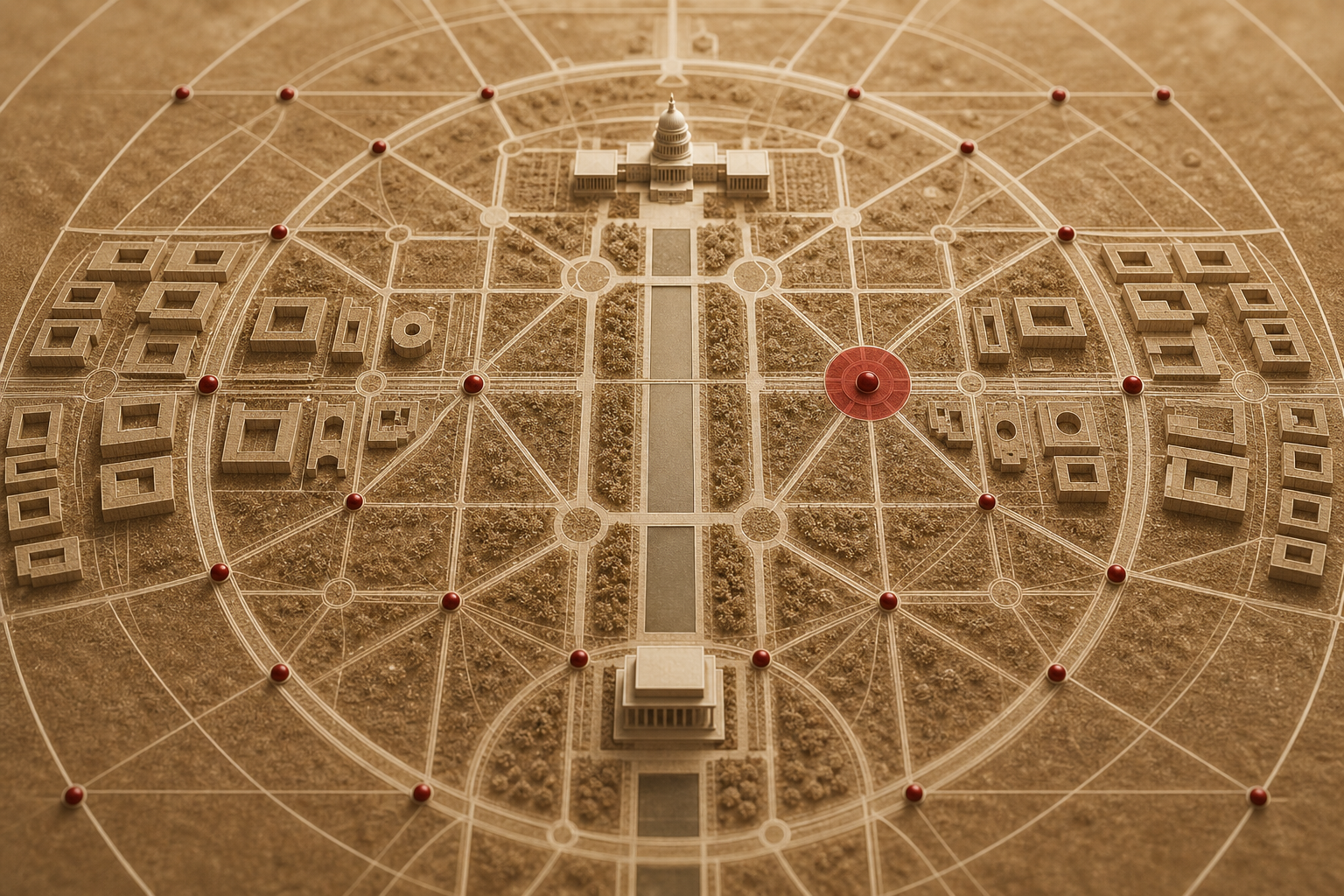
On the eve of the country's 250th birthday, tourists on the National Mall were pressing electric fans flat against their foreheads, as if cooling the skull directly might override whatever the thermometer was doing. The grass had that flattened, exhausted look. People rationed shade the way you ration water on a long drive, moving from one thin strip of it to the next. Washington in a heat wave stops being a marble postcard and becomes a physical problem to solve: how far can you walk, how long until the next cold building, how much stamina you have left before the Lincoln Memorial feels less like a destination and more like a dare. The city was sweating through its shirt along with everyone in it. That scene is the whole argument for treating a summer visit as logistics first and sightseeing second.
When a heat wave makes the news, the instinct is to treat it as weather to endure, a thing that happens to you while you stand in line for the Air and Space Museum. That framing quietly assumes the itinerary is fixed and the climate is the variable. Flip it. The itinerary is the thing you actually control, and most heat misery in a walkable, monument-heavy city comes from bad sequencing, not raw temperature. Schedule three outdoor stops back to back with no train leg between them and you can be miserable at 88 degrees. Time the exposed walks for morning and park yourself indoors from noon to four and you can be fine at 99. The recap coverage skips the boring, practical middle: the hour-by-hour choreography that decides whether a day feels survivable.
This is the kind of problem a Frommer's guide was built for, even if nobody markets it as heat-wave equipment. Meredith Pratt's Washington D.C. edition is organized around the two things that decide a summer day: where the air conditioning is, and how you move between patches of it. The book supplies public transportation details for every listing, which sounds like dull completeness until you realize a Metro ride is a refrigerated tunnel that also happens to cover ground. The neighborhood-by-neighborhood structure is where the real utility lives. Georgetown, Dupont Circle, Foggy Bottom, the National Mall, Capitol Hill, each gets its own pacing and its own walking tour, which lets you break a day into short outdoor legs stitched together by indoor stops.
Instead of marching the full length of the Mall at one in the afternoon, you can plan a shaded stretch, duck into the National Gallery or the American History museum, and come back out when the light is kinder. Pratt's guidance on museum hours and indoor options quietly rearranges your afternoon around the worst hours. The Smithsonian cluster becomes less a checklist of attractions and more a set of climate-controlled refuges that happen to hold the Wright Flyer and the Star-Spangled Banner. There is something faintly comic about using the National Archives partly for the Constitution and partly because it is reliably cold, but a hot day makes that kind of double reasoning honest.
The exact pricing is where I would push back. Frommer's lists specific costs for hotels, attractions, restaurants, and transit, and that precision ages badly in a way the printed format cannot hide. Prices drift, restaurants close, and a printed number becomes a rough suggestion within a year or two. The figures still help for relative comparison, for choosing an air-conditioned hotel near the sites over a cheaper one that commits you to long exposed walks. Treat the dollar amounts as ballpark, not gospel, and the value holds. The opinionated reviews earn their place under heat pressure.
When stamina is the scarce resource, you need someone willing to say this attraction is worth the outdoor walk and this one is not, rather than a flat catalogue that treats every stop as equal. A day in a heat wave forces triage, and triage needs a point of view. The fold-out city and Metro maps then turn those judgments into a route you can actually follow, which is the difference between a plan and a wish.
The heat-wave coverage will fade the way these stories do, filed under record highs and left there. The smaller, more portable idea underneath it stays useful: a hot city is a logistics puzzle, and a good guide is mostly a well-organized answer key. If a summer trip to Washington is on your horizon, or if you just want a concrete sense of how people plan around a capital that keeps getting hotter, Pratt's edition is a reasonable place to start. Bring the maps. Skip the afternoon Mall march. Let the museums do their cold, quiet work.