
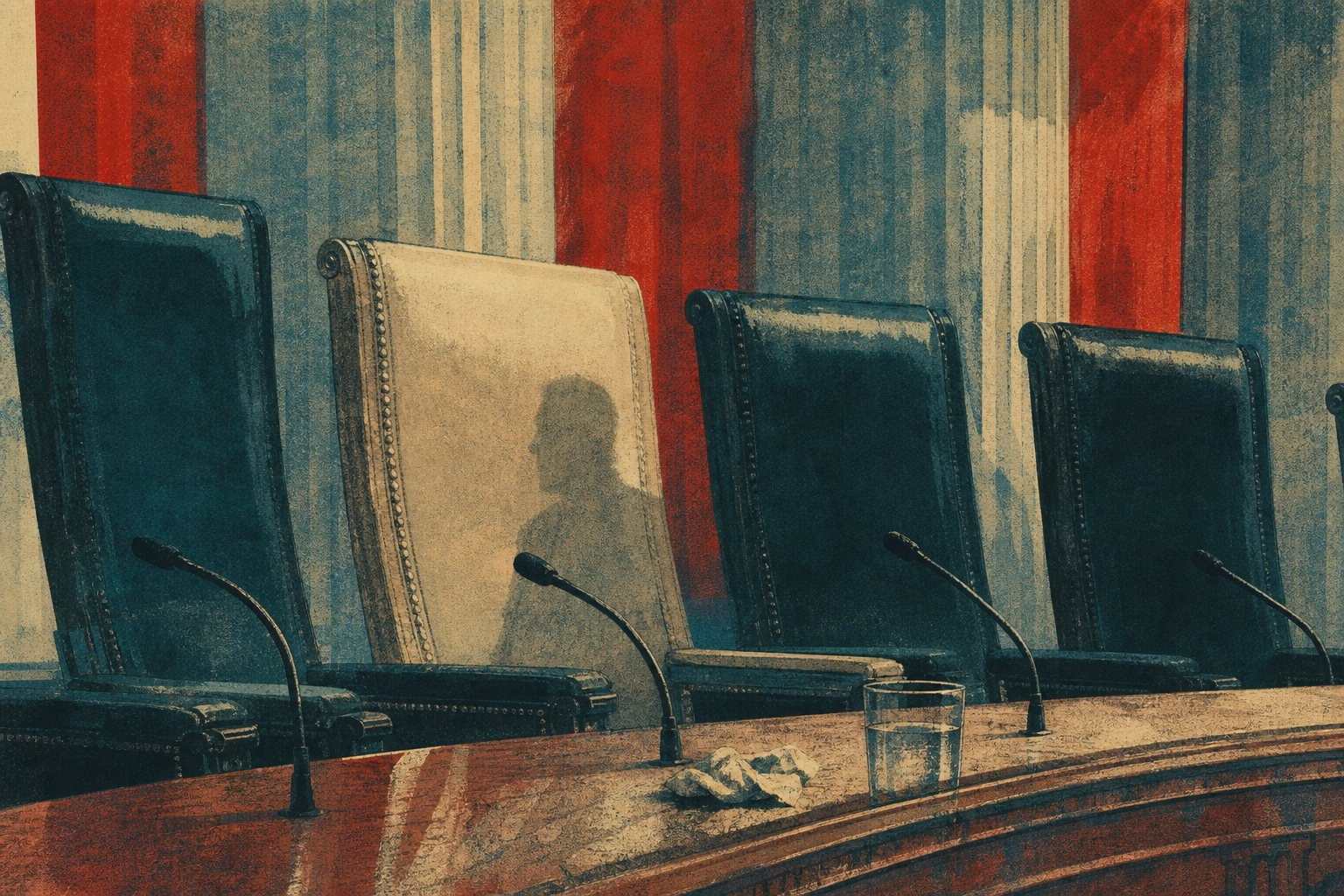
Why does a justice who died ten years ago still turn up at Supreme Court oral argument as if he kept a reserved seat? On Wednesday, as the Court weighed whether birthright citizenship extends to children of immigrants in the country illegally, Justice Samuel Alito reached for an analogy from the late Antonin Scalia, according to Fox News. The same outlet, citing unnamed sources, reported that Alito had been treated for dehydration at a hospital after a previously undisclosed March 20 incident in Philadelphia. He was not admitted and went home that night. Set the two reports side by side and the week starts to look generational: one justice's health has become a matter for anonymous sourcing, and he is borrowing the phrasing of a colleague who is past all such worries. The quick explanation is that Scalia won the long fight over how to read the Constitution. That explanation skips where his authority was assembled, years before the robe, in rooms where almost nobody was keeping score.
Accounts of the argument cast the Scalia line as one moment in a heavy morning. Look at the verb, though. Alito "invoked" Scalia, which is the word you use for a precedent or a patron saint, and very few justices get that treatment a decade after they leave. A name that travels this way has become an argument in its own right, shorthand for reading the Constitution by its original public meaning. That shorthand has a backstory the courtroom reports had no room for. Long before 1986, a combative Catholic kid from Queens was rehearsing his habits of argument, first as an academic and later as an official in two presidential administrations. If you want to know why his analogies still travel, the useful years are the ones before anyone called him Justice.
James Rosen's Scalia: Rise to Greatness, 1936-1986 is the opening volume of a planned three-volume biography, and it stops at the Court's door. The story runs from Scalia's birth to his ascension to the bench. The famous dissents belong to later volumes; this one covers the half century that produced the man who wrote them. The publisher's description sketches that half century in stages. A Catholic upbringing and education come first, and Rosen promises a fresh look at how faith and schooling shaped the young Scalia. Academia follows, with published works the description calls obscure and long overlooked.
Then comes service in the Nixon and Ford administrations, when, by the publisher's account, Scalia played a central role in reforming the U.S. intelligence community and in the approval of sensitive covert operations. That last detail may surprise you, since the public image of Scalia rarely includes classified paperwork. The overlooked writings tie the book most closely to Wednesday's argument. If a Scalia analogy can walk into a 2026 courtroom and still do work, you want to know which habits of mind were already present in a young academic writing for a small audience. Rosen's project, decades in the making by its own account, promises the chance to watch the method form before it hardened into a brand.
Biographies of famous judges often sell on gossip, and Scalia supplied plenty, but the origin of a method is the sturdier reason to open this one. Then there is the subtitle. "Rise to Greatness" is a verdict stamped on the cover before the evidence arrives, and it sits awkwardly with a subject whose legacy remains one of the most contested in American law. A biographer who calls the first fifty years an ascent has already decided where the story lands. The jacket's language, with its "brilliant and combative" justice who "defined our legal era," leans hard toward admiration, and you would be right to read with one eyebrow raised.
Admiration can still produce good history, but it tends to turn the critics into scenery. The scale earns its own skepticism. Three volumes for one justice is a commitment usually granted to presidents, and this first book ends at the exact moment many people start caring about its subject. Still, the decision to linger on the early years earns its keep. Rosen works forward from Queens, and the payoff is watching the confidence arrive before it had a platform.
So why does a justice gone for a decade still speak at oral argument? His colleagues built their phrasing around his, and he spent fifty years rehearsing that phrasing before anyone was obliged to listen. Rosen's first volume is admiring, sometimes too admiring, and it ends just as the famous opinions begin. It still lets you meet Scalia before his name became something lawyers invoke. If Wednesday's analogy sent you looking for its source, start in Queens, with a Catholic schoolboy who already argued like he expected to win.