
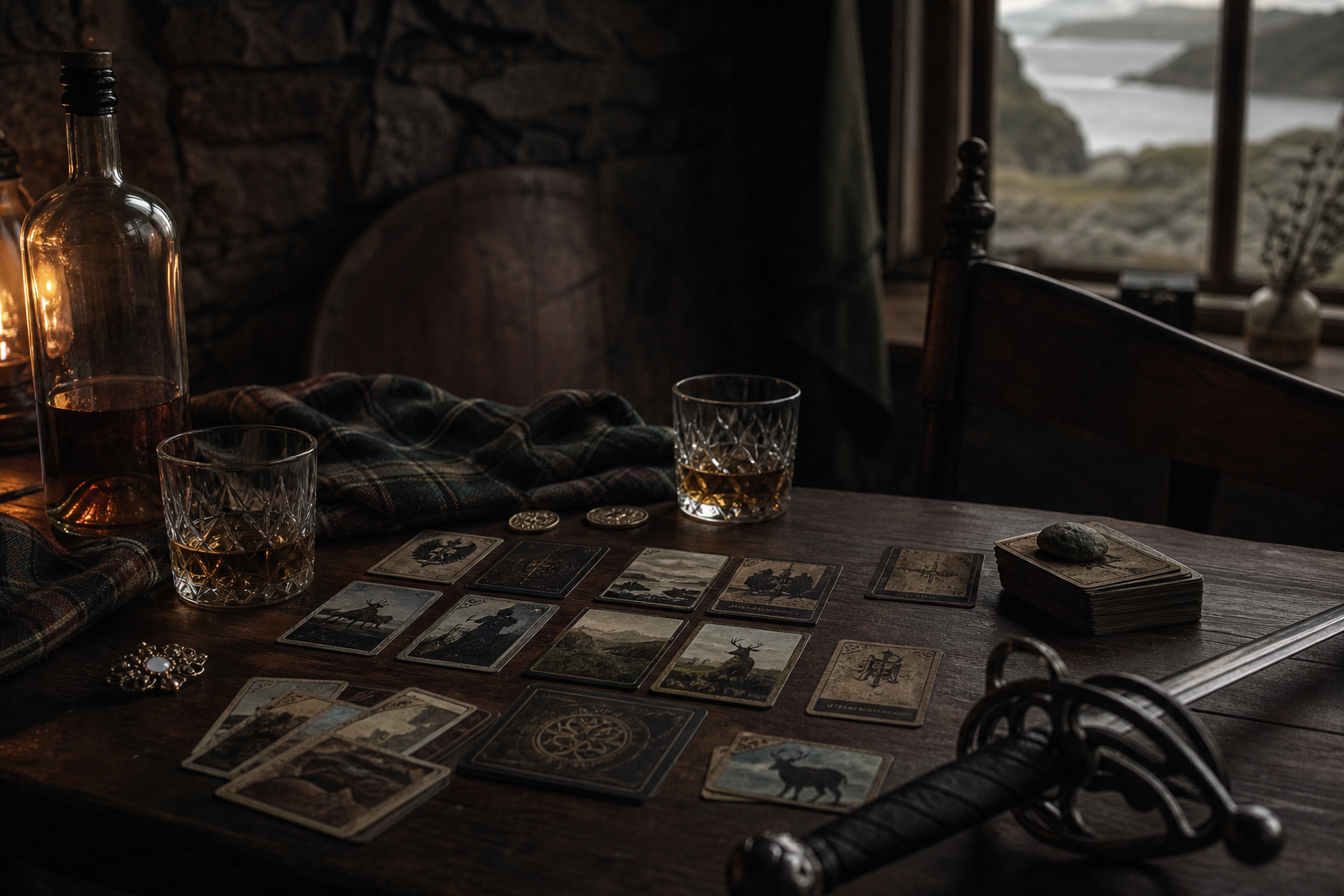
Somewhere between the second whisky and the third round of theorizing, the question always lands: did Jamie actually die? Season 8 opened with foreshadowing pointed enough that everyone at the watch party set down their snacks, and by the May 15 finale the debate had spilled out of group chats and into Sunday brunches. Anyone who has read past book three knew the show would have to pick its lane. Diana Gabaldon spent nine novels building a man who survives Culloden, Ardsmuir, a hanging, a sea voyage, and his own stubbornness. Television had to decide which of those Jamies got to walk off the screen. The fun, if you have stuck with both versions, lies in watching how the show negotiates with the books it grew out of, and how much of the original geometry it leaves intact.
The recap circuit has done its job. You can find a dozen pieces explaining the final scene beat by beat, parsing Sam Heughan interviews, and quoting Gabaldon's careful non-answers. What gets lost in that churn is the texture of the source: the specific rules of the standing stones, the family lore that drives half the plot, the running jokes about the Fraser motto that fans have been quoting at each other since 2014. The finale only makes full sense if you remember that Gabaldon's universe runs on small, accumulated detail. The conversation worth having is what the show had to compress, reroute, or quietly drop to get there, and whether the Jamie you carry in your head still matches the one on screen.
A 200-card trivia deck is not the obvious object to reach for after a series finale, but Outlander Trivia: A Card Game turns out to be a sneakily useful way back into the novels. Each card pulls from the first nine books, which means the prompts cover ground the show either rushed through or skipped entirely. Questions range from easy crowd-pleasers (the Fraser motto, how Claire met Frank) to the kind of detail that separates someone who watched twice from someone who has reread Dragonfly in Amber on a long flight. The sample prompts give a fair sense of the texture.
Who is the Old Fox. What is the one thing that seems to always be destroyed passing through the stones. These are the small load-bearing facts of Gabaldon's world, the kind that explain why certain finale choices either land or feel slightly off-key depending on how attached you are to the page version. The included booklet offers three ways to play: a low-key trivia night, a pub-style round, and an expert variation aimed at people who refer to themselves as Sassenachs without irony. The structure is loose enough that you can leave the cards out at a watch party and let people pick them up between scenes, or run an actual bracket if your friend group is the kind that takes a bracket seriously.
I will push back on one thing. A trivia deck is, by design, a recall exercise. It rewards memory, not interpretation, and the most interesting Outlander arguments are interpretive ones. Was Jamie's relationship with Lord John handled fairly. Does the time-travel mechanic actually hold up if you chart it across nine books. The cards will not get you there on their own. They will surface the raw material those debates need, which is half the work, but the deck stops short of the part fans most want to chew on. Where the design earns its keep is in collapsing the distance between casual and devoted.
If your watch party includes one person who has read every book and three who joined at season four, the cards give everyone a way in without forcing the completist to dial down or the newcomer to fake it. That is harder to design than it sounds. As an object, it is also pleasant to have around. The questions are specific enough to spark tangents, which is what you want from a game tied to a saga this long. Nobody needs another quiz that asks what color Claire's hair is. This one asks about Fraser family lore and the rules of the stones, which are the questions that actually matter when you are trying to figure out what the finale was doing.
If you are heading into a finale debrief with friends who range from book devotees to season-four arrivals, Outlander Trivia: A Card Game is a low-stakes way to give the conversation somewhere to go. The cards will not tell you whether Jamie really dies, and they will not settle the interpretive fights that make the saga worth arguing about. They will hand you the specific details the show could not always carry, and a structure for putting those details back into circulation. For a series this long and a finale this contested, that is the right size of object.