How Doctor Doom and the Avengers Get Designed, One Rejected Helmet at a Time
You watched the "Avengers: Doomsday" trailer with everyone else, and somewhere between Doctor Doom's entrance and Captain America's return, a small question probably surfaced: who decides what any of these people actually look like? Not the story, the face.
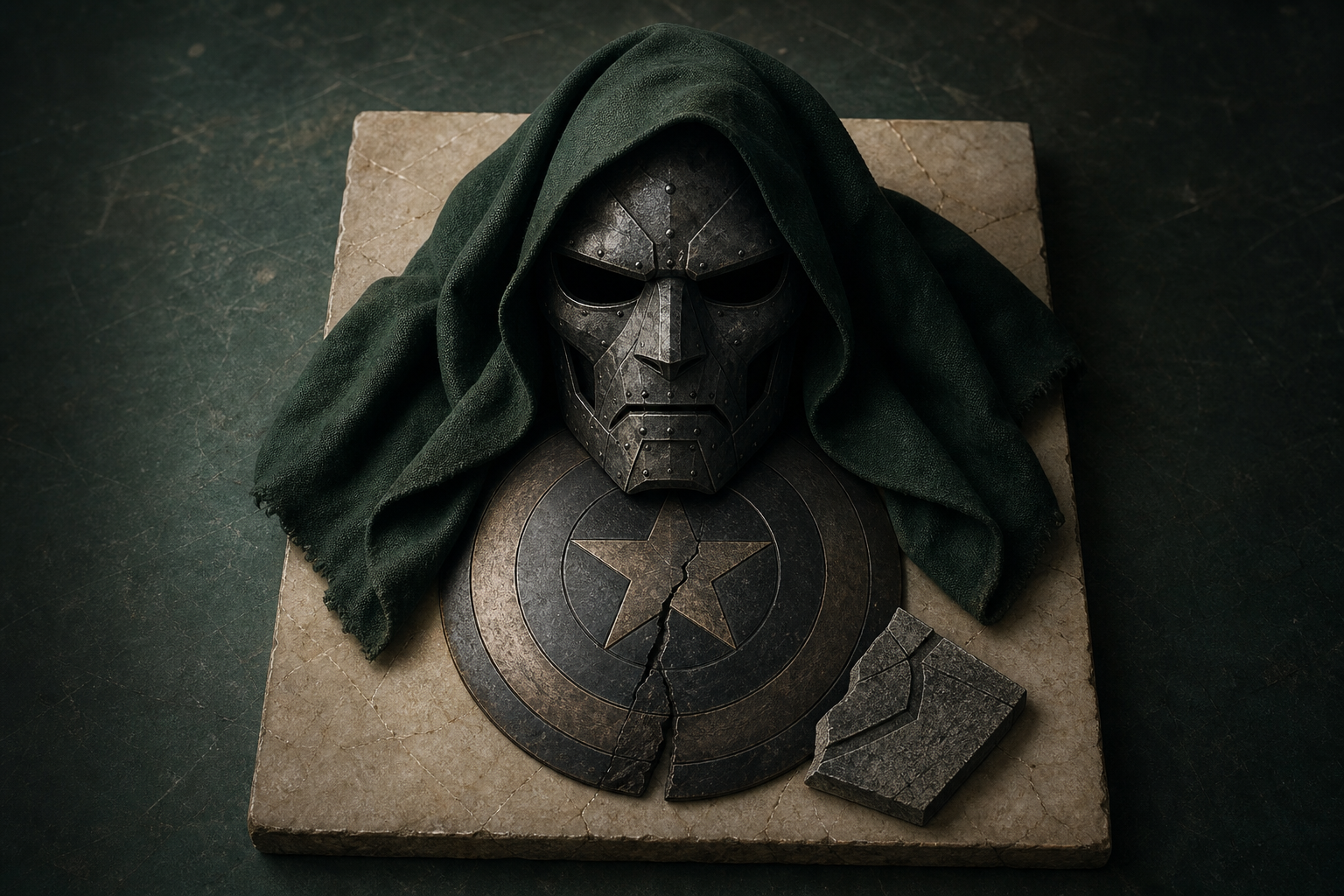
You watched the "Avengers: Doomsday" trailer with everyone else, and somewhere between Doctor Doom's entrance and Captain America's return, a small question probably surfaced: who decides what any of these people actually look like? Not the story, the face. The rivets on the armor, the exact green of a cloak. That green is a decision, and so is the way Doom reads as menace before he says a word. Someone drew it forty times first, someone argued about the collar. The finished frame you reacted to is the last version of a long fight nobody films, and the distance between the rejected stack and the polished shot is where the real work hides. A superhero design looks like a given. It almost never is.
Coverage of Doom tends to stop at the reveal: who's cast, which timeline, whether Captain America is really back. Those questions all sit downstream of a stage most reporting skips. Before a character can menace the MCU, a design team settles hundreds of quiet decisions about proportion, silhouette, material, and whether the figure reads from thirty feet away. That labor stays invisible on purpose, because a good final design erases the arguments that produced it. So the conversation fixates on the outcome and misses the mechanism, and the part worth understanding, how a familiar figure gets rebuilt for a new medium, goes unexamined. You end up with strong opinions about a result and no picture of the system that made it. A development artbook lives in exactly that gap.
Paul Davies's "Marvel's Avengers The Art of the Game" documents that hidden stage for a related project: the 2020 Square Enix game in which a young Kamala Khan has to reassemble a disbanded team to stop AIM. The book collects concept art, final designs, storyboards, and artist commentary, tracing each hero from first idea to finished screen. It is a hardback built for lingering, the kind you leave open on a table. The useful thing is the sequence. You watch costumes, gear, powers, and environments arrive as iterations instead of facts. A helmet shape gets tried, discarded, tried again with a different jaw.
The commentary from the artists who shaped these choices explains why one version survived and three didn't, which is precisely the reasoning that gets sanded off the finished product. That process maps onto the Doom question more cleanly than any trailer breakdown. When a studio rebuilds a comics property for an interactive world, the constraints change. A design has to hold up while a player swings the camera around it, not just for one held cinematic beat. Readability while the figure is moving matters more than a single flattering angle. The book shows those pressures acting on characters you already know, so the vague idea of reimagining turns into specific gear and paint.
I'll be honest about the ceiling here. This game had a rough public life, and a book celebrating its visual development can read like a handsome memorial to something that didn't land commercially. The volume favors finished spectacle, the sweeping environment paintings and rendered mission visuals, and stays quiet about the compromise and deadline pressure that shape any live-service title. If you want a candid account of which decisions were forced by the calendar or the balance sheet, you'll be reading between the lines. What survives that caveat is the pleasure of watching an ensemble get designed at once.
Iron Man, Thor, Black Widow, and the Hulk all get pushed through the same visual grammar so they read as one team, and that coherence is a hard design problem the sketches make plain. Seeing it worked out gives you a working sense of the next franchise reveal, Doom included: silhouette first, materials second, then the small choices that signal character before dialogue does. The trailer thrilled you as a viewer; the book returns you to the drawing table where that thrill was engineered, and once you've seen the iterations, you can't fully unsee them anywhere else.
Doom will keep dominating the feeds through 2026, and most of what you read will be about the story. This book pulls you toward the quieter question of how the face got made, one sketch at a time. If you already collect development art, or you just felt that flicker of curiosity about who chose the green, it's a satisfying place to sit with the process behind the spectacle. No urgency, no obligation. Just an open book on the table and a sharper eye for the next time a hero walks on screen.
Why this book
Try this the next time a big reveal drops. Instead of asking whether you liked the look, ask what problem the look was solving. Is that armor readable in motion? Does the silhouette separate Doom from the crowd of heroes he's fighting? What got simplified so the figure would parse on a phone screen at a glance? Davies's book hands you the raw material to answer, because it sets the failed attempts beside the winners and lets you find the seams yourself. Once you've paged through a dozen helmet studies for a character you assumed had one obvious face, visual development stops being mysterious. You don't need to draw anything. You just watch differently, with an eye for the decision underneath the frame. It's a small change and a permanent one, and it costs you nothing but a slower look at the next trailer.
Bridges by email
A news story and the book that goes with it, whenever we publish one.