What Happens After the Spin: Bill Elliott on the Boring Part of Speed
Cleetus McFarland spins his No. 33 Childress Chevrolet at Rockingham, and the clip outruns anything the car managed on the track.
Cleetus McFarland spins his No. 33 Childress Chevrolet at Rockingham, collects a couple of penalties, and the clip outruns anything the car managed on the track. A YouTube showman with millions of subscribers, sideways in turn three, trying his luck in a real NASCAR field. Online, the verdict splits along predictable lines: a triumph of access, or proof that stock car racing is harder than a livestream makes it look. The spin itself puts him in very old company. Drivers have been losing the back end on Southern short tracks since long before the cameras showed up, since before there were sponsors worth naming. The penalties are the only new part. The question underneath the highlight reel is one the sport has been answering, awkwardly, for seventy years.
The easy assumption is that Cleetus represents something unprecedented, the influencer-as-driver, fame arriving before the skill that should justify it. It is a tidy story, and it flatters our sense that everything used to be more honest. NASCAR has always run on showmanship bolted to real ability, with no clean line dividing the two. Junior Johnson ran moonshine before he ran Daytona. Personality sold tickets long before it sold merch. The useful question is not whether a famous outsider can show up and struggle, because people have struggled at these tracks forever. It is what separates someone who spins and learns from someone who spins and leaves. To see that difference, watch a driver do it the slow way, in a garage, with his own hands, before anyone was filming.
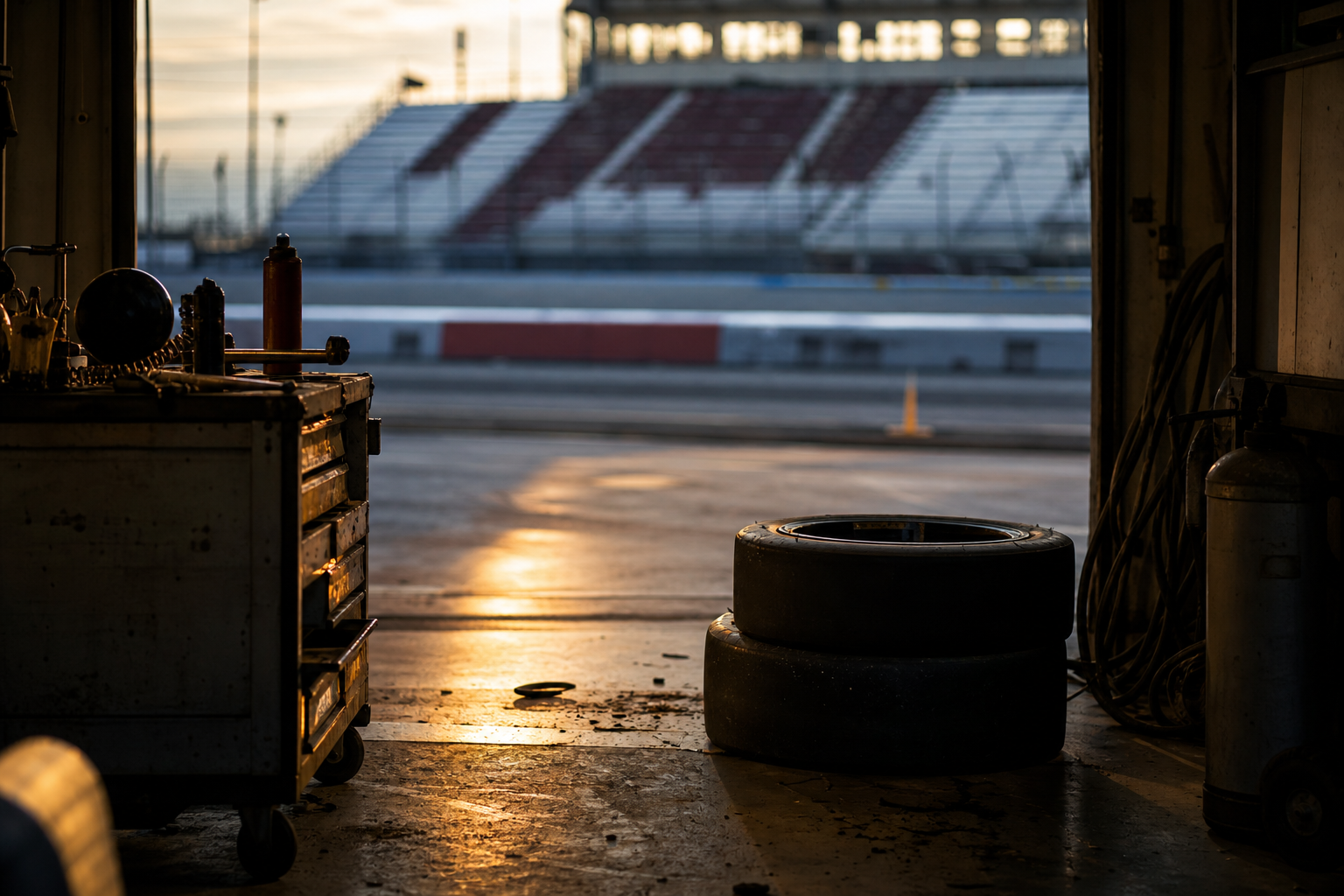
Bill Elliott built cars from scratch in North Georgia before the wider world had any reason to know his name. That detail sits at the center of his autobiography, written with Chris Millard, and it explains how he eventually arrived at the top of the sport. He did not buy speed. He fabricated it, on anonymous short tracks, in a family operation where dominating super speedways was a thing you earned with your hands. The book puts you under the car as often as in it. Elliott walks through the mechanical obsession that defined the Dawsonville approach, the part of racing that never makes the highlight reel because it happens in a garage at two in the morning.
This is the texture a viral spin leaves out: the unglamorous, repetitive labor that turns raw speed into something you can do twice. The racing comes next, and here Elliott names names. He fights Dale Earnhardt, Darrell Waltrip, Rusty Wallace, Ricky Rudd, and Alan Kulwicki for the championship, and he sketches the men who built the sport before him: Cale Yarborough, Junior Johnson, the Allisons, Carl Kiekhaefer, the France family. These were not brand ambassadors. They were difficult, vivid, often broke men who made a sport out of going fast and arguing about it afterward.
Elliott's 1985 season, the year he became a national story, runs alongside NASCAR's own climb toward the mainstream. He also holds the record for the fastest official speed ever recorded in a stock car, a mark that has stood for decades. The number matters less as a statistic than as proof of what the Dawsonville method could produce when everything lined up. The honest stretches are the strong ones. When the book protects the family mystique, it gets careful, and you can feel Elliott deciding how much of the super speedway secret he actually wants on the page.
An autobiography by a famously private man holds something back, and this one does. That reticence will frustrate you if you came for the full schematic of how the Elliotts went so fast. It is also the most authentic thing here. The garage kept its secrets too.
You do not need to love NASCAR to find Elliott's account worth your time. It is a clear-eyed look at how speed actually gets built, by hand, before anyone is watching, and it gives you a sturdier way to read the next viral spin than the highlight ever will. If the Cleetus story has you wondering what separates a moment from a career, this is a good place to sit with that question for a while.
Why this book
Set the Rockingham clip next to Elliott's story and the spin stops being a verdict on Cleetus. It becomes one frame in a process that has always taken years and bruised egos. Elliott spent a decade getting fast before fame found him. The modern path runs backward, with the audience arriving first and the competence expected to catch up in public, on camera, in front of everyone. Both routes produce real drivers and real wrecks. If you want to think clearly about whether a YouTube star belongs in a Childress car, the question to hold onto is what he does after the penalty, in the garage, when nobody is filming the boring part. That is the test Elliott's book quietly describes, and it beats any single afternoon at the track as a measure of who lasts.
Bridges by email
A news story and the book that goes with it, whenever we publish one.